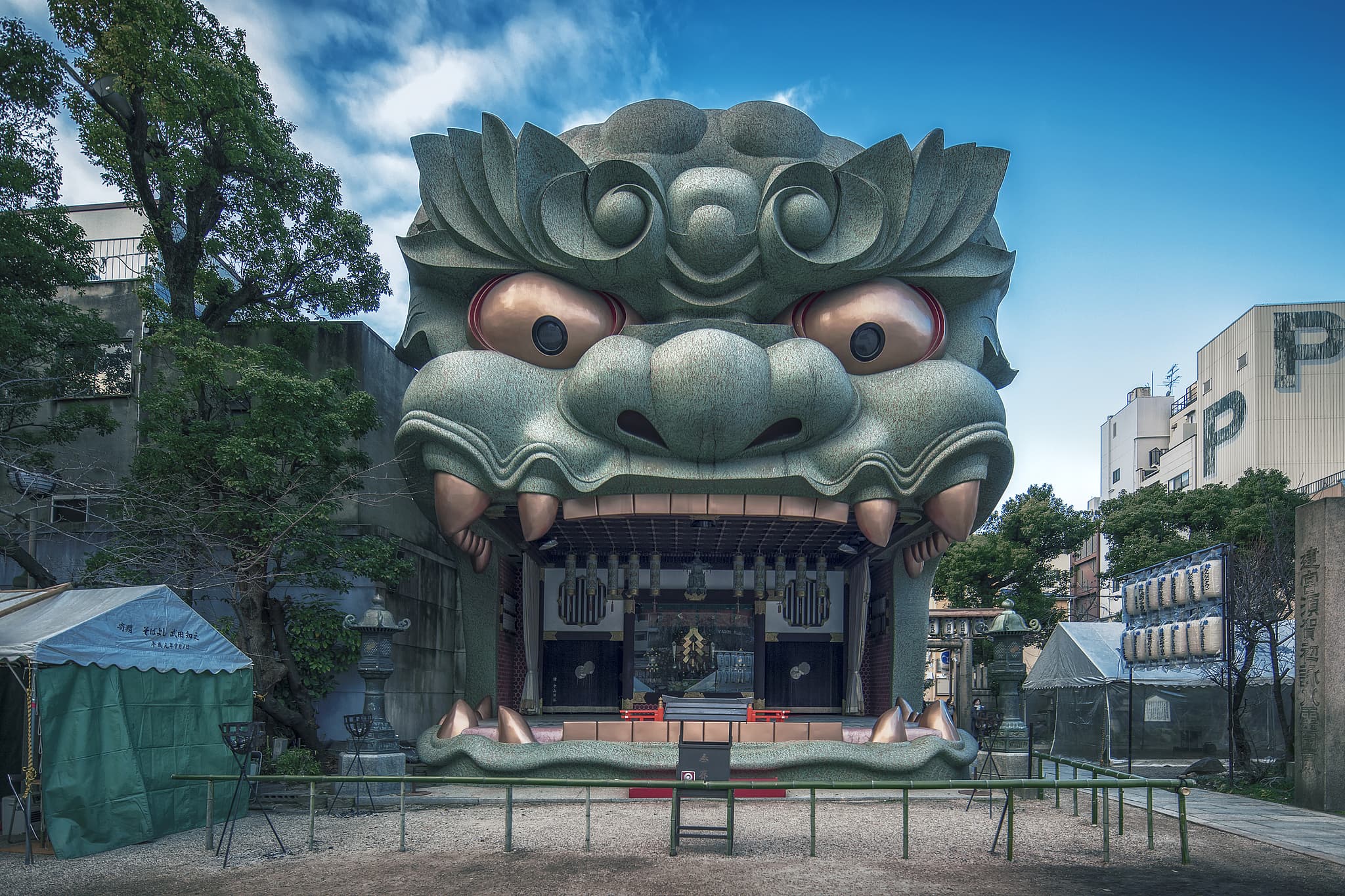
What this place is: Namba Yasaka Shrine is a historic Shinto shrine with roots dating back to 1069, though its most recognizable feature—the enormous lion-head structure (Shishiden)—was built in 1974 when the main hall was reconstructed. The shrine is dedicated to three deities and is believed to ward off epidemics and bring good fortune. The lion's open mouth functions as both a spiritual gateway and a performance stage during festivals, particularly the Tug-of-War Shinto Festival held each January.
What visitors consistently praise: Reviewers are almost universally impressed by the shrine's architectural uniqueness. The giant lion head—approximately 12 by 11 metres—is far more distinctive than typical Japanese shrines and makes for striking photographs. Visitors note the peaceful, serene atmosphere despite its urban location nestled in a residential neighbourhood. Many appreciate that it is free to enter and that the spiritual energy feels genuine rather than overly commercialised. Several reviewers mention purchasing omamori (protective amulets) and drawing fortune-telling sticks (mikuji), which are popular activities. The shrine's proximity to Namba Station and major shopping areas like Dotonbori makes it convenient to visit.
Common visitor experience: Most visitors spend 10-20 minutes at the shrine. The site is genuinely small—you can walk the entire grounds in under 15 minutes. The primary activity is photographing the lion head from various angles, particularly from the front entrance. Some visitors participate in prayer rituals or purchase amulets. Reviewers note that the shrine can become quite crowded, especially mid-morning through afternoon, with tour groups and Instagram-seeking tourists queuing for photos. The shrine closes promptly at 5:00 PM, which several reviewers mention as important to note.
Practical advice from visitor experiences: Arrive early—ideally before 9:00 AM—to photograph the lion head without crowds. Multiple reviewers specifically recommend this timing. Wear comfortable walking shoes, as the shrine is accessed via narrow residential streets. Bring cash if you wish to purchase omamori or draw fortune sticks, as payment methods are not always clear. The shrine's interior (inside the lion's mouth) is accessible but small; do not expect extensive grounds or gardens. If you are interested in the spiritual aspect rather than just photography, visiting during quieter hours allows for genuine prayer and reflection. The shrine is free to enter, though donations are welcome. If you are staying in a nearby hotel, the walk is easy and worth doing; if you are staying elsewhere, only visit if you are already in the Namba area, as making a special trip solely for this shrine may not justify the travel time.
Getting there: Namba Yasaka Shrine is located in the Motomachi area of Naniwa Ward, approximately 10-15 minutes on foot from Namba Station. From Namba Station, take exit 3 of the Midosuji Line and head towards the residential streets west of the main shopping district. The shrine is intentionally tucked away in a quiet neighbourhood, so using Google Maps or a similar navigation app is strongly recommended—several reviewers mention entering from the wrong side or taking longer to locate it without digital guidance. The walk from the station is flat and straightforward, though the final approach involves navigating small residential streets. If using the Nankai Namba Station, the walk is slightly longer but equally accessible. There is no dedicated parking; visitors are expected to arrive on foot or by public transport. The shrine is also reachable from Shinsaibashi Station (Midosuji Line) in approximately 10-15 minutes.
Common complaints and mitigation: The primary complaint is overcrowding, particularly during mid-day hours when tour groups arrive. Visiting before 9:00 AM or after 4:00 PM significantly reduces crowds. Some visitors feel the shrine is overly touristy and lacks the spiritual depth of larger temples; if this concerns you, arrive during quiet hours or consider visiting on a weekday rather than weekends. A few reviewers note that the shrine's small size can feel anticlimactic after seeing photos online; manage expectations by treating it as a 15-minute photo stop rather than a major attraction. The shrine's location in a residential area means there are limited facilities (no cafes, restrooms, or shops directly on-site), so plan accordingly.