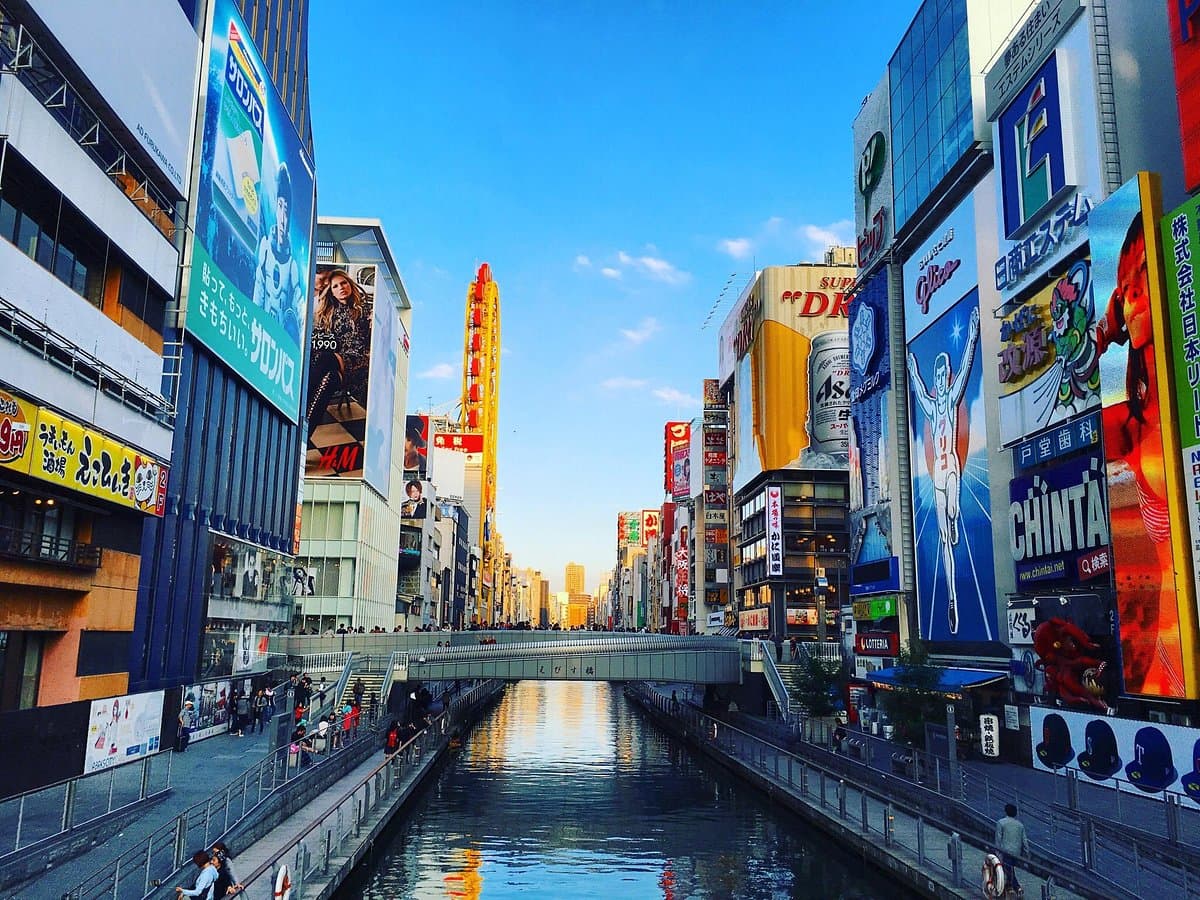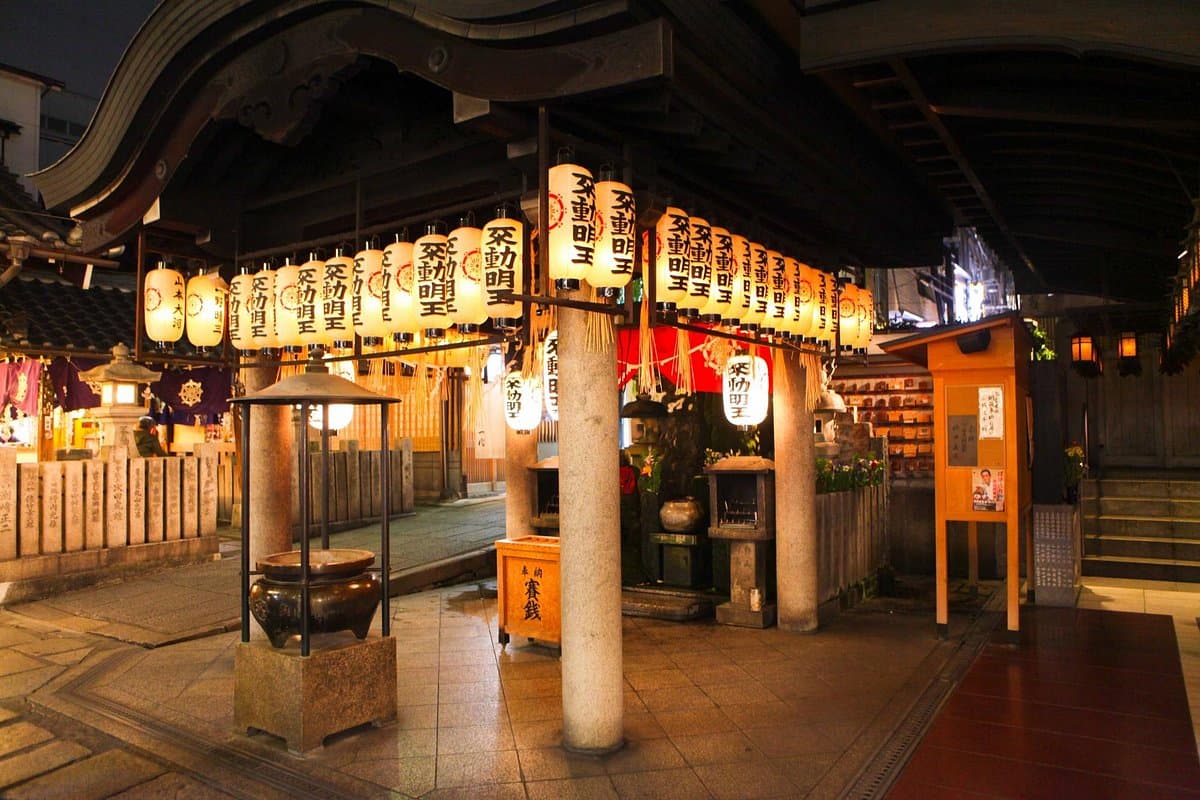
Hozen-ji Temple is a small yet historically significant Buddhist temple, established in 1637, that stands as a remarkable testament to resilience in the heart of Osaka's vibrant Dotonbori district. It is particularly renowned for its Mizukake Fudo Myoo statue, a deity completely covered in a thick layer of moss from centuries of visitors pouring water over it as an offering and for good fortune. This unique practice and the temple's unexpected serenity amidst urban chaos make it a distinctive cultural landmark.
Visitors consistently praise the temple for its peaceful and tranquil atmosphere, often describing it as a 'bubble of silence' or a 'magical place' that provides a welcome respite from the surrounding hustle and bustle. Many appreciate the opportunity to participate in the tradition of splashing water on the moss-covered statue, finding it a meaningful and unique experience. The temple's charm is often highlighted by its contrast with the lively Dotonbori area, making it feel like a 'hidden gem' or a 'secret garden'. Reviewers frequently mention the beauty of the lanterns, especially at night, which contribute to a warm and atmospheric setting. Some also note the presence of nearby atmospheric streets and cafes, enhancing the overall experience.
To fully appreciate Hozen-ji, visitors recommend spending about 10-20 minutes. It is best visited in the early morning or late evening when it is quieter, and the lanterns create a particularly enchanting ambiance. Many suggest combining a visit with a stroll through the adjacent Hozenji Yokocho alley, known for its traditional restaurants and bars. While there is no entry fee, visitors can purchase incense or make a small donation for a prayer, which is seen as a respectful gesture. It is advisable to wear comfortable shoes as the surrounding area involves a lot of walking.
Hozen-ji Temple is conveniently located in the Namba/Dotonbori area, making it easily accessible by public transport. The nearest major stations are Namba Station (various lines including JR, Nankai, Kintetsu, and Osaka Metro Midosuji Line) and Shinsaibashi Station (Osaka Metro Midosuji Line). From Namba Station, it's a short walk, typically 5-10 minutes, through the Dotonbori alleys. Many visitors discover it by chance while exploring the area, or by using navigation apps, though some note that cellular coverage can be spotty amidst the tall buildings. Look for the narrow alleys off the main Dotonbori thoroughfare; the temple is often described as being 'tucked away' or 'slightly hidden'.
A common complaint is the temple's small size, with some visitors expecting a larger, more grand temple like those found in Kyoto or Nara. This can lead to a sense of it being 'unremarkable' if expectations are not managed. To mitigate this, approach Hozen-ji not as a sprawling complex, but as a compact, intimate sanctuary. Its value lies in its unique cultural practice and its stark contrast to its urban surroundings, rather than its scale. Some also mention difficulty finding it due to its hidden location; using a reliable map and looking for the Hozenji Yokocho alley can help.