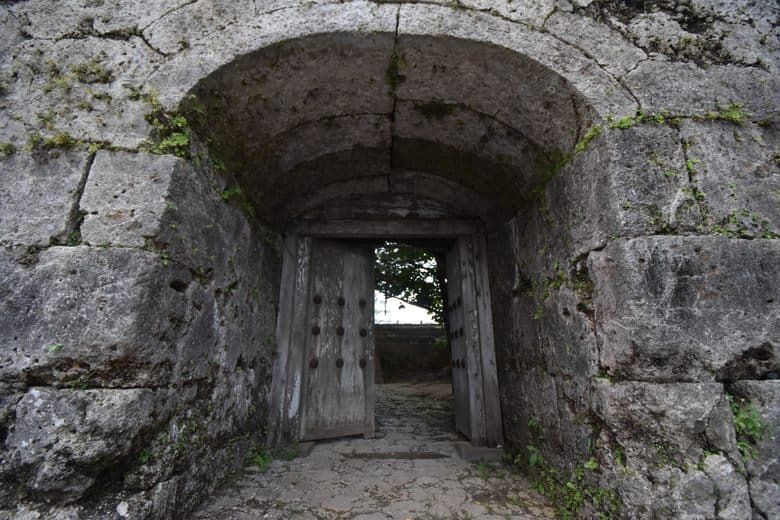
The Old Sogenji Temple Gate is the last remaining structure of what was once the grand Sogen-ji Temple, founded around 1527. This Buddhist temple served as a mausoleum for the spirits of the Ryukyu Kingdom's kings until its destruction during the Battle of Okinawa in 1945. The First Gate, predating the temple itself, survived the conflict and has since been restored, now standing as a historical marker within a public park.
Visitors often describe the site as peaceful and a good place for a brief, contemplative stop. The large banyan tree (gajumaru) that now stands where the temple once was is frequently highlighted as a striking natural feature, providing shade and a sense of age to the location. Reviewers appreciate the historical significance of the gate, noting its resilience through wartime destruction and subsequent restoration. However, many also temper expectations, emphasizing that there isn't much else to see beyond the gate and the tree, making it a quick visit.
For those interested in visiting, a short stop of 15-30 minutes is usually sufficient to appreciate the gate and the banyan tree. There are no specific items to bring, as it is an open park area. The site is best visited during daylight hours, and as it's a public park, there are no entry fees or specific opening times to consider. It offers a quiet respite from the urban environment, particularly appealing to those seeking a moment of reflection or a connection to Okinawa's past.
The Old Sogenji Temple Gate is located in the middle of urban Naha. While specific public transport lines aren't mentioned in reviews, Naha is well-served by buses and the Okinawa Urban Monorail (Yui Rail). Visitors can likely reach the vicinity by taking a monorail to a nearby station and then walking, or by using local bus services. As it's in an urban area, driving might be an option, but parking availability could be limited. Walking or cycling from other central Naha attractions is also feasible for those who enjoy exploring on foot.
A common complaint among visitors is the lack of extensive attractions beyond the gate itself. To mitigate this, it's important to approach the site with the understanding that it is a historical remnant rather than a sprawling complex. Manage expectations by viewing it as a brief, historically significant stop rather than a major destination requiring a long visit. Combining a visit here with other nearby attractions in Naha can make for a more fulfilling itinerary.