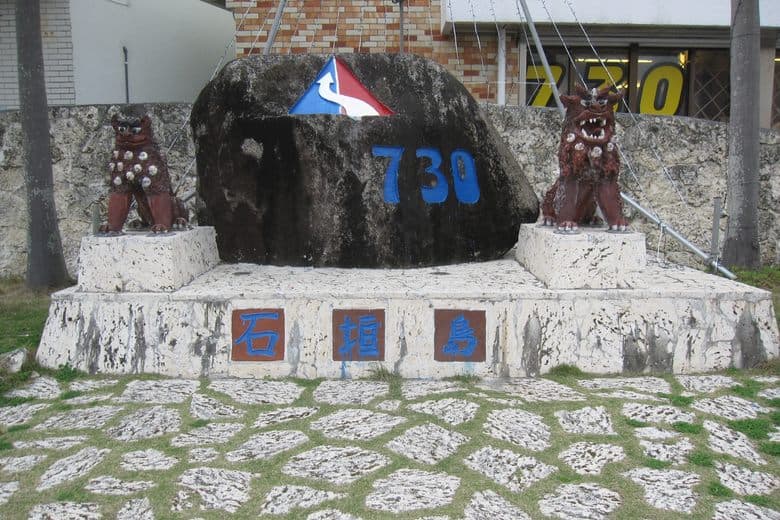
The 730 Crossing, located in Ishigaki, is a monument marking a pivotal moment in Okinawa's post-WWII history. It commemorates July 30, 1978, the day Okinawa switched from right-hand to left-hand traffic, aligning with the rest of Japan after decades of U.S. administration. This transition, known locally as '730', was a significant event symbolizing Okinawa's full reintegration with Japan, and the monument stands as a testament to this smooth, accident-free change.
Visitors consistently describe the 730 Crossing as a small, quick stop, often integrated into a broader exploration of Ishigaki. Many appreciate the historical context, finding the story behind the monument intriguing. The monument itself, flanked by traditional Okinawan shisa statues, offers a pleasant spot for a brief photo. Reviewers often highlight its clean and well-maintained appearance, noting that it's more of a symbolic landmark than an interactive attraction. Some visitors enjoy the adjacent 730 Shiishii Park, which provides a small green space for relaxation.
For those interested in visiting, allocate about 10-15 minutes to fully appreciate the monument and its surroundings. It's best visited during daylight hours to clearly see the monument and read the informational plaques. There are no specific items to bring, but a camera is recommended for photos. Since it's a public space, there are no entry fees or strict opening hours. It's an ideal stop for history buffs or anyone looking for a unique cultural anecdote.
The 730 Crossing is centrally located in Ishigaki, making it easily accessible. Many visitors reach it on foot as part of a walking tour of the city center, especially if they are staying near the port or main shopping areas. Public buses in Ishigaki can also take you to stops within a short walking distance. For those driving, parking might be available in nearby public lots, though it's often easier to walk if you're already in the downtown area.
The most common 'complaint' or observation from visitors is that the monument is smaller and less elaborate than some might expect, leading to a sense of it being 'just a crossroads'. To mitigate this, approach the 730 Crossing with an understanding that its value lies in its historical significance rather than its grandiosity. Reading up on the '730' event beforehand can enhance the experience, allowing visitors to connect more deeply with the monument's purpose.