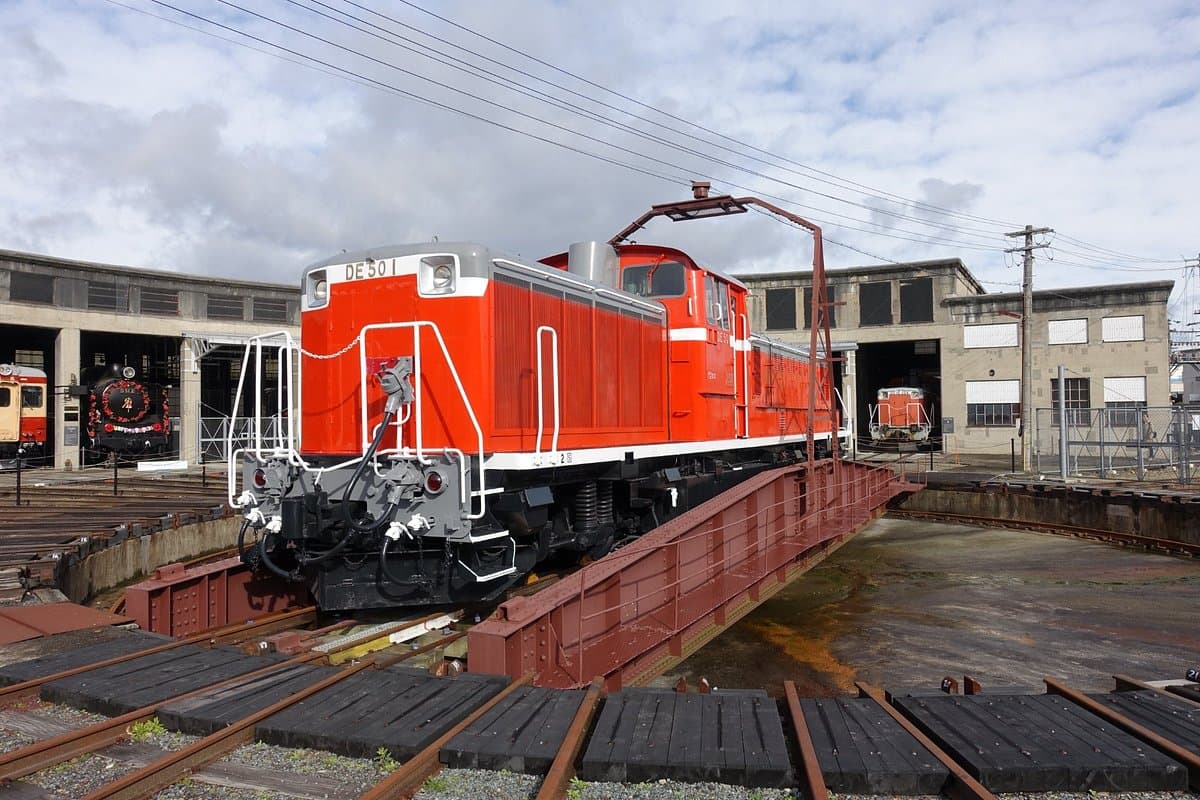
The Tsuyama Manabi no Tetsudokan, or Tsuyama Railway Learning Museum, is a significant site for understanding Japan's railway heritage. Its centerpiece is a preserved fan-shaped locomotive depot, a rare architectural and engineering marvel that once served as a maintenance hub for steam and diesel locomotives. The museum showcases a variety of rolling stock, primarily diesel locomotives and railcars, reflecting the non-electrified nature of the local Tsuyama Station.
Visitors consistently praise the impressive sight of multiple diesel cars and locomotives lined up within the fan shed, with some noting the presence of trains that can only be seen here. The opportunity to see a revolving turntable in action, reminiscent of childhood picture books for some, adds to the nostalgic appeal. While the focus is on the vehicles themselves, some reviewers appreciate the chance to enjoy a ride on a mini-train, which is particularly popular with children.
For a fulfilling visit, allocate about 1 to 2 hours. The museum is generally well-regarded for its unique exhibits, but some visitors suggest that the overall experience could be enhanced with more interactive elements beyond the train displays. It's advisable to check for special events or operating hours for the mini-train if that is a key interest. Consider visiting during cooler parts of the day, as much of the viewing is outdoors or in unconditioned spaces.
The museum is conveniently located less than a 10-minute walk from Tsuyama Station. Despite its proximity, some visitors have reported difficulty finding the museum due to a lack of clear signage on the roads leading to it. It is recommended to use a map application or ask for directions at Tsuyama Station to avoid getting lost. Public transport, specifically the train to Tsuyama Station, is the most straightforward way to reach the museum.
A common complaint among some visitors is the perceived lack of diverse exhibits beyond the static train displays. Suggestions for improvement include adding a movie theater, train bells, simulators, collections of uniforms, or railway-themed music. While the museum excels in its core offering of historical rolling stock and the fan depot, those expecting a highly interactive or multimedia-rich experience might find it somewhat limited. To mitigate this, approach the visit with an appreciation for the historical and mechanical aspects of the exhibits rather than expecting a modern, high-tech museum experience.