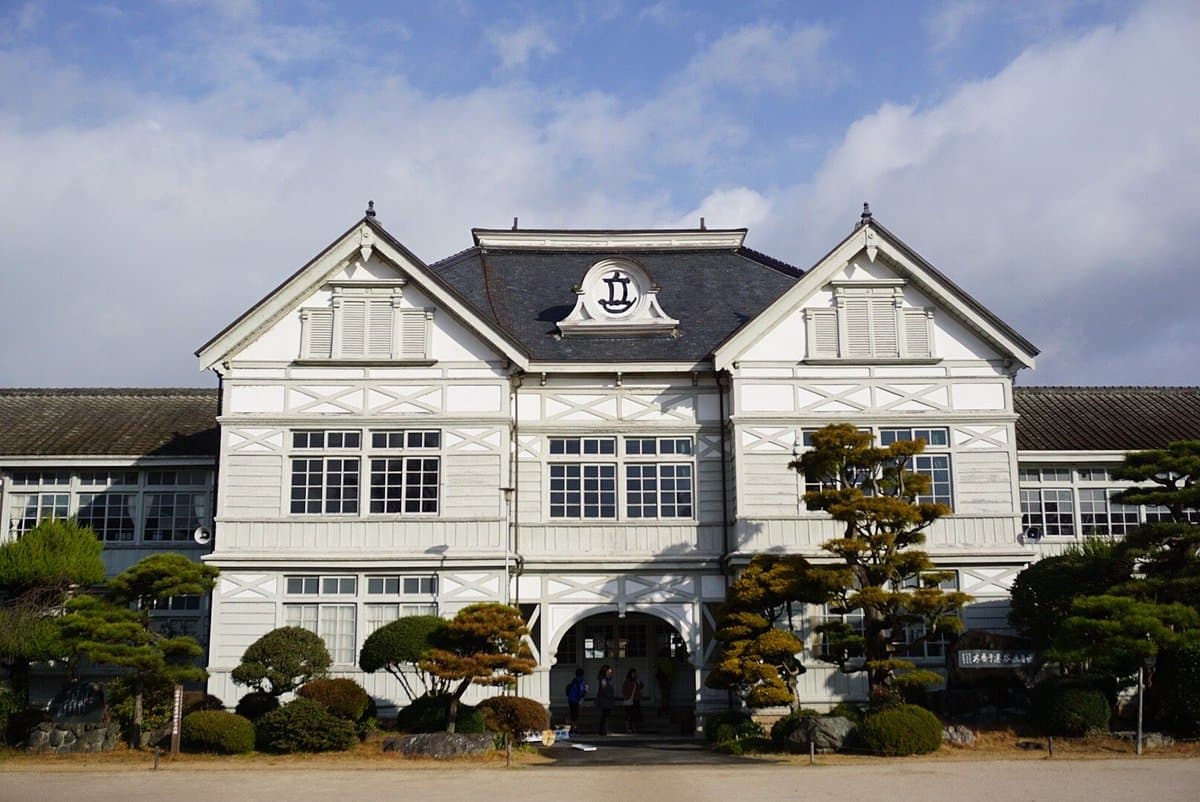
The Old Senkyo Jinjo Elementary School, constructed in 1907, stands as a significant example of Western-style architecture in early 20th-century Japan. Originally an active elementary school for over a century, it has since been designated an important cultural property and now functions primarily as a museum dedicated to its rich history. Its unique appearance has also made it a popular filming location for numerous Japanese films and television dramas, adding another layer to its cultural relevance.
Visitors consistently praise the school for its nostalgic atmosphere and the opportunity to step back in time. Reviewers often highlight the well-preserved classrooms and the chance to try on traditional school uniforms, which many find to be a fun and engaging experience, though some note the uniforms can be quite warm. The building's age and its role in local history are frequently mentioned as key attractions, offering a cool piece of history for those interested in Japan's past.
While entry is free, visitors should be aware that most of the informational displays are exclusively in Japanese. Those without language ability might find it challenging to fully grasp the historical context, though many still enjoy the visual experience of the old school. A visit of 1-2 hours is generally sufficient to explore the premises. It is recommended to visit during daylight hours to fully appreciate the architectural details and natural light within the building.
The school is located at 17-1 Nabeya Kuse Espace Land, Maniwa, Okayama Prefecture. Specific public transport options are not widely detailed in visitor reviews, suggesting that driving or taking a taxi might be the most convenient way to reach the location, especially given its somewhat rural setting within Espace Land. Visitors planning to use public transport should research local bus routes to Kuse or Maniwa stations and then consider a taxi for the final leg.
The primary complaint among visitors is the lack of English explanations, which can diminish the educational aspect for international tourists. To mitigate this, it is advisable to use a translation app or bring a Japanese-speaking companion if understanding the detailed history is a priority. Otherwise, simply appreciating the architecture and atmosphere can still be a rewarding experience.