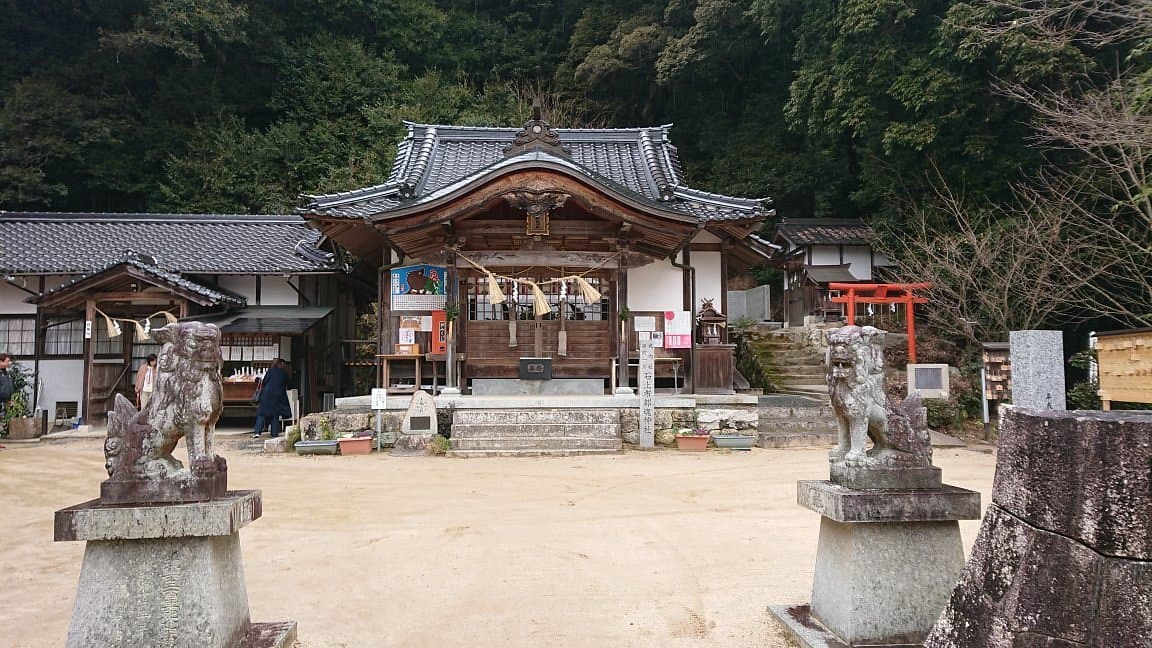
The Isonokami Futsumitama Shrine holds historical significance as one of the oldest shrines in Japan, with roots tracing back to the Kofun period. It is believed to enshrine the Futsu-no-Mitama sword, a legendary weapon associated with Emperor Jimmu, the mythical first Emperor of Japan. While not visually grand, its importance lies in its deep connection to the origins of Japanese mythology and imperial lineage, making it a site of quiet reverence for those interested in ancient history.
Visitors consistently describe the shrine as peaceful and uncrowded, offering a serene atmosphere for reflection. Reviewers often highlight the sense of history and tranquility, noting that it provides a stark contrast to more bustling tourist attractions. However, some visitors mention that the shrine itself is quite small and lacks extensive facilities or elaborate decorations, which might lead to a shorter visit than expected if one is not deeply invested in its historical context.
For a meaningful visit, it is recommended to allocate about 30-60 minutes to explore the grounds and absorb the quiet ambiance. There are no specific items to bring, but comfortable walking shoes are always advisable. The shrine is best visited during daylight hours to fully appreciate its natural surroundings. Since it is a less-frequented site, there are no crowds to avoid, making any time of day suitable for a peaceful experience.
The Isonokami Futsumitama Shrine is located at 1448 Ishikami, Akaiwa, Okayama Prefecture. Public transportation options to this specific location are limited, and visitors often find that driving or taking a taxi is the most convenient way to reach the shrine. There is typically parking available on-site or nearby, as it is not a high-traffic area. Those relying on public transport might need to combine train travel to a nearby station with a taxi ride for the final leg of the journey.
A common complaint among visitors is the lack of English information or signage, which can make it challenging to fully understand the shrine's historical context without prior research. To mitigate this, it is advisable to read up on the shrine's history and significance before your visit. Additionally, some visitors express that the shrine's modest appearance might be underwhelming if one expects a grand architectural display. Managing expectations by focusing on its historical and spiritual importance rather than its visual grandeur can enhance the experience.