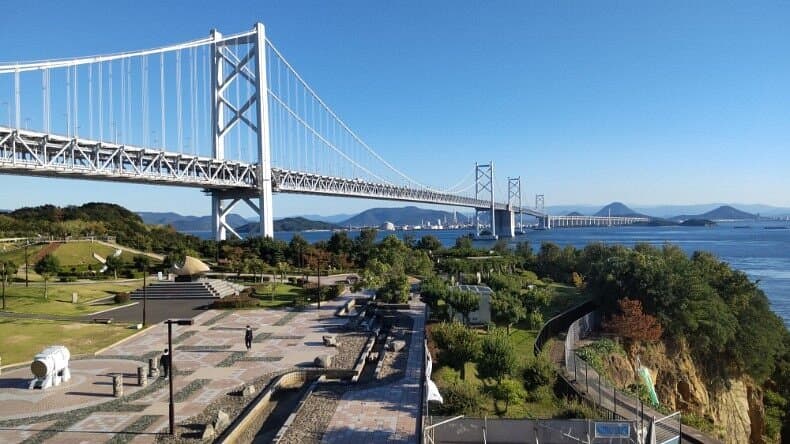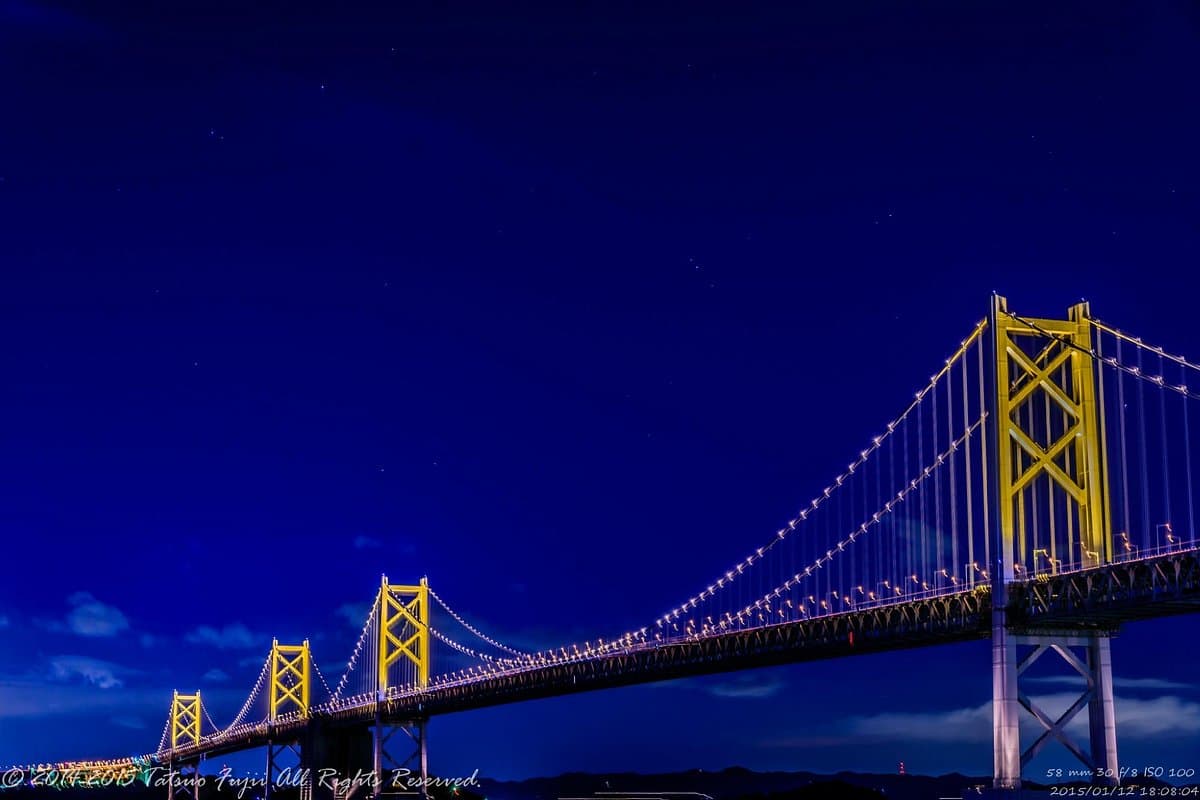
The Great Seto Bridge, or Seto Ōhashi, is a monumental engineering achievement in Japan, serving as a vital link between Honshu and Shikoku islands. Unique for its double-deck design carrying both highway and railway lines, it spans several small islands across the Seto Inland Sea. It's not merely a transit route but a destination in itself, offering panoramic vistas that captivate travelers.
Visitors frequently highlight the breathtaking views experienced while crossing the bridge, whether by car or train. Many describe the architectural scale as amazing, with some noting the intricate design and the sensation of traversing over water and islands. The Yoshima Service Area is a popular stop for its limited-edition products and opportunities for commemorative photos with the bridge as a backdrop. Reviewers often recommend taking the train for a different perspective, as it passes under the road deck, offering unique views of the flowing scenery. The sunset views from various observation points are also highly praised, with visitors describing them as spectacular.
For an optimal experience, consider crossing the bridge by both car and train if time permits, as each offers distinct perspectives. Many suggest stopping at the Yoshima Service Area for souvenirs and photo opportunities. To catch the best sunset views, plan your visit for the late afternoon and be prepared for a potentially tight schedule if relying on public transport to reach observation decks. Reviewers advise bringing comfortable shoes if you plan to explore observation points, as some involve walking uphill. The journey across typically takes about 30-45 minutes, but allowing extra time for stops and photos is recommended.
The Great Seto Bridge is accessible by both road and rail. For those traveling by train, the JR Seto-Ohashi Line connects Okayama Station on Honshu to Takamatsu Station on Shikoku, directly crossing the bridge. Kojima Station is the last stop on Honshu before crossing. If driving, the Seto-Chuo Expressway forms the road deck of the bridge. Several reviewers mention taking a bus from Kojima Station to reach observation decks, noting that bus schedules can be infrequent, especially in the evening. It's advisable to check bus timings in advance, as alternative transportation options to observation points can be scarce.
A common complaint among visitors is the lack of convenient public transportation to some of the best viewing spots, particularly for sunset. Reviewers suggest that relying on a rental car offers the most flexibility for exploring the various viewpoints and islands along the bridge. If using public transport, carefully plan your itinerary, especially for return journeys, as buses might have limited schedules. Some visitors also note that traffic can be heavy, particularly on holiday evenings, which might affect travel time and visibility from the bridge.