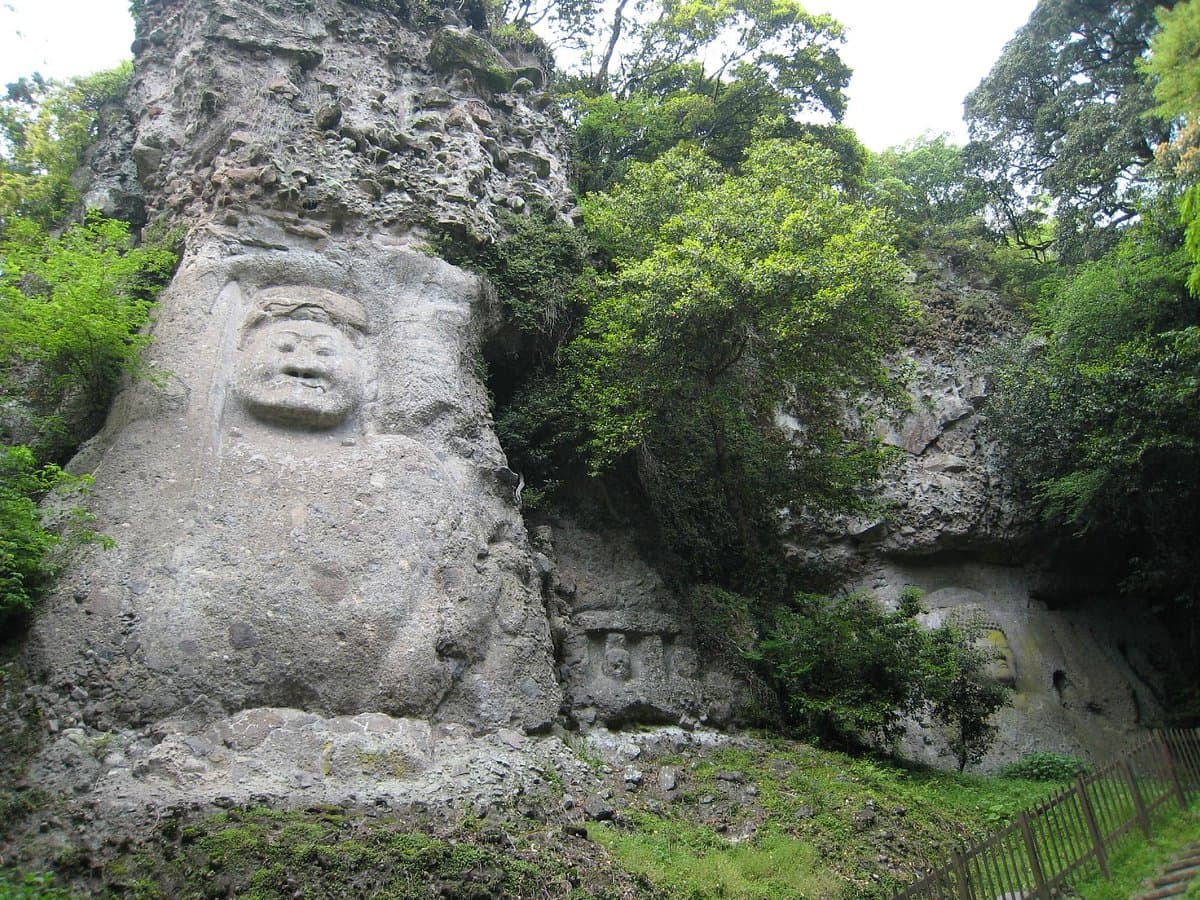
Kumano Magaibutsu is home to some of the largest and most significant stone Buddhist statues carved directly into rock faces on the Kunisaki Peninsula. These impressive carvings, believed to date from the late Heian period (11th to 12th century), offer a glimpse into Japan's rich Buddhist heritage and are a testament to ancient craftsmanship. The site is particularly noteworthy for its two main statues, a Fudo Myoo and a Dainichi Nyorai, which stand prominently amidst the natural rock formations.
Visitors consistently praise the serene and natural setting of Kumano Magaibutsu, with the statues nestled within a beautiful forest. Many find the experience of reaching the carvings to be part of the adventure, describing the path as well-maintained gravel, initially gentle before becoming increasingly steep. The presence of handrails and walking sticks (available at the reception) is frequently mentioned as helpful, especially on the more challenging sections. The historical significance of the carvings, combined with the tranquil atmosphere, contributes to a memorable visit for those who appreciate cultural sites integrated with nature.
For a comfortable visit, it is advisable to wear sturdy, non-slip shoes due to the steep and potentially slippery path, especially after rain. Reviewers suggest allocating about 1 to 1.5 hours for the visit, which includes the climb and time to appreciate the statues. Walking sticks are highly recommended and can be borrowed at the information desk. It's best to visit during dry weather to minimize the risk of slipping. While the site is generally quiet, arriving earlier in the day might offer a more solitary experience.
Kumano Magaibutsu is best accessed by car or as part of an organized bus tour, as public transport options are limited. A small road leads through nature to the site. There is a parking lot with a toilet just before the final ascent. If the red light at this lower lot is on, it indicates that the upper parking lot near the information desk is full, requiring visitors to park below and walk up. This walk from the lower parking lot adds to the overall ascent. Some visitors mention that the site is located about five kilometers south of Maki Odo, another notable site on the peninsula, making it feasible to combine visits.
A common complaint relates to the steepness and potential slipperiness of the path, particularly for older visitors or those with mobility issues. Some reviewers explicitly warn that it is not recommended for individuals with cardiac or ankle problems. To mitigate this, visitors should assess their physical condition before attempting the climb, utilize the provided walking sticks, and take their time. The limited number of statues (only two main ones) might also be a point of consideration for those expecting a larger complex, but the quality and historical value of these carvings are generally considered to outweigh the quantity.