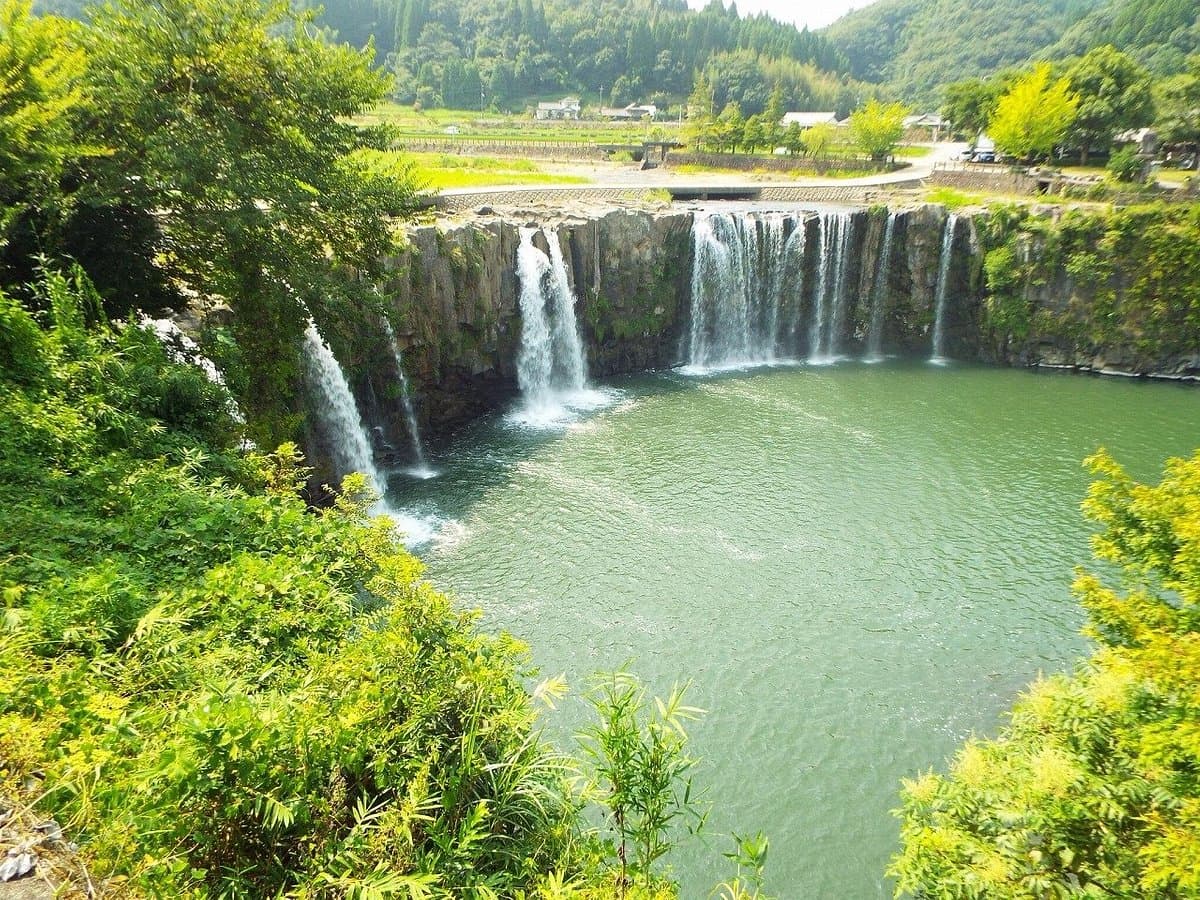
Harajiri Falls is a distinctive natural landmark in Oita Prefecture, often referred to as the 'Oriental Niagara' due to its impressive width and unique formation. Unlike many waterfalls nestled deep in mountains, Harajiri Falls emerges unexpectedly in a flat, rural landscape, making it a rare and captivating sight. Its V-shaped cascade over a vertical rock face, combined with its accessibility, makes it a significant natural attraction in the region.
Visitors consistently praise the accessibility and the various viewpoints available. Many enjoy walking across the suspension bridge for panoramic photos and then exploring the area around and even behind the falls. The ability to descend to the riverbank is a highlight for families, with children often enjoying playing in the mist. The surrounding area, particularly during the tulip season in April, adds another layer of beauty, though some note that the falls themselves can appear less dramatic during dry periods.
For a fulfilling visit, allocate about 1-2 hours. The best time to visit is after the rainy season or typhoons, when water levels are high, ensuring a more powerful and impressive cascade. Early April is also popular due to the Tulip Festival, though this can mean larger crowds and potential parking changes. Consider bringing comfortable shoes for walking around the falls and down to the riverbed. A camera is highly recommended for the numerous photo opportunities, especially from the suspension bridge.
Harajiri Falls is conveniently located next to a roadside station (Michi-no-Eki Ogata), which offers parking, restrooms, and local products like yogurt drinks and gelato. The falls are about a 1-minute walk from this station. If driving, the falls are well-signposted from the main roads. During the Tulip Festival, visitors mention that the main parking near the falls might be closed, requiring parking further away and taking a shuttle bus. This is an important consideration for those visiting in April.
A common complaint, particularly from those visiting outside the rainy season, is that the waterfall's flow can be less impressive. To mitigate this, check local weather reports for recent rainfall or plan your visit for late summer or early autumn when water levels are generally higher. During peak seasons like the Tulip Festival, expect crowds and be prepared for alternative parking arrangements and shuttle services.