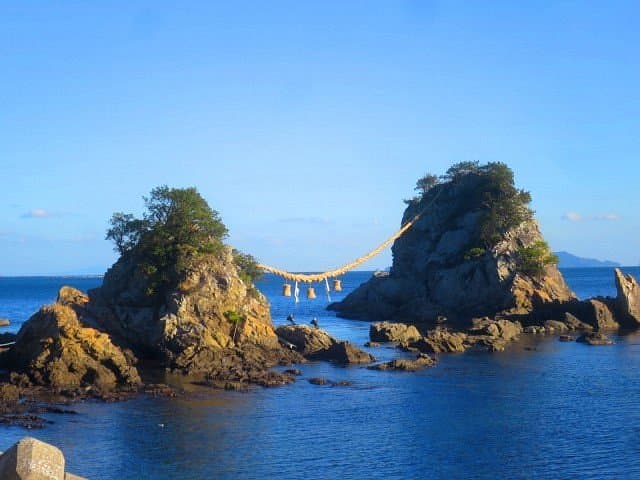
Bungo Futamigaura is a scenic coastal spot in Saiki, Oita Prefecture, famous for its 'Meoto Iwa' or 'husband and wife' rocks. These two large rock formations, one larger than the other, are connected by a 'shimenawa' (sacred rope), symbolizing a marital bond and often associated with good fortune and fertility. It's a significant cultural and natural landmark, offering a glimpse into Japan's Shinto traditions intertwined with natural beauty.
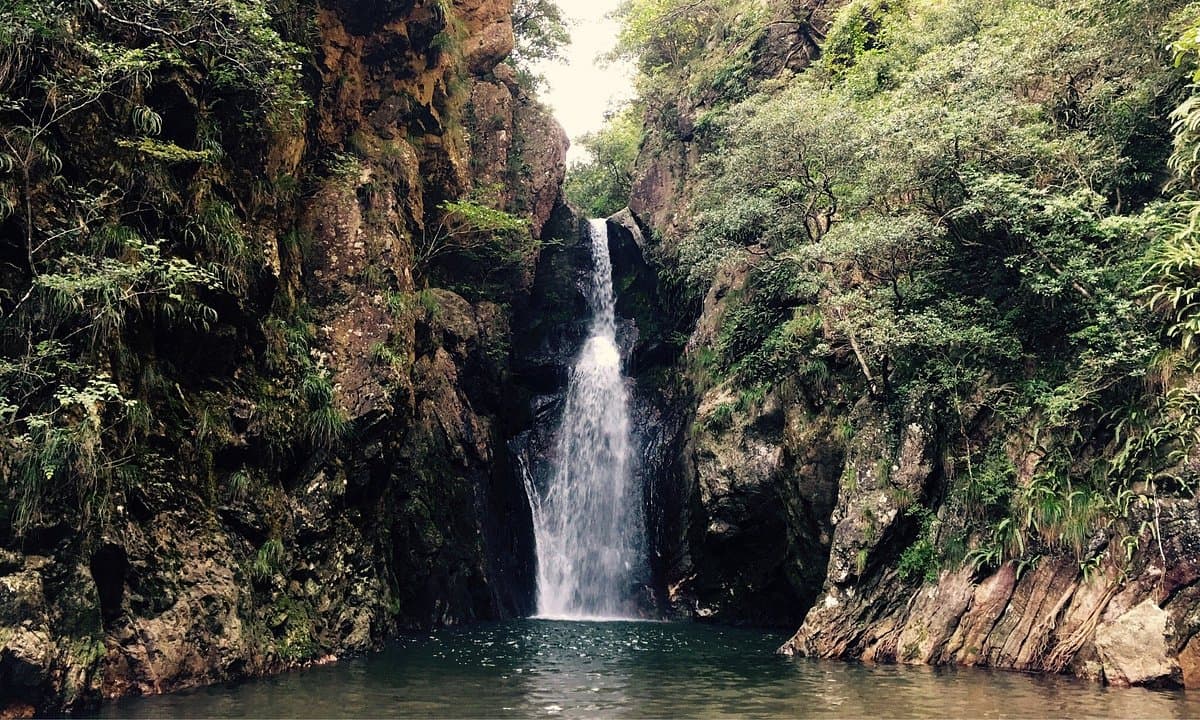
Visitors consistently praise the peaceful atmosphere and the unique visual appeal of the rocks, especially when viewed against the ocean. The area is often described as charming and a pleasant place for a quiet stroll. Reviewers suggest combining a visit here with a stop at a nearby shrine, which often features a small waterfall, enhancing the overall experience of natural and spiritual beauty. The relatively uncrowded nature of the site allows for a more reflective and personal experience compared to more bustling attractions.
To make the most of your visit, consider going in the early morning for a serene experience and potentially better light for photography. While there isn't a specific entry fee, visitors should allocate about 30 minutes to an hour to fully appreciate the rocks and the surrounding coastal views. There are no specific items to bring, but comfortable walking shoes are advisable if you plan to explore the immediate vicinity or walk to the nearby shrine.
Accessing Bungo Futamigaura requires some planning. One reviewer mentioned taking National Route 217 from Tsukumi City towards Saiki, noting the site appears shortly after entering Saiki City. Another visitor detailed taking a train to Azamui Station, then walking to a shrine before reaching Futamigaura. This suggests that while public transport (train to Azamui Station) is an option, a significant walk (around 30 minutes from the station) is involved. Driving appears to be a more convenient option for many, with a junior high school parking lot mentioned as a possible parking spot, though official parking information is limited.
Common complaints are few, primarily revolving around the site's relative remoteness and the effort required to reach it, especially without a car. To mitigate this, plan your transportation in advance, considering a rental car for greater flexibility or being prepared for a walk from Azamui Station. There are no reported issues with crowds or commercialization, ensuring a tranquil visit.