Rinsen-ji Temple holds significant historical importance as the place where Uesugi Kenshin, one of Japan's most revered samurai warlords of the Sengoku period, spent his formative years from age 7 to 14. Founded in 1497 by Kenshin's grandfather, Nagao Yoshikage, the temple is considered foundational to Kenshin's character, known for his high education and deep religious devotion. It also serves as the burial ground for Uesugi Kenshin himself.
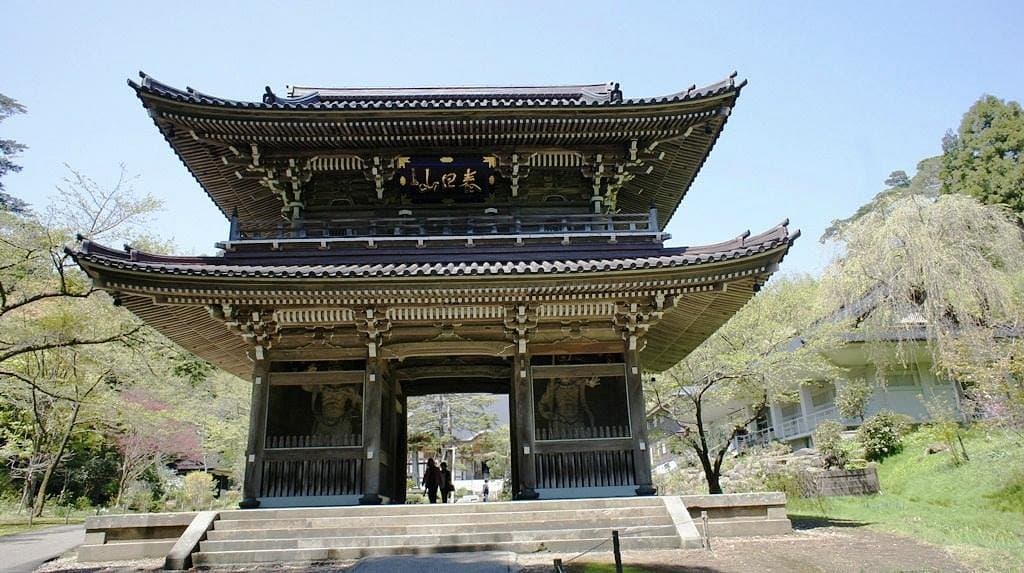
Visitors consistently praise the temple's serene atmosphere and its historical connection to Kenshin. Reviewers highlight the impressive wooden main gate (mon), the small but lovely temple garden, and the main temple building. The presence of a small museum, though photography is not allowed inside, is also noted as a valuable addition for understanding the history. The burial grounds, located to the left of the main temple, are a key point of interest for many.
To make the most of a visit, it is recommended to allocate approximately 1 to 2 hours. The temple opens at 10 AM, and arriving shortly after opening or later in the afternoon might offer a quieter experience. Comfortable walking shoes are advisable, as the temple is situated on a hill and involves some steps. While the museum is small, it provides context, so visitors interested in Kenshin's life should plan to spend some time there. The entry fee is 500 JPY.
Rinsen-ji Temple is located at 1-1-1 Nakamonzen, Joetsu, Niigata Prefecture. Reviewers mention it is "tucked away in the forest at the base of the hill below Kasugayama Shrine." While specific public transport details are not frequently mentioned in reviews, its proximity to Kasugayama Shrine suggests it might be accessible via local bus routes or a taxi from Joetsu-Myoko Station or Takada Station. Driving to the temple is also an option, though parking availability is not explicitly detailed in visitor comments.
Common complaints are not widely reported, but visitors should be aware that the museum is small and photography is restricted inside. Those expecting a large, sprawling complex might find it more modest in scale. The temple's location on a hill means there are steps, which could be a consideration for visitors with mobility issues.