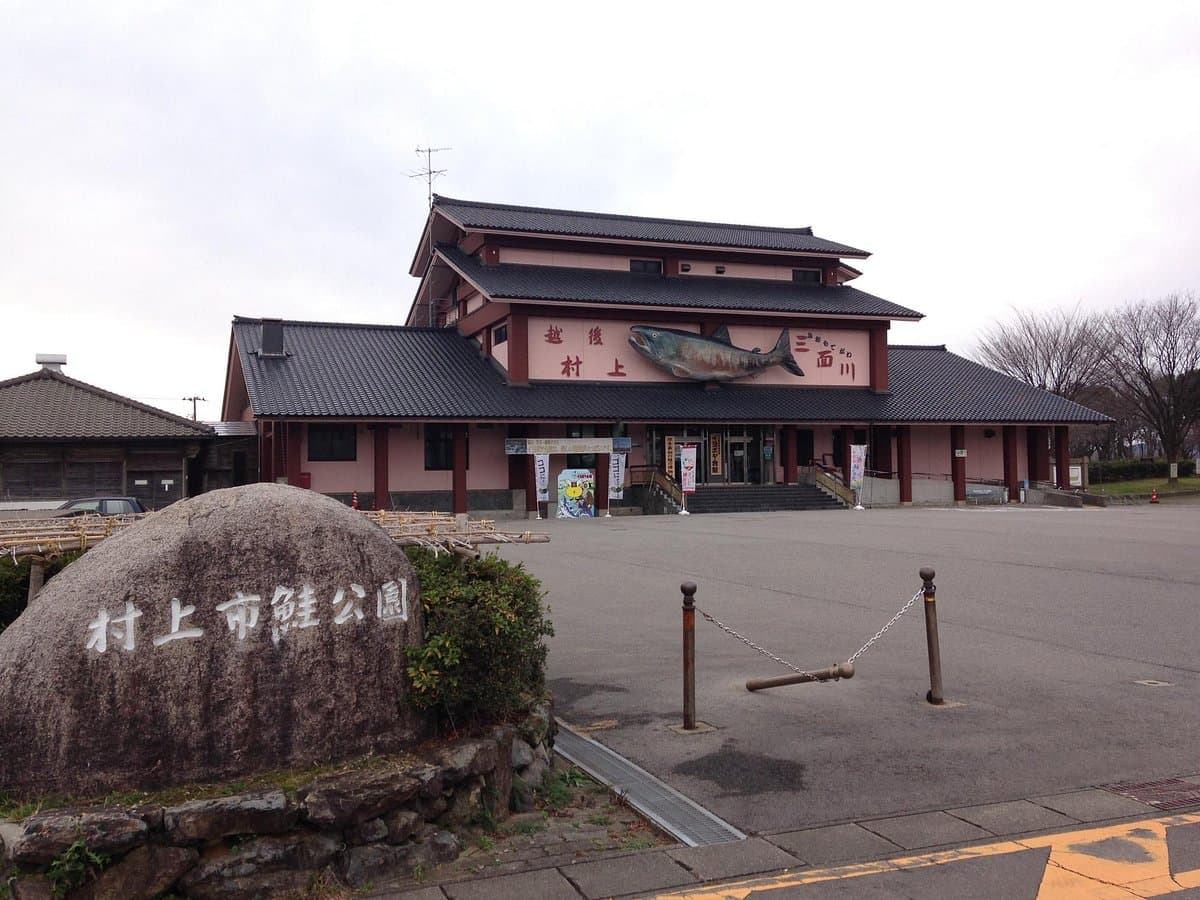
Iyoboya Kaikan is a specialized museum in Murakami, Niigata Prefecture, focusing entirely on the salmon, a fish deeply intertwined with the region's history and culinary identity. It serves as an educational center, showcasing the salmon's life cycle, its importance to the local economy, and traditional fishing methods. The museum is particularly notable for its direct connection to the Miomote River, allowing visitors to observe salmon in their natural habitat through underwater windows.
Visitors consistently praise the unique opportunity to see live salmon, especially baby salmon if timed correctly. The museum's displays, including fish tanks with various river critters like salamanders, are often described as engaging and well-presented. Reviewers appreciate the educational aspect, with information on salmon, trout, and char. The 7-minute historical film about salmon is also mentioned as an informative highlight. However, a recurring theme in reviews is the language barrier; some visitors note that without understanding Japanese, the depth of the information might be lost, making the experience less enriching for non-Japanese speakers.
To make the most of your visit, consider bringing a translation app or a Japanese-speaking companion if you don't understand the language, as much of the detailed information is in Japanese. The recommended time to spend here is approximately 1-2 hours. The best time to visit for observing salmon is during their spawning season, typically late autumn to early winter, when they return to the river. If you're interested in seeing baby salmon, inquire about their hatching season. There are no specific items to bring beyond personal essentials.
Iyoboya Kaikan is located at 13-34 Shiomachi, Murakami. While specific public transport details are not frequently mentioned in reviews, Murakami is accessible by train. From Murakami Station, the museum would likely require a short taxi ride or a longer walk. Driving is also an option, and parking should be available on-site or nearby. It's advisable to check local bus routes or taxi availability from Murakami Station for the most convenient access.
The main complaint revolves around the language barrier. To mitigate this, prepare by downloading offline translation tools or consider hiring a local guide if you wish to delve deeper into the exhibits. Despite this, many find the visual experience of the live fish and the overall presentation charming and educational, even with limited Japanese comprehension.