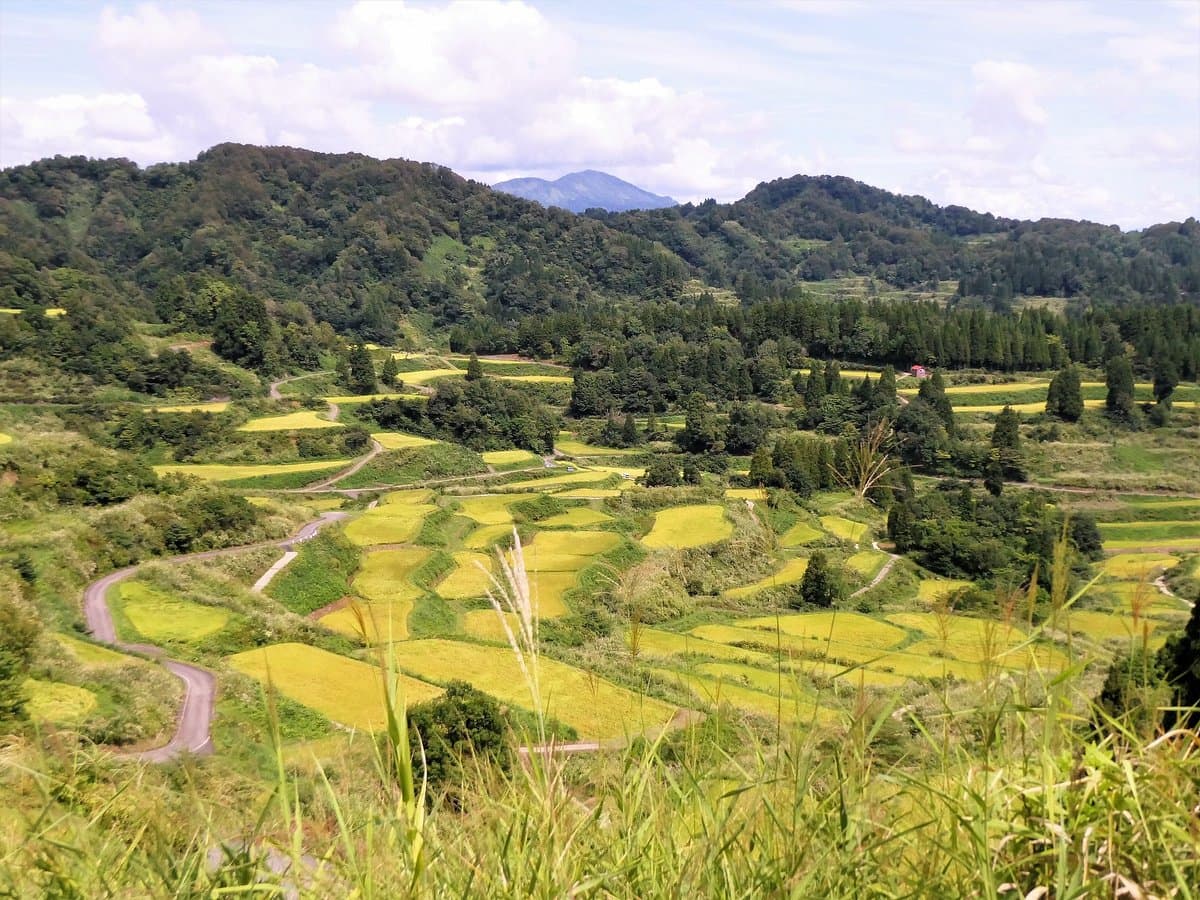
The Hoshitoge Rice Terraces are a renowned agricultural landscape in Tokamachi, Niigata Prefecture, celebrated for their scenic beauty and the unique patterns created by the terraced rice paddies. This site is particularly significant for its visual appeal, offering photographers and nature enthusiasts a dynamic canvas that transforms with the seasons, from water-filled reflections in spring to lush green in summer, golden hues in autumn, and snow-covered vistas in winter.
Visitors frequently describe the views as 'breathtaking' and 'exceeding expectations,' even on overcast days, noting the 'gorgeous twirl of fog' and the 'brilliant green' of the paddies. The serene atmosphere, often described as 'quiet and so beautiful,' is a consistent highlight, with many appreciating the opportunity for peaceful contemplation away from crowds. The changing seasons are a major draw, with reviewers mentioning the beauty of water-filled fields in May, vibrant green in August, and the potential for autumn colors or winter snowscapes. Several recommended spots for photography are noted, suggesting visitors explore different vantage points.
To fully appreciate the terraces, visitors should plan their trip according to the desired seasonal view. May, when the fields are filled with water, and August, for the lush green, are popular choices. An overcast day or light rain can enhance the mystical atmosphere, as noted by some reviewers. Bringing a camera is essential, and comfortable shoes are advisable for exploring the viewpoints. While some suggest a 'quick detour' if driving, many find themselves spending more time than anticipated, soaking in the views. Consider staying overnight in the area, as suggested by one reviewer who recommended the Shiba Toge Unkai hotel Matudai, to experience different lighting conditions, such as sunrise or sunset.
Access to the Hoshitoge Rice Terraces primarily requires a car, as public transport options are limited. Reviewers frequently mention 'a pretty drive up through Matsudai' to reach the site, indicating that the journey itself is part of the experience. There are no specific public transport lines mentioned in reviews, reinforcing the need for personal vehicle access. Parking is generally available at the various viewpoints along the mountain pass.
A common complaint, or rather a point of consideration, is that the terraces might not live up to expectations if visited during an 'off-season' or if the weather conditions are not ideal for photography. To mitigate this, check local weather forecasts and seasonal conditions before visiting. While the beauty is undeniable, some visitors might find the remote location challenging without a car. Planning your visit as part of a larger driving tour of the Niigata Prefecture can make the journey more worthwhile.