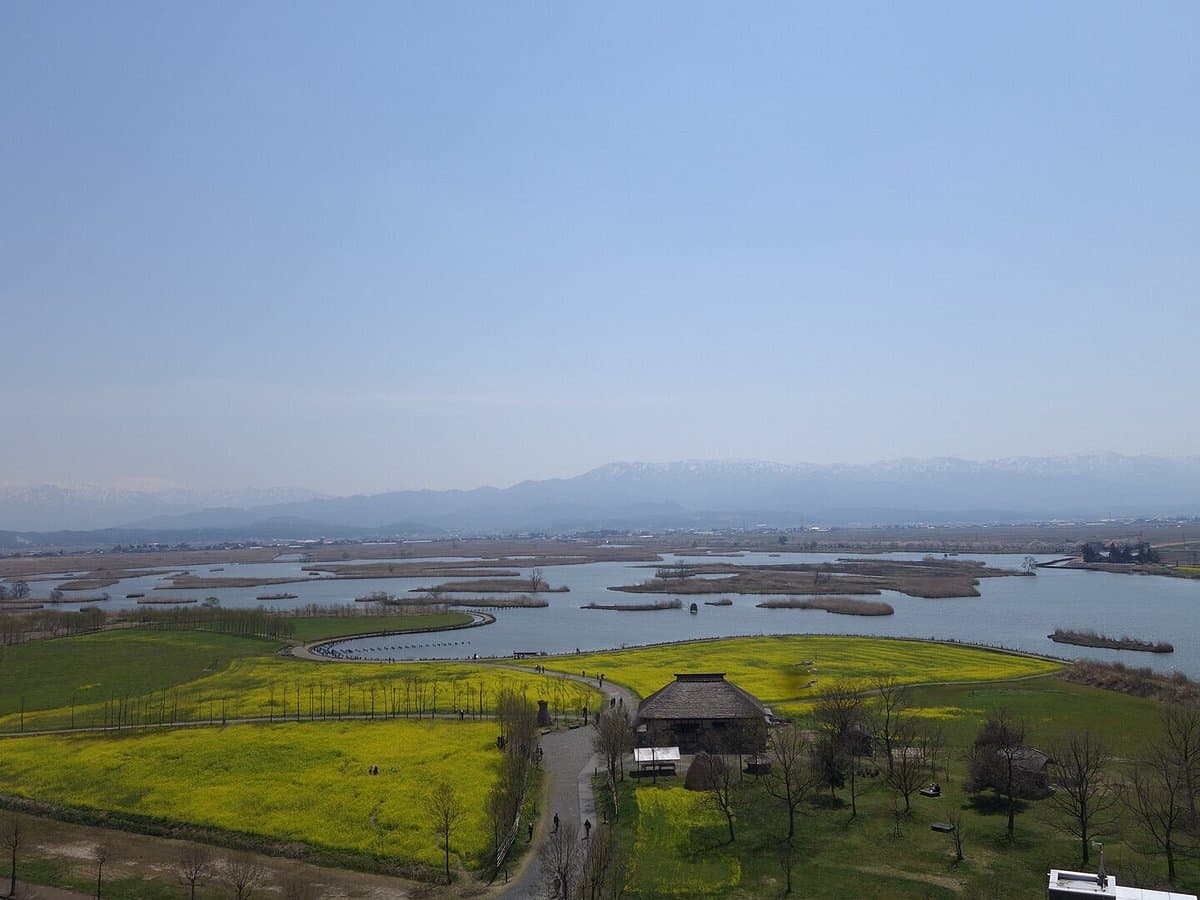
Fukushimagata is a significant wetland area in Niigata, serving as a vital breeding ground for migratory birds, notably white swans, before their return to Russia. Beyond its ecological importance, the area also holds historical value, with evidence of human habitation, fishing, and farming dating back millennia. Today, it functions as a nature park, offering both recreational opportunities and educational insights into its rich natural and cultural heritage.
Visitors consistently praise the natural beauty and tranquility of Fukushimagata. Many highlight the spectacular seasonal displays, such as the "yellow carpet" of canola flowers in April, which creates a vibrant landscape. The opportunity for birdwatching, especially during migration seasons, is a major draw, with various species frequenting the wetlands. Reviewers appreciate the well-maintained walking paths that allow for exploration around and through the lake and wetlands, often accompanied by informative signs detailing the local ecosystem and history.
For an optimal experience, consider visiting in April to witness the blooming canola flowers and active birdlife. While some visitors suggest a visit of 30 minutes to an hour, others recommend allowing more time to fully explore the walking paths and enjoy the peaceful atmosphere. Bringing binoculars for birdwatching is advisable. The park is generally accessible, but comfortable walking shoes are recommended for the paths. There are no specific complaints about crowds, suggesting it remains a relatively peaceful destination.
Reaching Fukushimagata requires a combination of train and taxi. From Tokyo, take the Shinkansen to Niigata Station (approximately 2 hours). From Niigata, take a local train to Toyosaka Station (about 21 minutes). Upon arrival at Toyosaka Station, a taxi ride to Fukushimagata costs approximately 1800 yen. Visitors planning their return journey should factor in the need to call a taxi from the park back to the station, as they are not always readily available.
While generally positive, some visitors note that the park might not offer enough engagement for those not specifically interested in nature or birdwatching, suggesting it could be a shorter visit for some. To mitigate this, focus on the specific seasonal attractions or plan your visit around peak bird migration times to maximize your experience.