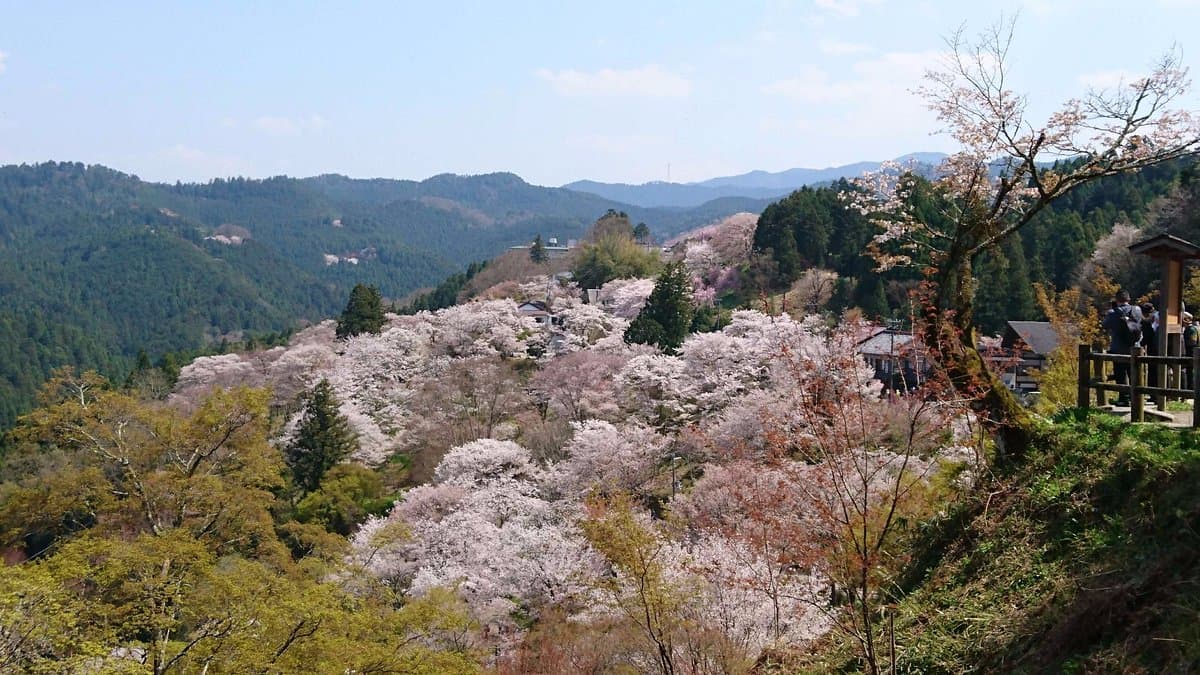
Mt. Yoshino, or Yoshinoyama, is a UNESCO World Heritage site celebrated for its unparalleled beauty, particularly during the cherry blossom season. It's not just a mountain; it's a cultural landscape dotted with ancient temples and shrines, deeply intertwined with Japan's spiritual history. The mountain is divided into four main areas—Shimo Senbon (lower), Naka Senbon (middle), Kami Senbon (upper), and Oku Senbon (inner)—each offering distinct views as the blossoms unfold sequentially from lower to higher elevations.
Visitors consistently rave about the sheer abundance of cherry trees, describing the sight as a 'forest of cherry trees' or 'clusters of pink sweet cotton candy flowing from the mountain.' Many highlight the unique experience compared to urban cherry blossom viewing, emphasizing the natural, powerful beauty. Reviewers frequently mention the joy of walking amidst the blossoms, exploring the various viewpoints like Hanayagura, and discovering the numerous shops and eateries along the main street. However, a recurring theme is the extreme crowds during peak cherry blossom season, with some describing it as 'extremely crowded' and queues for transport being 'ridiculous.'
To make the most of your visit, especially during peak sakura, planning is crucial. Check cherry blossom forecasts on sites like Japan-Guide.com well in advance, as timing is everything; arriving too early or too late can significantly impact the experience. Many recommend arriving early in the morning, even before sunrise, to avoid the worst of the crowds and secure parking if driving. Wear comfortable walking shoes, as exploring involves considerable walking and steep slopes. Bringing your own snacks and drinks is a good idea, though many shops are available. Consider staying overnight in a local ryokan to experience the area more deeply and avoid the day-trip rush. While the cherry blossoms are the main draw, some visitors have also enjoyed the autumn foliage, though it's less famous for this.
Getting to Mt. Yoshino requires some planning. The most common route is via the Kintetsu Line to Yoshino Station. Many visitors take the Kintetsu Limited Express from Osaka-Abenobashi Station (adjacent to JR Tennoji Station), which takes about 1 hour 15 minutes. From Yoshino Station, options include taking the ropeway, shuttle buses (which operate only during cherry blossom season), or walking. Reviewers advise against the ropeway during peak times due to long queues, suggesting the bus or walking instead. Private car access is restricted during cherry blossom season, with parking often filling up before 1 a.m. for those who attempt to drive. Taxis are also an option from Kashihara Jingu-mae Station for those seeking efficiency or with physical limitations.
The primary complaint revolves around the overwhelming crowds and associated logistical challenges during peak cherry blossom season. To mitigate this, aim for weekdays if possible, arrive very early, or consider visiting slightly before or after the absolute peak bloom. While some areas might be past their prime, others will still be beautiful, and the crowds will be significantly thinner. Be prepared for long waits for public transport and limited seating at restaurants. Embrace the walk; many reviewers found walking from the station or between the 'Senbon' areas to be enjoyable, with cherry blossoms lining the paths.