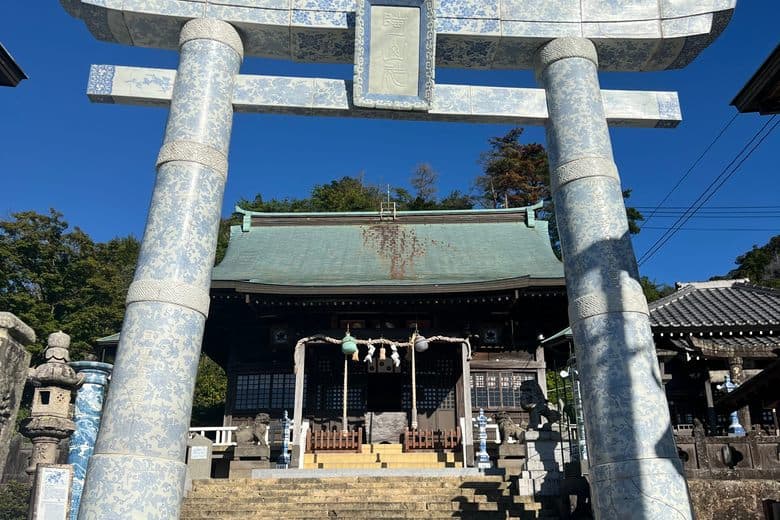
Tozan Shrine, also known as Sueyama Shrine, stands as a testament to Arita's rich history as a premier center for Japanese porcelain production. Unlike traditional Shinto shrines, Tozan Shrine incorporates locally crafted porcelain extensively, from its intricate Torii gate to various decorative elements. This unique integration of porcelain, including blue and white Sometsuke, colorful Kinsai, Kinrande, and plain white Hakuji, makes it a significant cultural property and a must-see for those interested in Japanese artistry and craftsmanship.
Visitors consistently praise the shrine's distinctive porcelain Torii gate, designated a Tangible Cultural Property, for its beauty and uniqueness. Many are also captivated by the surreal experience of an active train line running directly in front of the shrine, requiring visitors to cross the tracks to enter. This unusual juxtaposition of sacred space and modern transport is frequently highlighted as a memorable aspect of the visit. Reviewers often recommend taking time to appreciate the detailed porcelain work and the serene atmosphere, despite the occasional train passing by.
For a fulfilling visit, allocate approximately 1 to 1.5 hours to explore the shrine grounds, admire the porcelain details, and take in the views. The best time to visit is during daylight hours to fully appreciate the craftsmanship and the surrounding townscape. Consider purchasing unique porcelain lucky charms and fortunes available at the shrine as traditional souvenirs. While the shrine itself is not physically demanding, navigating the town of Arita may involve some walking on uneven surfaces.
Arita is somewhat remote, and while driving offers the most flexibility, public transport is a viable option. If traveling by train, take the Sasebo Line and alight at Kami-Arita Station. Direct trains are available from Sasebo, Saga, or Takeo Onsen. From Nagasaki or Fukuoka, a train change will be necessary before boarding the Sasebo Line to Arita. The shrine is a short walk from Kami-Arita Station. For those driving, parking options are available in the vicinity, though specific details may vary.
The primary 'complaint' or rather, a unique feature, is the active train line. While it adds to the shrine's distinctiveness, visitors should be mindful of train schedules and exercise caution when crossing the tracks. There are designated crossings that close when a train approaches, ensuring safety. Some visitors might find the remote location challenging to reach, but planning your journey in advance, especially train connections, can mitigate this.