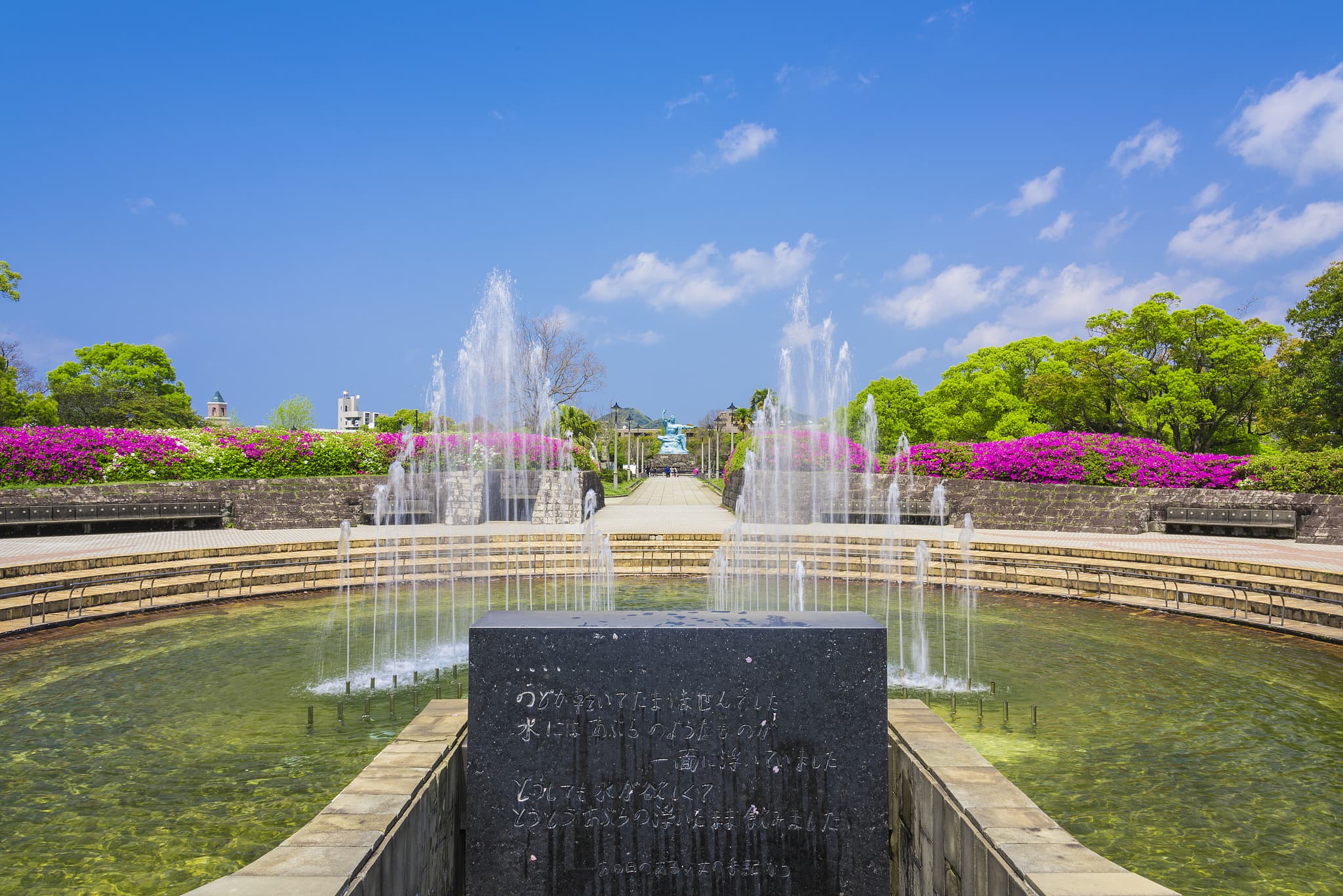
Nagasaki Peace Park stands as a solemn testament to the devastating atomic bombing of August 9, 1945, and a powerful global appeal for peace. Built on a hill north of the hypocenter, it serves as a memorial to the victims and a constant reminder of the horrors of nuclear warfare. The park's central features, such as the iconic Peace Statue and the Peace Fountain, are imbued with deep symbolism, reflecting the city's enduring wish for a world free from such destruction.
Visitors consistently praise the park's serene and contemplative atmosphere, noting its ability to evoke a sense of reflection and hope. Many find the collection of international peace monuments, donated by various countries, particularly moving, as they symbolize a collective desire for peace. Reviewers often recommend visiting the park after the Atomic Bomb Museum, as it provides a more hopeful and reflective counterpoint to the museum's somber historical accounts. The park is frequently described as well-maintained, clean, and surprisingly uncrowded, even with school groups present, allowing for a personal and impactful experience.
To make the most of your visit, allocate 1 to 2 hours to explore the park thoroughly. Many visitors suggest taking the time to read the inscriptions on the various statues and monuments, as they offer profound messages of peace and remembrance. The park is particularly peaceful in the mornings or late afternoons, allowing for quieter contemplation. While the park itself is free to enter, consider bringing water, especially during warmer months, as some areas are exposed to the sun. Reviewers note that the park is suitable for all ages and mobility levels, with escalators available to assist with the elevation changes.
The Nagasaki Peace Park is easily accessible by public transport. Many visitors recommend taking the tram to the "Peace Park" (Heiwa Koen) station, which is conveniently located almost directly in front of the park's entrance. From the station, escalators are available to transport visitors up to the main park level, making it accessible for those with mobility concerns or strollers. For those visiting the Atomic Bomb Museum first, the park is a short, easy walk away, often connected by pedestrian paths and escalators. Driving is also an option, with some reviewers mentioning free underground parking available, though public transport is generally preferred for convenience.
While most experiences are positive, some visitors find the park's main Peace Statue "garish" or less impactful than expected, especially when compared to Hiroshima's memorials. To mitigate this, focus on the broader message of peace conveyed by the numerous international sculptures and the overall atmosphere of reflection. A few reviewers also mention that the park can feel "smaller" than imagined; however, its poignancy and historical weight are universally acknowledged to outweigh its physical size. Visiting during off-peak hours can help avoid larger tour groups, enhancing the contemplative experience.