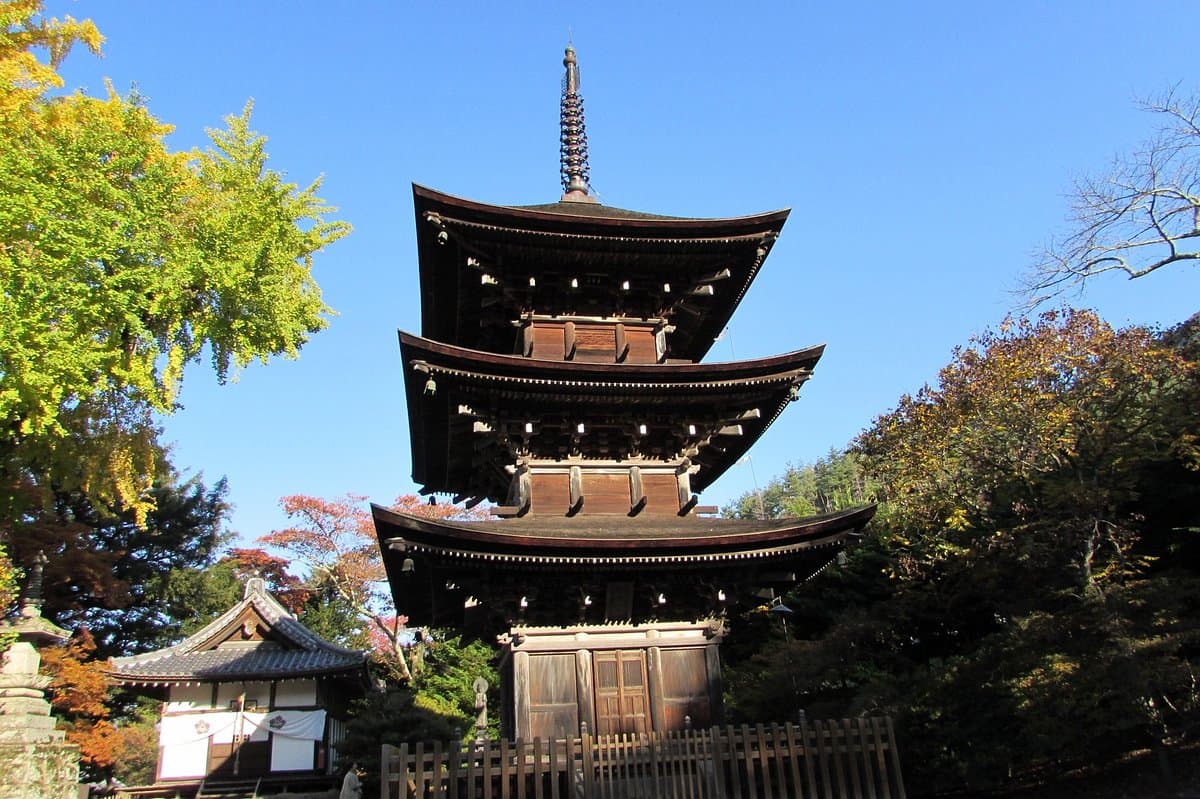
Zensanji Temple is an ancient Shingon sect temple located on the mountainside of Shiotadaira, near Ueda. It is particularly famous for its unique three-story pagoda, which some describe as 'unfinished' due to its distinct architectural style. This temple offers a glimpse into historical Japanese religious architecture and provides a tranquil setting away from the bustling city.
Visitors consistently praise the temple's serene atmosphere and the architectural beauty of the pagoda. Many find the 200 yen entry fee reasonable for the experience. The temple is also known for its 'Kurumi Ohagi' (walnut mochi), which some reviewers recommend trying. The ability to drive up close to the pagoda is a significant advantage, making it accessible even for those with mobility concerns.
To make the most of your visit, plan to spend about 1-2 hours exploring the grounds and the pagoda. Early mornings or late afternoons are often recommended for a more peaceful experience and better light for photography. While the temple itself is not large, taking time to appreciate the details of the architecture and the surrounding nature enhances the visit. Don't forget to bring some cash for the entry fee and any potential snacks like the 'Kurumi Ohagi'.
Zensanji Temple is accessible via the Heritage Bus. Reviewers mention purchasing a ¥500 day bus pass at Bessho Onsen, which covers the route. The bus schedule is precise, and it's advisable to check timings in advance, especially since there might be only one driver for the loop. For those driving, there are multiple parking lots available, but it's recommended to check their locations beforehand to ensure a smooth arrival.
A common point to note is the limited bus frequency, which can restrict the time spent at the temple if relying solely on public transport. To mitigate this, consider combining your visit with other attractions along the Heritage Bus route, or allocate sufficient time between bus connections. If driving, ensure you have clear directions to the parking areas to avoid confusion upon arrival.
