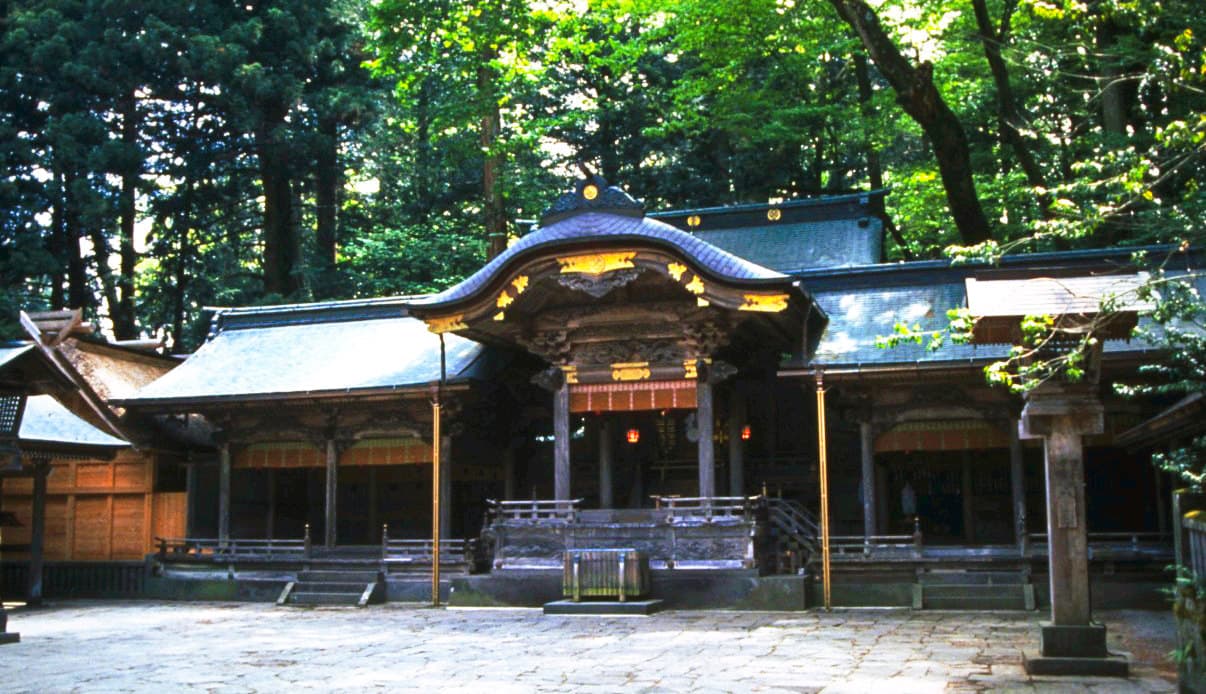
Suwa Taisha Shimosha Akimiya is one of the four shrines that make up the ancient Suwa Taisha complex, one of Japan's oldest and most historically significant religious sites. Dedicated to the god of farming and hunting, this particular shrine is celebrated for its serene atmosphere, traditional unpainted wooden architecture, and the massive sacred Onbashira pillars that are central to the famous Onbashira Festival.
Visitors consistently praise the shrine's peaceful ambiance and the beauty of its natural surroundings, particularly the ancient trees that create a dense, quiet grove. Many highlight the impressive size of the shimenawa (sacred rope) and the sacred yew tree, noting how these elements contribute to a profound sense of history and spirituality. The architecture, with its natural wood and subtle gold accents, is frequently admired for blending harmoniously with the environment. Reviewers often describe the experience as calming and reflective, a stark contrast to more bustling tourist spots.
To make the most of your visit, allocate 1-3 hours to explore the grounds leisurely. The shrine is particularly beautiful in the morning or late afternoon when fewer crowds are present, enhancing the tranquil experience. Visitors recommend taking time to observe the details of the shrine buildings and the ancient trees. It's advisable to wear comfortable shoes as you'll be walking on uneven paths. While there are specific rules for worship, simply observing the traditional hand-washing ritual before ascending the steps is a respectful gesture.
Suwa Taisha Shimosha Akimiya is conveniently located about a 15-minute walk from JR Shimo-Suwa Station, making it easily accessible by public transport. For those driving, ordinary car parking is available on-site. The shrine's location at a historical crossroads also means it's well-connected, attracting many worshippers and tourists alike.
While most visitors have positive experiences, some note that the shrine might feel less grand than other major Japanese shrines due to its unpainted, natural aesthetic. To mitigate this, approach the visit with an appreciation for its ancient origins and the subtle beauty of its natural integration, rather than expecting ornate, gilded structures. The focus here is on historical depth and spiritual tranquility.