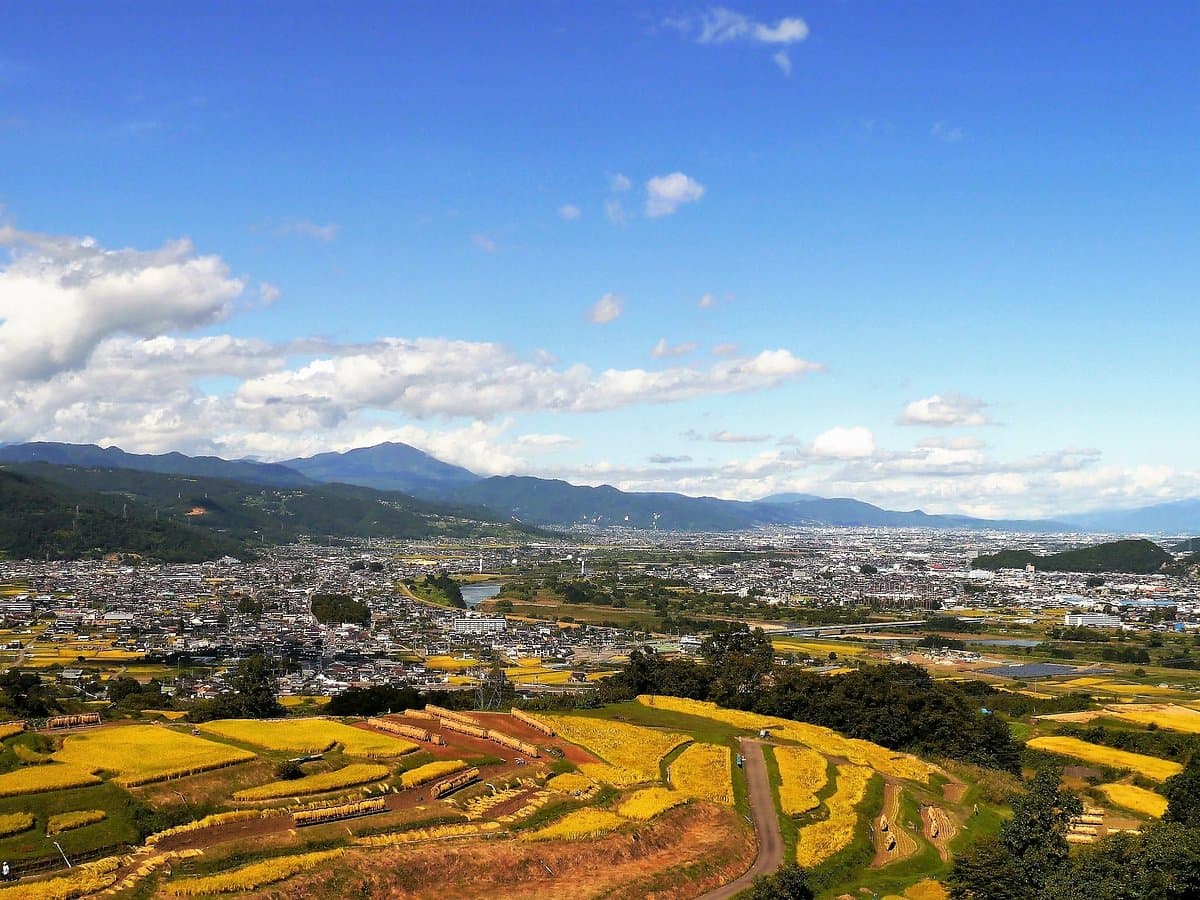
Obasute Tanada, or the Obasute Terraced Rice Fields, is a designated national scenic spot in Japan, renowned for its traditional agricultural landscape. These terraced fields are particularly famous for the legend that they reflect the moon in each individual paddy, creating a stunning visual effect. It represents a significant cultural and historical aspect of rural Japan, showcasing centuries-old farming practices.
Visitors consistently praise the unique beauty of the terraced fields, especially when they are filled with water, which typically occurs in late spring and early summer. Many reviewers highlight the convenience of viewing the fields directly from Obasute Station, noting that the station platform itself serves as an excellent observation deck. This makes it an ideal spot for a quick stop to appreciate the scenery, particularly for those traveling by train between Matsumoto and Nagano. Some visitors also appreciate the seasonal beauty of flowering trees in early May, even if the rice paddies are not yet filled with water.
To make the most of your visit, aim to come between late May and early July when the fields are irrigated and the rice seedlings are young, offering the best reflections. An early morning or late afternoon visit can provide softer light for photography. While the station platform offers good views, exploring the area around the station might offer different perspectives. There isn't a significant entry fee, and the primary activity is observation and photography. Consider bringing a good camera with a zoom lens to capture the details of the distant fields.
Obasute Tanada is exceptionally easy to access by train. It is located directly at Obasute Station on the JR Shinonoi Line, which connects Matsumoto and Nagano cities. The station platform itself provides excellent views of the terraced fields. For those driving, there might be limited parking options in the vicinity of the station, but the train remains the most convenient and recommended mode of transport for this particular attraction.
A common complaint is that the fields can appear dry and less impressive outside of the irrigation season, particularly in early spring before the water is introduced. To mitigate this, check local agricultural calendars or recent visitor photos to confirm the current state of the fields before your visit. While the station view is good, some visitors feel it doesn't offer the "full form" of the fields; however, for a quick stop, it provides a sufficient and memorable experience.
