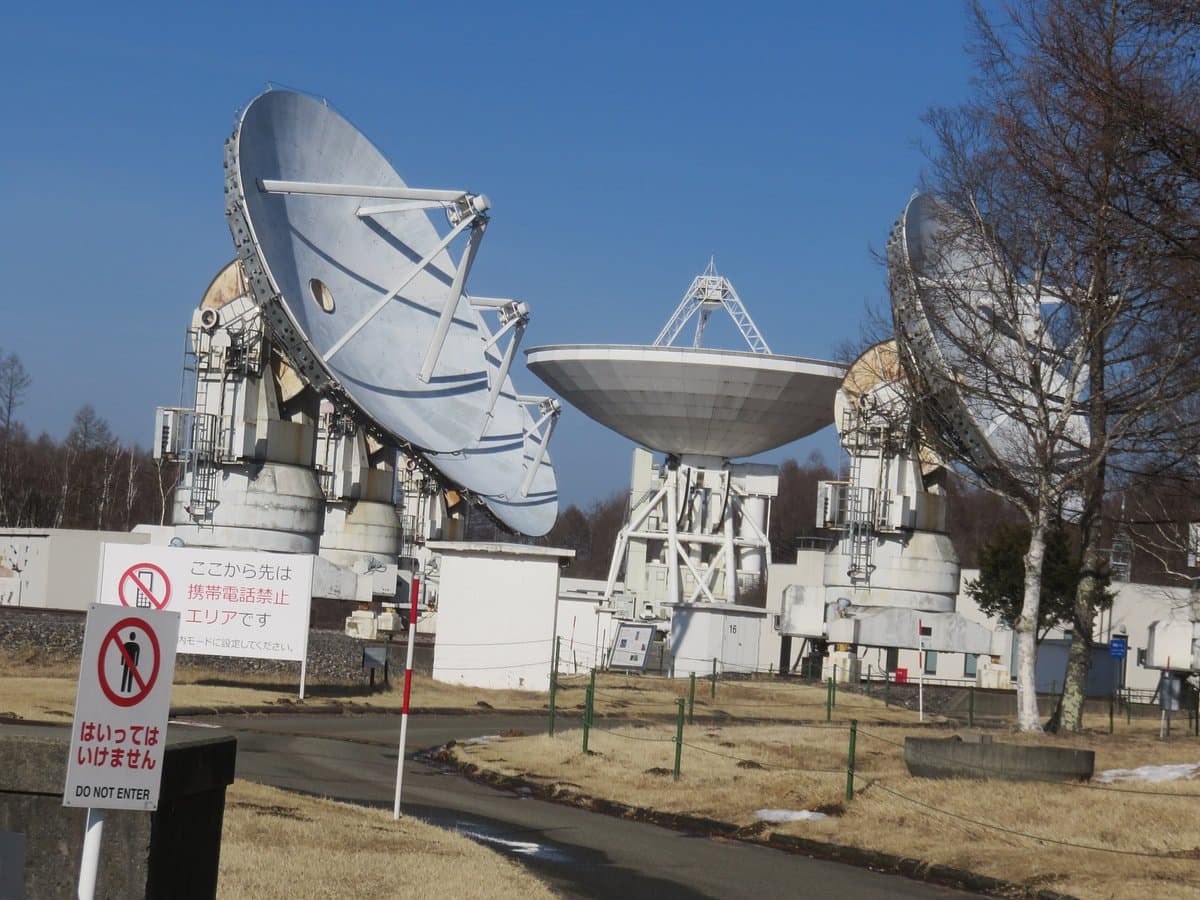
The National Astronomical Observatory of Japan Nobeyama is a significant scientific facility, home to some of the world's largest radio telescopes, including a 45-meter antenna and a 10-meter interferometer. It plays a crucial role in radio astronomy research and offers the public a unique glimpse into this field. Its remote, high-altitude location also makes it an excellent spot for stargazing.
Visitors consistently praise the impressive scale of the parabolic antennas, noting their 'spectacular' and 'huge' presence. Many describe the experience as feeling like being on a film set due to the futuristic appearance of the equipment. The free admission and ample free parking are frequently highlighted as major positives. While the main draw is the outdoor display of telescopes, some reviewers mention a small museum and a 3D cinema, adding to the educational aspect of the visit. The night tours are particularly recommended for those wanting to experience the starry sky and even catch a glimpse of the Milky Way.
To make the most of your visit, allocate about 60 minutes for a self-guided tour of the outdoor facilities. Reviewers suggest bringing a camera to capture the unique scenery. It's advisable to check the weather beforehand, as the observatory is outdoors and in a highland area. For night tours, warm clothing is essential, even in warmer months, due to the altitude. Remember to put your phone on airplane mode near the telescopes to avoid interference.
The observatory is located in a somewhat remote area. It is approximately 30 minutes by car from Kiyosato, and visitors consistently mention the large, free parking lot available on site. Public transport options are not widely mentioned in reviews, suggesting that driving is the most convenient way to reach the observatory. The surrounding area has a 'highland resort' feel, making the drive itself scenic.
A common point to be aware of is the remote location, which means limited public transport. Visitors should plan for a car journey. While the technical specifications of the telescopes might not be fully understood by all, the visual impact and the opportunity to explore such a facility freely are generally considered sufficient to make the trip worthwhile.