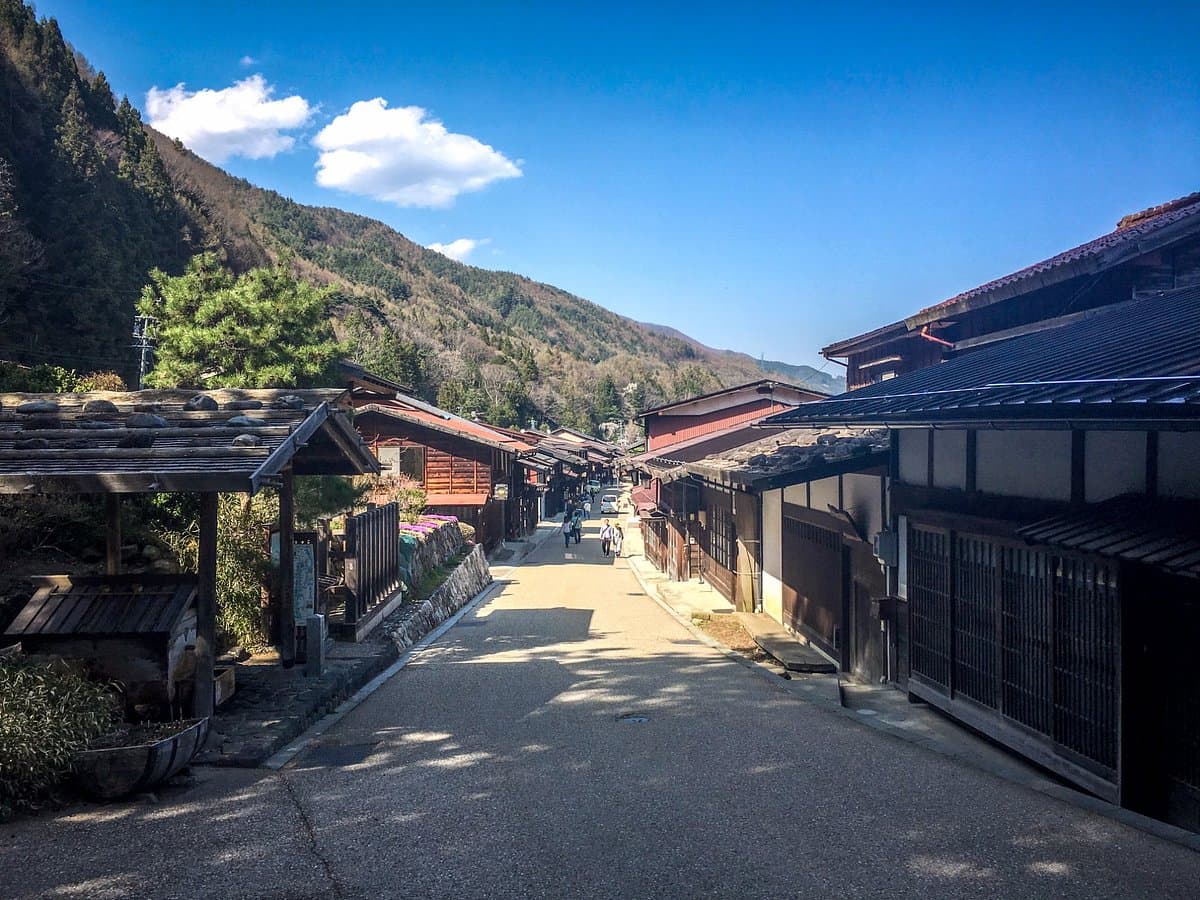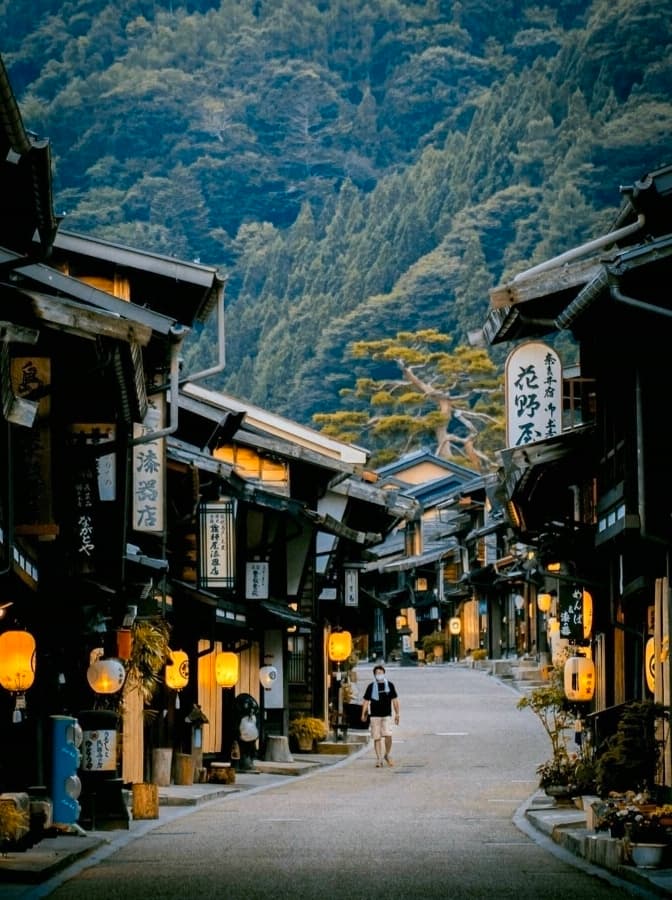
Narai-juku is a meticulously preserved post town along the historic Nakasendo Road, one of Japan's five ancient highways. It served as a crucial stop for travelers during the Edo period (1603-1868) and today offers an unparalleled glimpse into that era. The town's unique architectural style, characterized by slightly protruding second-floor beams, intricate lattice work, and long eaves supported by 'monkey head' wooden beams, creates a deeply charming and authentic atmosphere that sets it apart from other historical sites.
Visitors consistently praise Narai-juku for its ability to transport them back in time, describing it as a 'miraculous sight' and a place where 'time seems to stand still.' Many highlight the quiet and peaceful ambiance, especially compared to more famous post towns like Tsumago and Magome, making it an ideal destination for those seeking a tranquil experience. The main street, stretching about a kilometer, is lined with shops, sweets, and food establishments, offering opportunities to sample local delicacies like Wuping cakes and purchase traditional wooden tableware as souvenirs. The Kiso Ohashi Bridge and the Narai River also add to the picturesque scenery, with some reviewers recommending a visit to the bridge as another landmark.
To make the most of your visit, plan for 2-3 hours to leisurely explore the main street and its side alleys. While the town is open 24/7, shops and eateries typically operate until around 5 PM, so an early start is recommended to enjoy the full experience. Several visitors suggest finding something to cool off with if visiting on a hot summer day. The town is generally easy to navigate on foot, and a map, often provided by an officer, can help guide your exploration. Don't forget to look for the distinctive architectural details that make Narai-juku unique.
Getting to Narai-juku is relatively straightforward, despite its location 'deep in the mountains.' Many reviewers note its excellent accessibility by train. You can take a train from Nagano or Matsumoto and alight directly at Narai Station. The town is located very close to the station, making it easily reachable on foot. For those driving, a spacious parking lot is available, and it's just a short walk from there to the main street, adding to the convenience. While some mention it might be 'a little hard to find,' the train access seems to mitigate this concern for most.
A common observation is that the town can appear quiet, with shops not always obviously open from the outside. However, visitors advise simply exploring, as many establishments are indeed open. While there's 'only one main street,' the charm lies in the details of the architecture, the local crafts, and the overall atmosphere rather than a multitude of activities. Some visitors also note that it might be less well-known than other post towns, which contributes to its peacefulness but means fewer overt tourist amenities; however, this is often seen as a positive aspect, preserving its authentic feel.