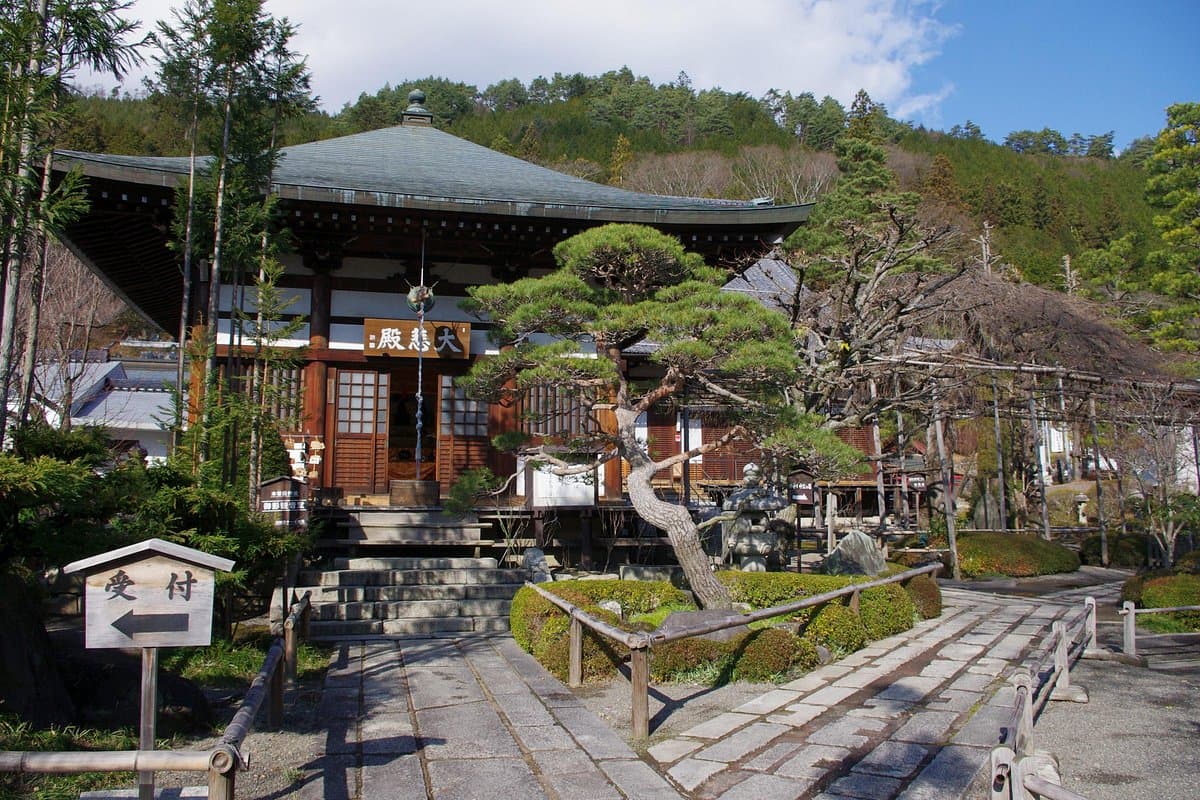
Kozen-ji Temple is a historic Buddhist temple in the Kiso Valley, renowned for housing one of Japan's largest karesansui (dry landscape) gardens. This significant cultural site offers visitors a glimpse into traditional Japanese aesthetics and spiritual tranquility, making it a notable stop for those interested in temple architecture and garden design.
Visitors frequently highlight the temple's peaceful ambiance and the beauty of its gardens, especially during the autumn months when the foliage displays vibrant colors. Many describe the experience as serene and conducive to quiet reflection. The main dry garden is a consistent point of praise, with its vast scale often surprising first-time visitors. Beyond the main garden, reviewers also mention a smaller, charming garden at the back and a mossy graveyard up the road, which offers unique photographic opportunities.
To make the most of your visit, allocate at least 1-2 hours to explore the grounds and gardens thoroughly. The best time to visit is undoubtedly during autumn for the spectacular fall colors, though the temple's tranquility can be enjoyed year-round. While the temple grounds are generally free to enter, there is a fee to access the main dry garden. It is advisable to bring cash for the entry fee, as some visitors have noted a lack of formal ticketing or brochures. Consider bringing a book or journal if you wish to spend time in quiet contemplation.
Kozen-ji Temple is conveniently accessible on foot from the nearest train station, Kiso-Fukushima. Several reviewers mention enjoying the walk to the temple, suggesting it is a pleasant and manageable distance. If driving, parking is generally available, though specific details are not widely mentioned in reviews.
A common complaint among some visitors is the lack of English information, particularly in the museum, which is primarily in Japanese. While this might be a minor drawback for some, the visual beauty of the gardens and the overall peaceful atmosphere can still be appreciated without extensive textual explanations. Some visitors also reported the treasure house being closed or the absence of Goshuin (temple stamps) on certain days, so it is advisable to check ahead if these are important aspects of your visit.