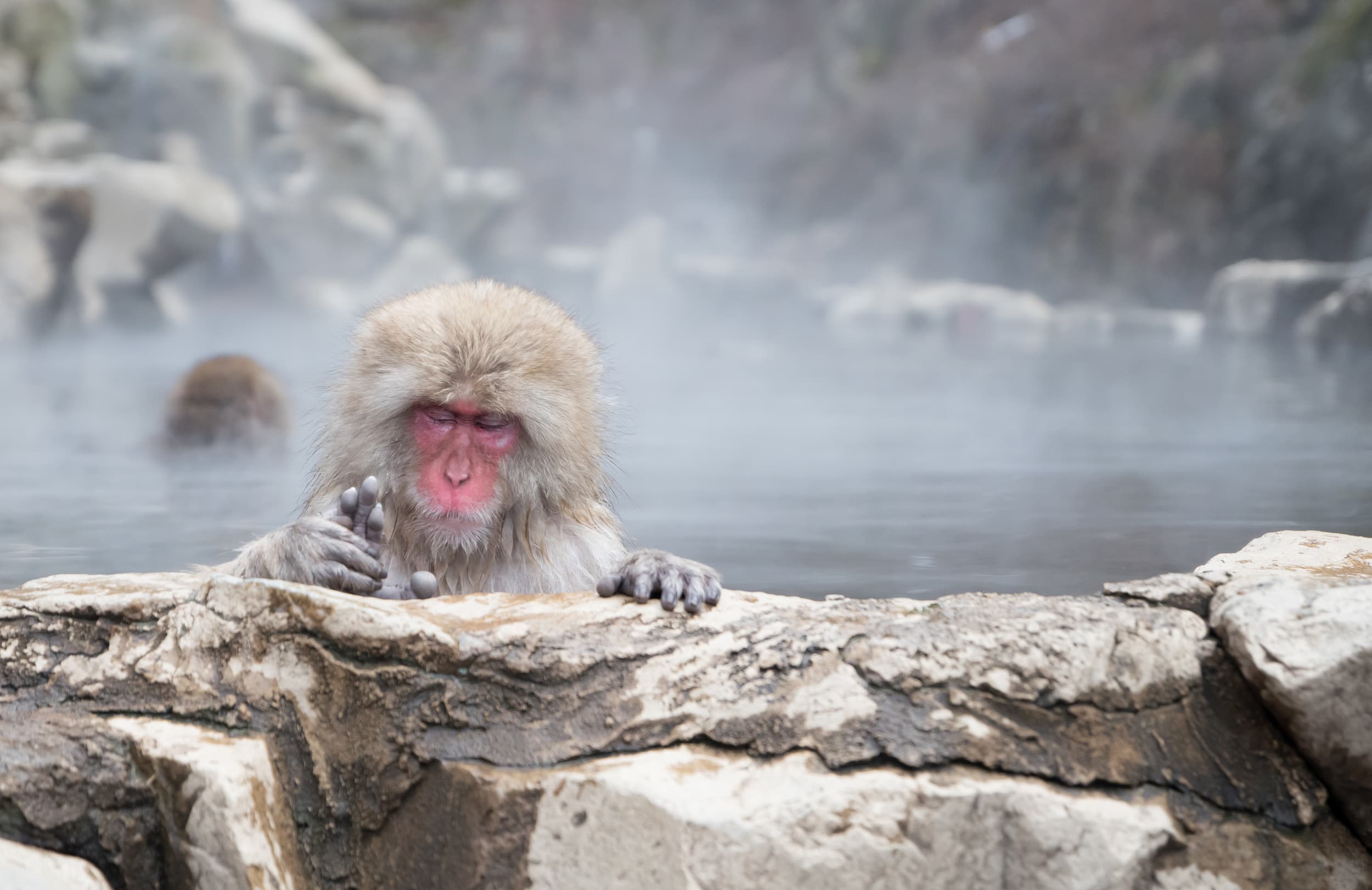
Jigokudani Monkey Park, nestled in Nagano Prefecture's 'Hell's Valley,' is a globally renowned nature reserve famous for its wild Japanese macaques, or 'snow monkeys.' These are the northernmost non-human primates, and their unique habit of bathing in natural hot springs, especially during the cold winter months, has made the park an iconic destination. The park provides a rare opportunity to observe these animals up close in a relatively natural setting, distinct from a zoo.
Visitors consistently praise the magical experience of seeing the monkeys interact freely, often ignoring human presence. Many describe the walk through the forest to the park as beautiful and enjoyable, contributing to the overall adventure. The sight of baby monkeys playing and adults grooming or relaxing in the hot springs is frequently highlighted as a heartwarming and memorable aspect. However, some visitors note that the experience can feel somewhat artificial due to the monkeys being fed by staff to keep them in the park, and the viewing area around the hot spring can become very crowded, especially later in the day.
To make the most of your visit, aim to arrive early, ideally around opening time (9:00 AM), to avoid large crowds and potentially see more monkey activity. The best time to witness monkeys in the hot springs is during the colder winter months (January to February), between 10:00 AM and 2:00 PM. During warmer seasons, monkeys may not use the hot springs as frequently, though they are still present and active in the park. Plan for a total visit duration of 2-3 hours, including the walk to and from the park. Bring good quality hiking shoes or boots, especially in winter, as the path can be muddy, icy, and slippery. Many reviewers recommend purchasing or renting crampons at the gift shop near the trail entrance for added safety. It's advisable to wear warm, layered clothing in winter, as temperatures can be very low. Do not bring food or drinks into the park, and maintain a respectful distance from the monkeys; they are wild animals.
Getting to Jigokudani Monkey Park requires some effort. From Nagano Station, visitors can take an express bus (Bus Stop 23) directly to the park entrance, which takes about an hour and costs around 1,500 JPY. Alternatively, take a local train from Nagano to Yudanaka Station, then a local bus or taxi to the park entrance. From the bus drop-off point, there is a significant walk of approximately 1.6 km (1 mile) through a forest trail to reach the park's ticket office and the monkey viewing area. This walk typically takes 30-45 minutes and involves some uphill sections and steps. While generally manageable, it can be challenging for those with mobility issues or young children, especially in adverse weather conditions. Free parking is available further down the road for those driving, but it adds to the walking distance.
A common complaint is the condition of the walking path, particularly in winter, where it can be very slippery with ice and mud. To mitigate this, wear appropriate footwear and consider using crampons. Another point of contention is the potential for overcrowding, which can detract from the natural feel of the experience. Arriving early is the best strategy to enjoy a more peaceful viewing. Some visitors also express disappointment if monkeys are not bathing in the hot springs, especially outside of peak winter. It's important to remember these are wild animals, and their behavior is not guaranteed. Checking the park's live webcam or recent visitor reports can help manage expectations.