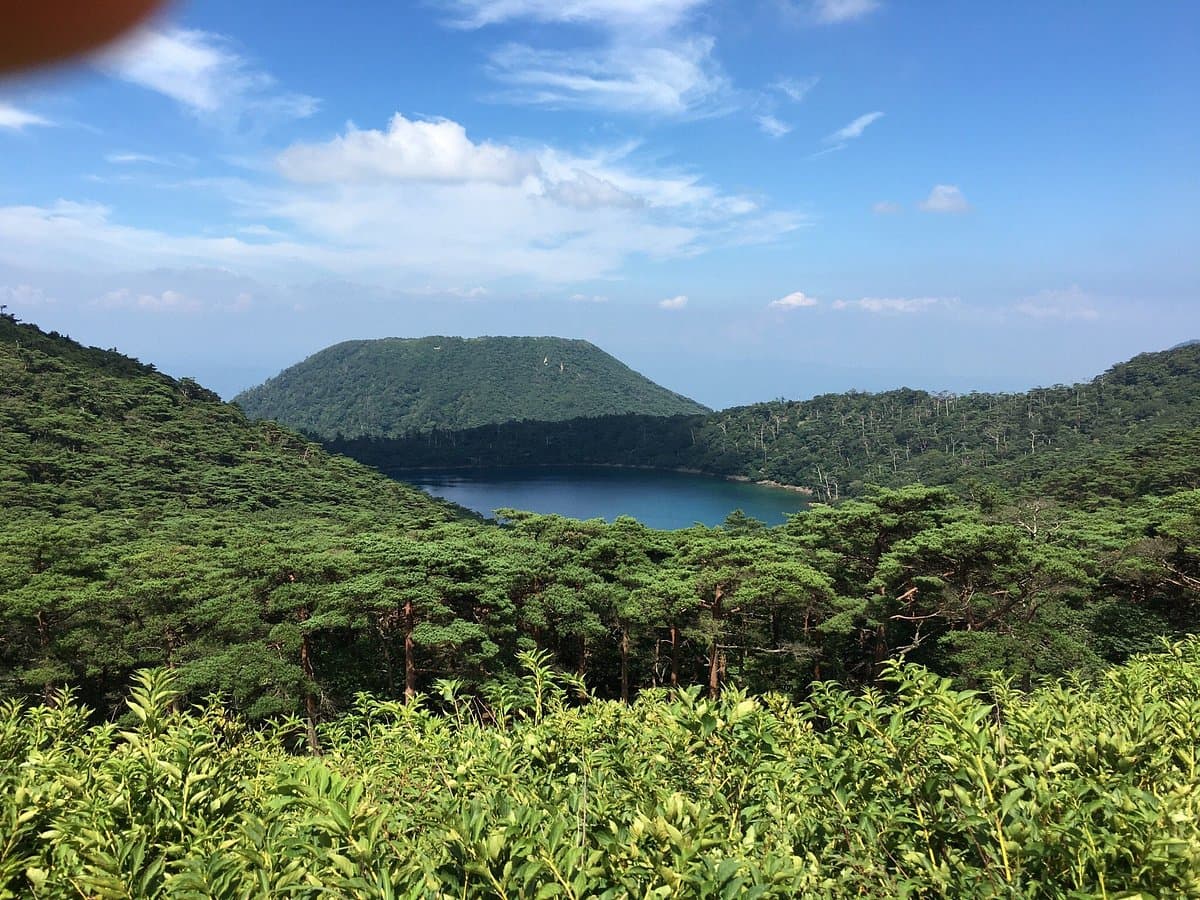
Ebino Plateau is a picturesque highland region nestled amidst volcanic cones in Miyazaki Prefecture, Japan. It is renowned for its unique geological features, including active fumaroles and a series of stunning crater lakes. The area serves as a gateway to the Kirishima-Kinkowan National Park, offering visitors a chance to immerse themselves in Japan's dynamic natural environment.
Visitors consistently praise the accessible hiking trails, particularly the Ikemeguri trail, which loops around three crater lakes: Byakushi, Rokkannon-miike, and Fudo. Reviewers note that these trails, while featuring some ups and downs, are generally manageable for children and elderly persons. The scenic beauty, especially when mist rolls in during the afternoon, is frequently highlighted as a photographic highlight. The opportunity for a peaceful escape into nature, away from urban bustle, is a recurring positive theme.
For a rewarding experience, visitors recommend starting the Ikemeguri trail from the Eco Museum Center, conveniently located near the bus stop. It is advisable to allocate at least 2-3 hours for the full loop around the crater lakes. While the trails are generally easy, comfortable walking shoes are essential. Reviewers suggest checking the current volcanic activity status before visiting, as fumarole activity can lead to trail closures. Bringing water and snacks is also recommended, as amenities can be limited on the trails.
Access to Ebino Plateau is primarily by bus. The Eco Museum Center, a key starting point for hikes, is situated near a bus stop, making public transport a viable option. For those cycling, be prepared for a challenging 500m climb towards the plateau. Driving offers more flexibility, but visitors should be aware of potential road closures due to volcanic activity. Always confirm road conditions and public transport schedules in advance.
A common concern among visitors is the potential for trail and road closures due to volcanic activity. To mitigate this, it is crucial to check official park websites or local tourist information centers for the latest updates on volcanic conditions and access restrictions before planning your trip. Some older reviews mention limited access to certain areas, such as the museum and specific lakes, due to past volcanic events, underscoring the importance of current information.