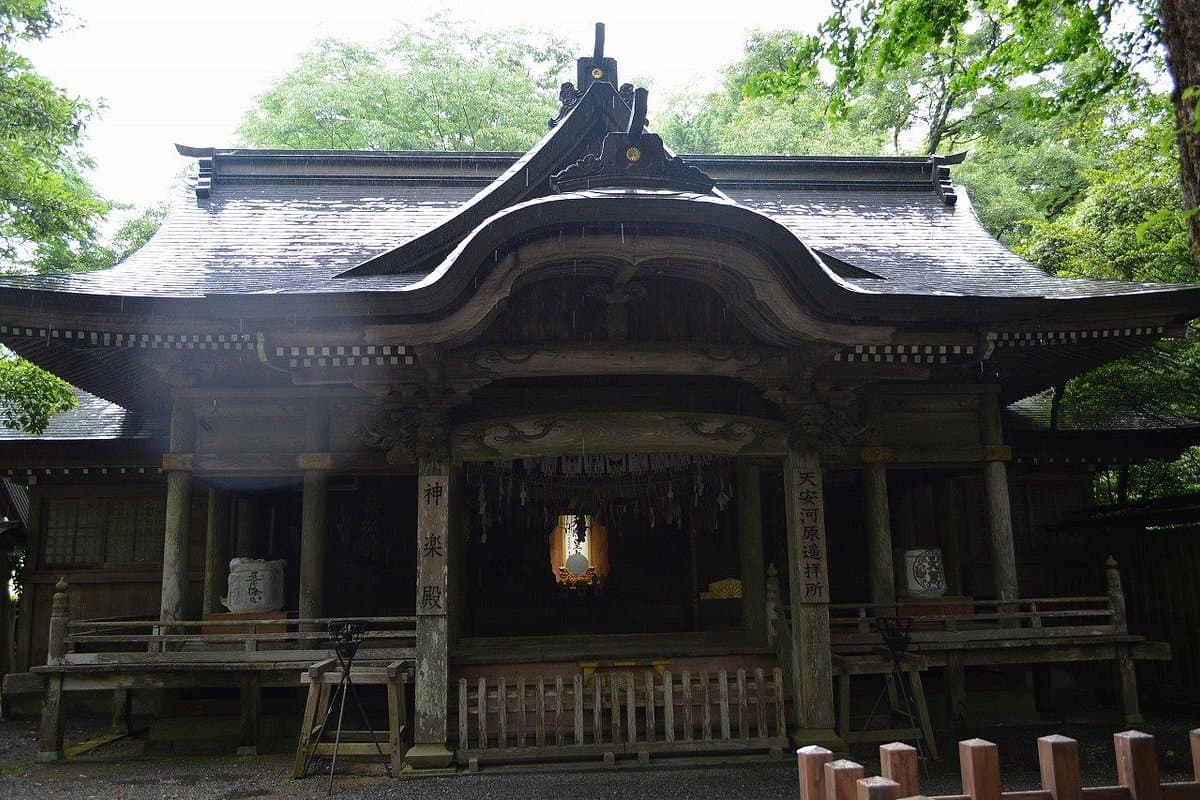
Amano Iwato Shrine is a pivotal location in Japanese mythology, revered as the site where the Sun Goddess Amaterasu Omikami hid herself, plunging the world into darkness. This shrine is not just a historical landmark but a living spiritual center, offering a tangible connection to one of Japan's most foundational myths. It comprises two main parts: the West Shrine (Nishihongu), which worships the sacred cave Ama-no-Iwato itself, and the East Shrine (Higashihongu).
Visitors consistently praise the unique spiritual atmosphere and the profound sense of history. Many highlight the free guided tours led by Shinto priests, which occur every 30 minutes. These tours, though often conducted primarily in Japanese, include a purification ceremony and allow access to a viewing platform behind the West Shrine, offering a glimpse of the sacred cave across the river. Reviewers note that photography is prohibited in this sacred area, emphasizing the reverence expected. The short walk to Amanoyasu Kawara, a nearby cave where the gods are said to have convened, is also frequently mentioned as a highly atmospheric and worthwhile extension to the visit, with its distinctive piles of stones left by pilgrims.
To make the most of your visit, plan to spend about 1-2 hours, including the guided tour and the walk to Amanoyasu Kawara. Arriving earlier in the day might offer a quieter experience, though the 30-minute tour schedule means there's always an opportunity to join. Bring comfortable shoes, as there's a short hike involved, especially to Amanoyasu Kawara, which some describe as not wheelchair accessible. While the priest's explanation is often in Japanese, the experience itself is considered powerful and moving regardless of language comprehension. Consider leaving your goshuin book at the shrine beforehand if you wish to receive a calligraphed stamp.
The shrine is accessible by car or local bus. Many visitors recommend taking a local bus from Takachiho Gorge or Takachiho Shrine, as these sites are relatively close. For those driving, a large parking lot is available. The drive itself, especially from areas like Kurokawa Onsen, is often described as scenic, with beautiful mountain views. The shrine is part of Miyazaki's 'Mythical Road' and is easily combined with other attractions in the Takachiho area, such as Takachiho Gorge and Takachiho Shrine, often visited on the same day.
A common point of feedback is that the actual Ama-no-Iwato cave is not directly accessible or clearly visible from the viewing platform, being across a river and somewhat obscured. Some visitors express mild disappointment that the cave itself is not as prominent as anticipated. To mitigate this, manage expectations by understanding that the experience is more about the spiritual significance and the ritual of viewing a sacred site, rather than a close-up view of a large, open cave. The overall atmosphere and the priest-led ceremony are often cited as the true highlights.