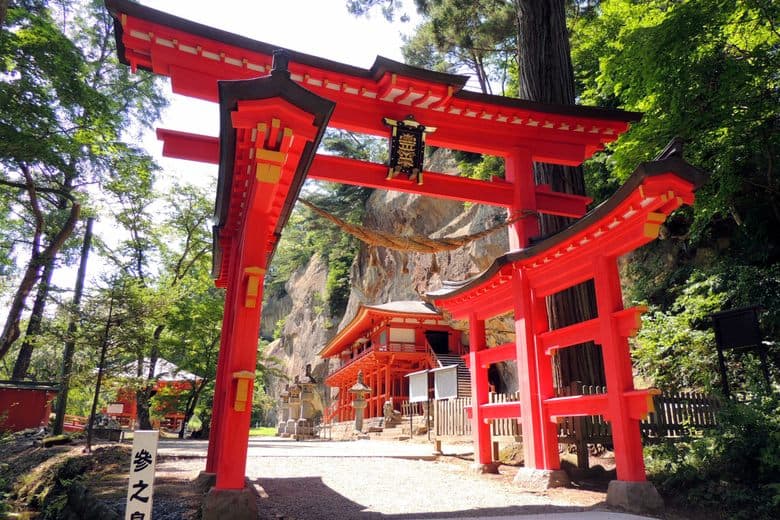
Takkoku no Iwaya Bishamondo is a historically rich temple complex nestled within a cliff face in Hiraizumi. Originally founded over a thousand years ago as a Shinto shrine by Sakanoue no Tamuramaro to commemorate his victory over the warlord Akuro Takamiro, it was later influenced by Pure Land Buddhism. The site is particularly notable for its dramatic setting and the large Buddha face carved into the cliff, which is considered the northernmost Buddha image in Japan. Its unique origin story, involving a warlord's alleged harem prison, adds to its mystique and historical significance.
Visitors often praise the serene atmosphere and the impressive architectural integration with the natural rock formations. The sense of history and the unique blend of Shinto and Buddhist elements are frequently highlighted as compelling aspects of the visit. While the current building is a 1961 reconstruction, its design is inspired by the famous Kiyomizudera Shrine in Kyoto, maintaining a traditional aesthetic that many find appealing. The site offers a peaceful retreat and a glimpse into ancient Japanese spiritual practices.
To make the most of your visit, allocate approximately 1 to 2 hours to explore the temple and its surroundings. It is advisable to wear comfortable shoes as there are some steps and uneven paths. The site is generally not crowded, allowing for a contemplative experience. Bringing a camera is recommended to capture the unique cliffside architecture and the Buddha carving. There are no specific warnings about what to skip, as the entire complex is relatively compact and offers a cohesive experience.
Takkoku no Iwaya Bishamondo is easily accessible from Hiraizumi Station. It is located approximately 5 km from the station, making it a pleasant bike ride for those who enjoy cycling. Bike rentals and maps are available directly at Hiraizumi Station. Alternatively, the site is visible from the main road, Route 31, suggesting it is also reachable by car or taxi. Public bus services might also connect to the area, though specific routes should be confirmed locally.
Common complaints are rare, but some visitors might find the site smaller than anticipated if expecting a sprawling complex. The statues of Bishamon are usually kept hidden, only revealed every 33 years, which might disappoint those hoping to see them. However, the cliffside temple and the Buddha carving remain the primary attractions and are always visible.