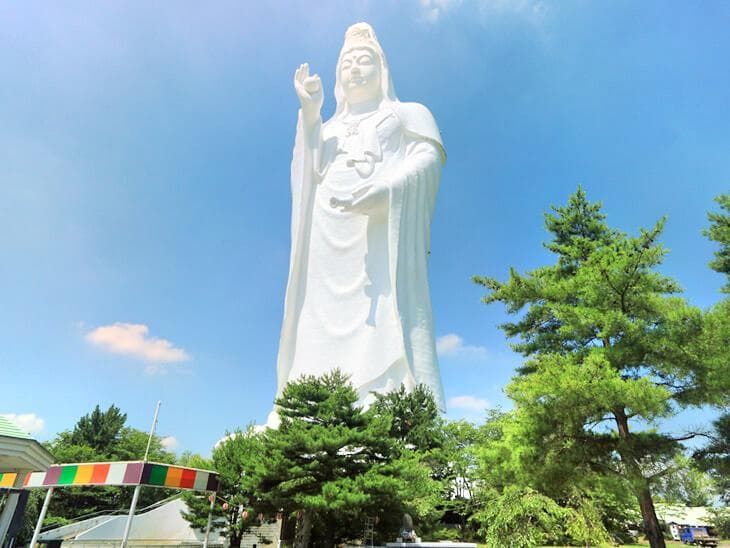
The Sendai Dai Kannon, also known as the White-Robed Colossus, is a monumental 100-meter-tall statue of the Bodhisattva Kannon, making it one of the tallest statues in Japan and a prominent landmark in Sendai. Built to commemorate the city's 100th anniversary, it stands as a symbol of peace and prosperity. Its sheer scale and the intricate interior, housing 108 Buddha statues across 12 levels, offer a unique blend of spiritual pilgrimage and architectural wonder.
Visitors consistently praise the statue's impressive size and the solemn atmosphere it creates. Many highlight the experience of taking an elevator directly to the top, which is roughly at the statue's shoulder level, and then walking down the spiral staircase to view the numerous Buddha statues. The panoramic views from the upper levels, stretching from downtown Sendai to the Pacific Ocean, are frequently mentioned as a significant draw. While some find the interior design somewhat unconventional for a Buddhist site, the overall consensus points to a memorable and awe-inspiring visit.
To make the most of your visit, allocate approximately 1 to 2 hours. It is recommended to visit during daylight hours to fully appreciate the views from the top. There is no specific best time of day mentioned, but clear weather would enhance the panoramic experience. Reviewers do not mention specific items to bring, but comfortable shoes are advisable for descending the many stairs. The entry fee is generally considered good value for money, given the unique experience offered.
Getting to the Sendai Dai Kannon can be a bit challenging due to its location. Several visitors note that transportation is not very convenient from Sendai Station. While specific public transport lines are not detailed in reviews, it is understood that a bus or taxi would be required from the city center. For those driving, the statue is visible from a distance, making it easier to locate. Parking information is not explicitly provided, but given its somewhat remote location, parking is likely available on-site.
A common complaint among visitors is the statue's remote location and the inconvenience of reaching it via public transport. To mitigate this, consider combining your visit with other attractions in the northern part of Sendai if you have access to a car or are willing to take a taxi. Planning your route in advance and checking local bus schedules will also help manage expectations regarding travel time.
