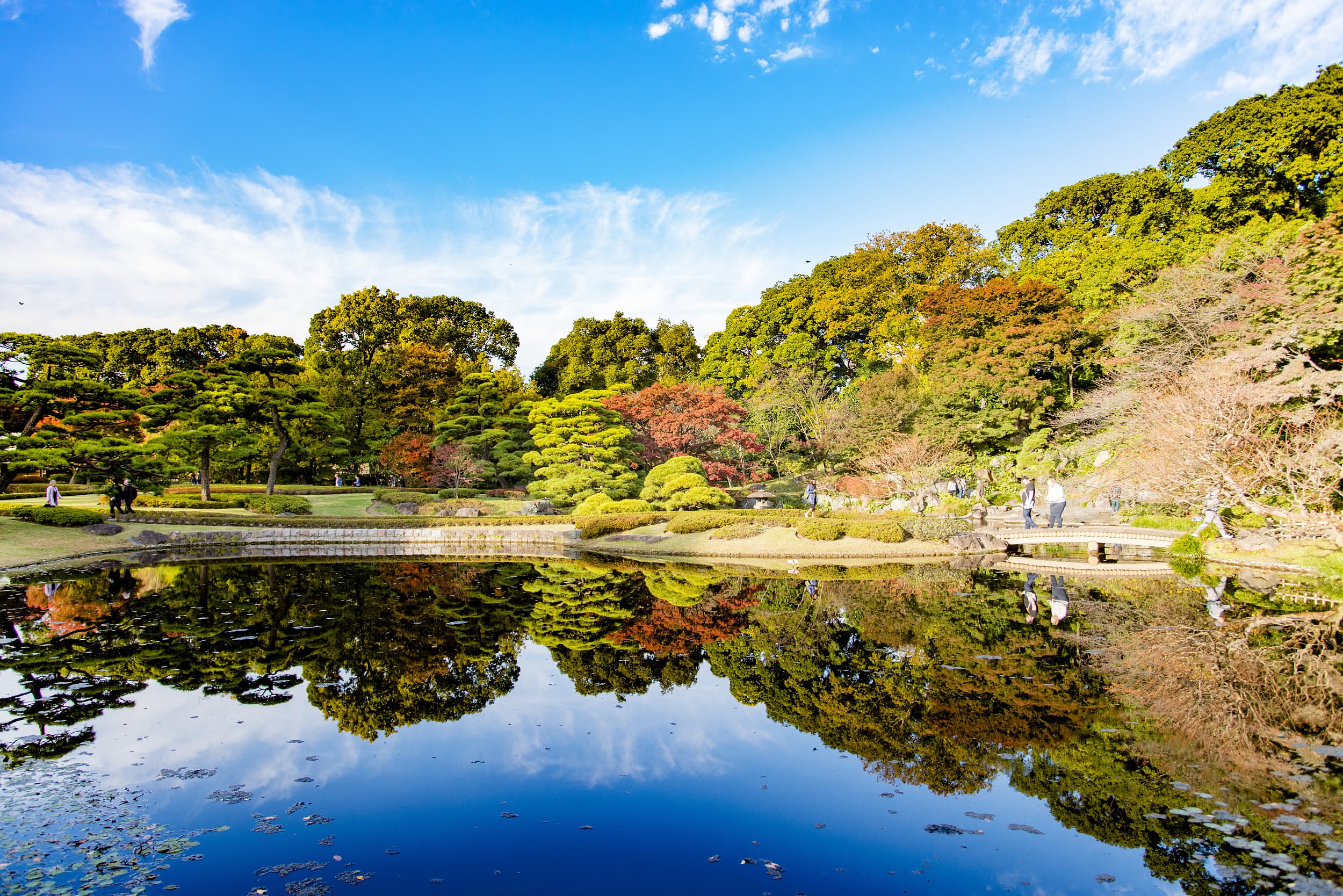
The Imperial Palace East Garden, known locally as Kōkyo Higashi Gyoen, is a significant historical site in Tokyo, serving as the former location of Edo Castle's innermost circles of defense (Honmaru, Ninomaru, and Sannomaru). While the Imperial Palace itself is largely inaccessible to the public, these gardens offer a rare opportunity to step onto imperial grounds, explore the remnants of a powerful shogunate, and experience a meticulously preserved natural landscape. It's a place where the weight of centuries of Japanese history, from samurai to emperors, can be felt amidst the tranquil beauty.
Visitors consistently praise the gardens for their peaceful atmosphere and well-maintained greenery, offering a welcome respite from the urban environment. Many highlight the impressive stone walls and moats, which provide a tangible sense of the Edo Castle's former grandeur. The Ninomaru Garden, with its traditional Japanese design, pond, and waterfall, receives particular acclaim for its beauty. Reviewers also appreciate the free entry and the opportunity for a pleasant stroll, often noting the seasonal beauty, especially during cherry blossom (spring) and autumn leaf (fall) seasons. However, some visitors express disappointment, expecting more elaborate floral displays or visible palace architecture, and find certain areas to be simply large, open green spaces.
To make the most of your visit, plan for 1.5 to 3 hours. Wear comfortable shoes as there is a lot of walking, including some uphill sections. Bring water, especially during warmer months, as cafes are not available within the grounds. Arriving early in the morning is recommended to avoid crowds and enjoy the tranquility. While the gardens are beautiful year-round, spring (for cherry blossoms and azaleas) and autumn (for vibrant foliage) are particularly popular. Don't miss the Edo Castle ruins, including the castle tower base (Tenshudai), and the traditional Ninomaru Garden. Some visitors recommend skipping the less ornate open grassy areas if time is limited.
The Imperial Palace East Garden is conveniently located and easily accessible. The closest subway stations are Otemachi (various lines, Exit C3 is often cited for direct access) and Takebashi. From Tokyo Station, it's about a 15-minute walk to the Otemon Gate, which is a popular entry point. Reviewers often mention walking from Tokyo Station Hotel. There are multiple gates for entry and exit, including Otemon Gate, Hirakawa Gate, and Kitahanebashi Gate. Security checks, including bag inspections, are common at entry points, but entry is free and visitors receive a plastic chip to return upon exit. Public transport is highly recommended over driving, as parking can be challenging in central Tokyo.
A common complaint is the perception that there isn't much to see beyond green spaces and stone walls, especially for those expecting elaborate palace buildings or extensive flower gardens. Some reviewers also note that parts of the garden may be closed for renovation, limiting access. To mitigate this, manage your expectations by focusing on the historical significance of the Edo Castle ruins and the serene, natural beauty of the Japanese gardens rather than a grand palace tour. Check the official website for any closure notices before your visit. Consider joining a free walking tour, often mentioned by reviewers, for historical context and a more guided experience.