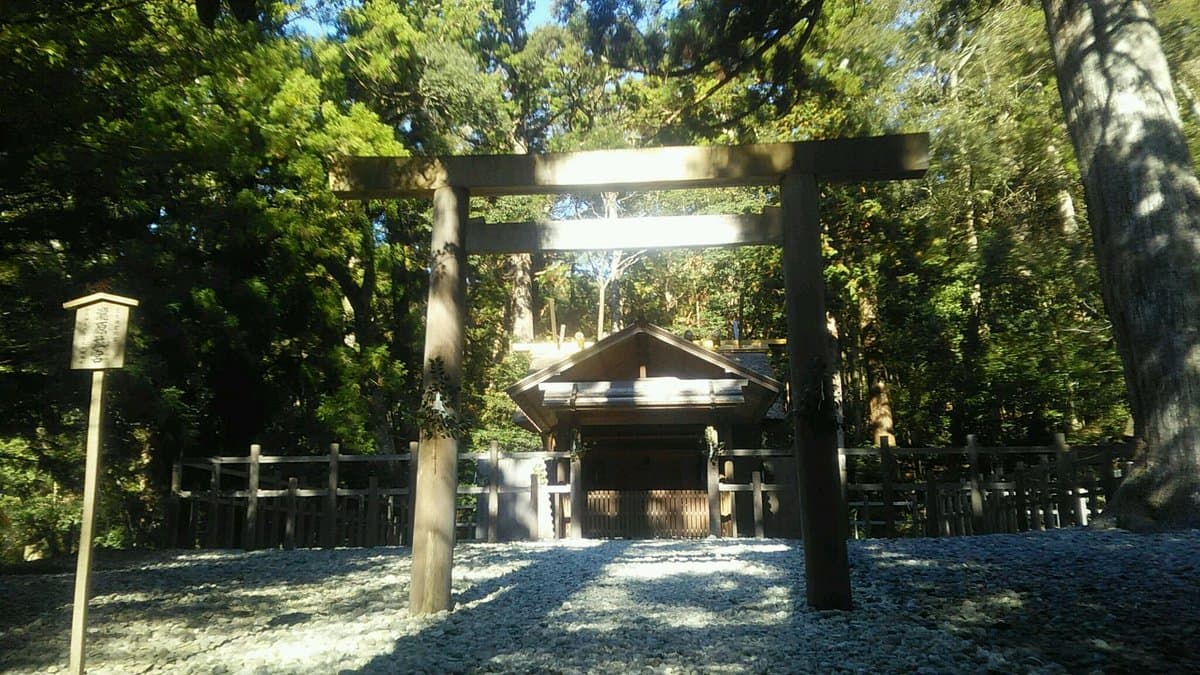
Takinomiya holds a special place in Japanese spiritual history as one of the sites where the deity Amaterasu Omikami was enshrined by Yamatohime no Mikoto before the establishment of the grand Ise Jingu. This makes it a compelling destination for those seeking to understand the deep historical roots of Shintoism and the origins of Japan's most revered shrine complex. It offers a glimpse into the ancient spiritual journey that led to the current location of Ise Jingu.
Visitors consistently praise the tranquil and dignified atmosphere of Takinomiya. Many describe it as a small, peaceful sanctuary, a stark contrast to the often bustling main shrines. The presence of twisted cedar trees, which some visitors refer to as a 'zero magnetic field,' adds to the mystical and serene ambiance. Reviewers often highlight the sense of warmth and spiritual energy felt in this sacred space, making it a place for quiet contemplation and reflection rather than a typical tourist attraction. The gravelly approach to the site is frequently mentioned, suggesting the need for appropriate footwear.
For a comfortable visit, it is recommended to wear comfortable walking shoes due to the gravel path. A visit to Takinomiya typically takes about 30 minutes to an hour, allowing ample time to soak in the atmosphere. The best time to visit is during daylight hours when the natural surroundings can be fully appreciated. There are no specific money-saving tips as entry is free, but combining it with other spiritual sites in Mie Prefecture can optimize travel time.
Takinomiya is located in Taiki-cho, Mie Prefecture, approximately 40 km up the Miya River from the main Ise Jingu sites. Given its somewhat remote location, public transport options might be limited. Visitors often find it more convenient to access the site by car. There is no specific information about direct bus lines or train stations mentioned in reviews, implying that a personal vehicle or taxi might be the most practical way to reach it. It is advisable to check local transport schedules or consider renting a car if planning a visit.
Common complaints are few, primarily revolving around its small size and relative remoteness compared to the larger Ise Jingu. To mitigate this, visitors should manage their expectations, understanding that Takinomiya is a site of historical and spiritual significance rather than a grand architectural marvel. Its value lies in its quietude and historical context, not in extensive facilities or large crowds.