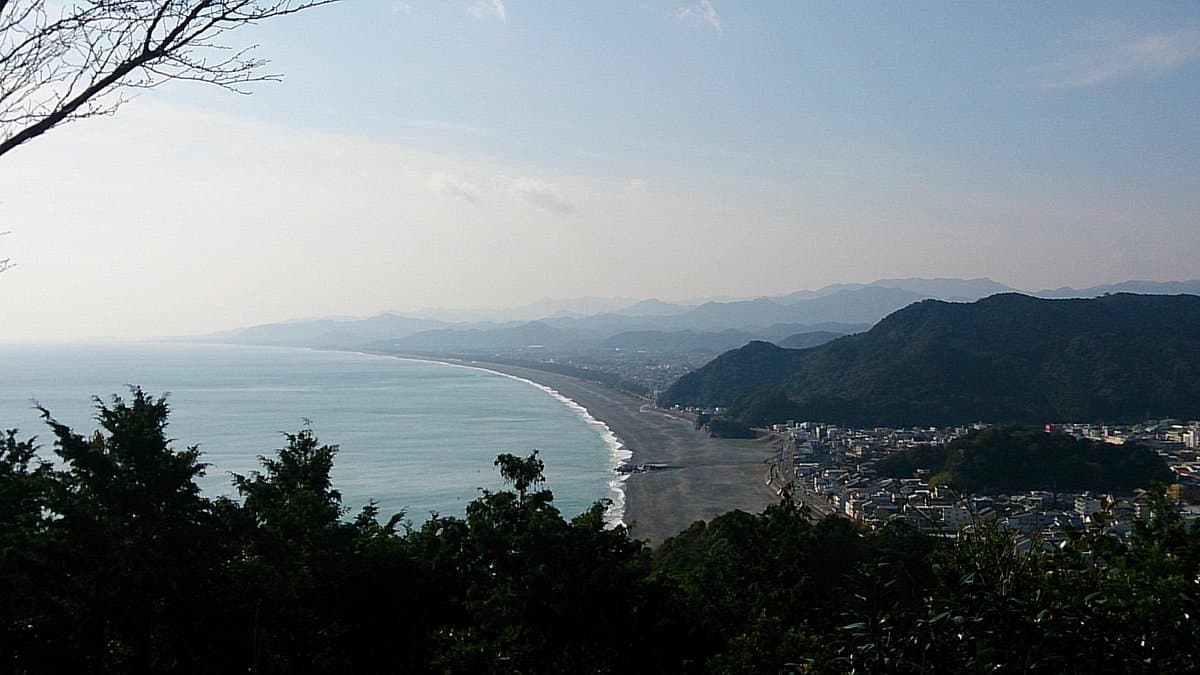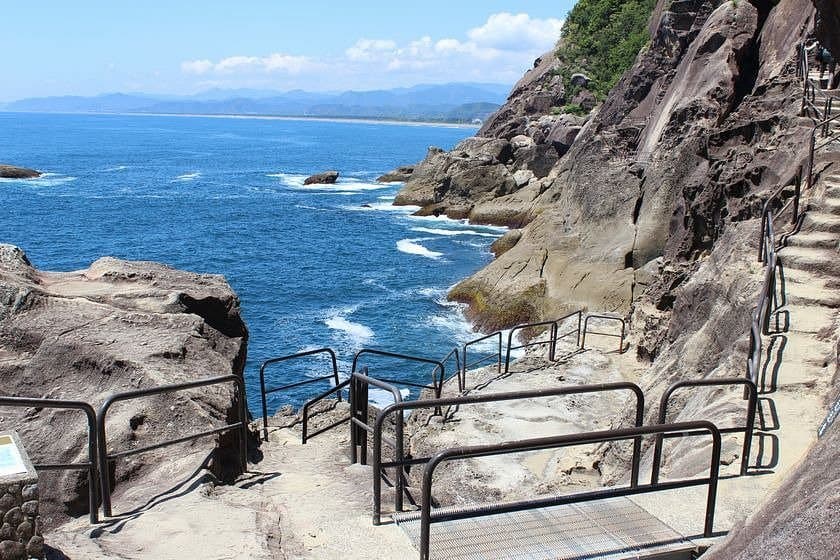
Onigajo, meaning "Demon's Castle," is a spectacular natural landmark in Kumano, Mie Prefecture, recognized as part of the UNESCO World Heritage Site "Sacred Sites and Pilgrimage Routes in the Kii Mountain Range." It features a dramatic coastline with a series of terraced sea caves and unique rock formations, sculpted over millennia by the relentless erosion of waves and wind. The site is steeped in local legend, said to have been the stronghold of pirates or 'oni' (ogres) conquered by the hero Sakanoue no Tamuramaro some 1200 years ago, adding a layer of historical mystique to its natural beauty.
Visitors consistently praise the breathtaking ocean views and the opportunity to walk along the narrow, uneven paths carved into the cliffside. Many describe the experience as adventurous, highlighting the impressive scale of nature's artistry. The unique rock formations, often compared to a castle, are a major draw, with some reviewers noting their particular interest for those learning about geological erosion. The site's natural beauty and dramatic scenery make it a popular spot for photography, especially the cliffs overlooking the Kumano-nada sea.
To make the most of your visit, wear comfortable, sturdy shoes suitable for walking on uneven surfaces and stairs. Reviewers mention numerous stairs and narrow sections, so good mobility is essential. While some older areas have been fenced off due to deterioration, there is still ample space to explore. Many visitors spend between 1 to 2 hours here, though some report walking for 45 minutes one way before turning back due to time constraints. The site is free to enter, which is a significant plus. There's a shop at the parking area that some visitors found to have nice souvenirs, and an Italian-style cafe offering views of the area.
Onigajo is located in Kinomotocho, Kumano, Mie Prefecture. It is easily accessible by car, with a parking area available. Many visitors incorporate it as a stop on a road trip, particularly when driving between Nachi Katsuura and Ise. While specific public transport details are not frequently mentioned in reviews, its location along a major coastal route suggests bus access might be possible, though driving offers the most flexibility for exploring the wider Kumano region.
A common point to be aware of is the uneven and sometimes narrow path, which might be challenging for those with mobility issues or small children. While the views are stunning, some older sections have been closed off, which a few visitors found disappointing. However, the remaining accessible areas still provide a powerful experience of nature's force.