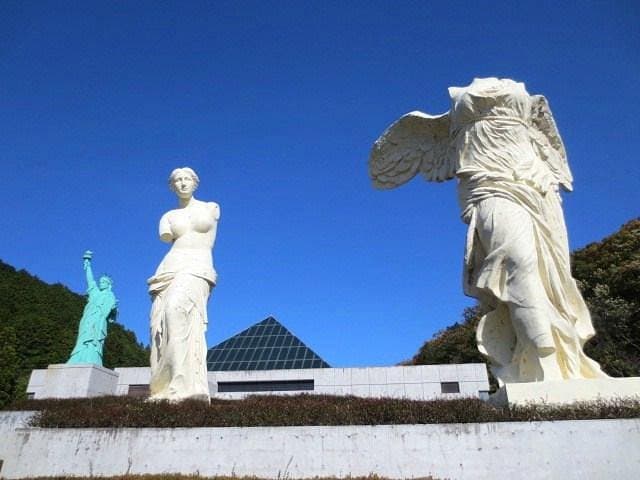
The Louvre Museum of Sculpture in Tsu, Japan, stands as an officially sanctioned 'sister' museum to the world-renowned Louvre in Paris. Founded by Buddhist priest Yūjiro Takegawa, this museum, designed by Kisho Kurokawa, showcases over 1,300 replicas of famous sculptures from various global museums, including iconic pieces like the Venus de Milo and the Winged Victory of Samothrace. Its significance lies in offering an accessible glimpse into classical art for those unable to travel to Europe, and its unique integration within the elaborate Hōjuyama Daikannon Temple grounds.
Visitors consistently praise the museum as a good alternative for those who cannot visit the original Louvre, or as an interesting preview. Many find it a pleasant experience, especially for families, and appreciate the opportunity to see a wide array of sculptures. The museum's setting within the temple complex, with its own impressive statues like the 33-meter-tall golden Kannon, adds another layer of cultural exploration. Reviewers often highlight the ample free parking as a significant convenience.
For a comfortable visit, allocate at least 2-3 hours to explore both the museum and the surrounding temple grounds. While some visitors mention getting lost due to unclear signage, especially with French-only descriptions for some items, a self-guided tour allows for a flexible pace. It's advisable to wear comfortable shoes as there is a fair amount of walking, though seating is available for rest. Consider visiting during off-peak hours to avoid potential crowds, although reviews do not indicate significant overcrowding.
The museum is conveniently located near Sakakibara Onsenguchi train station, making it accessible by public transport. For those driving, ample free parking is available from 9:30 AM to 5:00 PM, which is a major plus for many visitors. Its proximity to the Sakakibara Onsen also makes it a good stop for those combining their visit with a hot spring experience.
A common complaint among some visitors is the lack of clear signage and the prevalence of French descriptions without English translations, which can make navigation and understanding difficult. To mitigate this, consider researching some of the key sculptures beforehand or using a translation app on your phone. While the museum primarily features replicas, managing expectations about this aspect can enhance the experience, focusing instead on the artistic and cultural value of the collection.