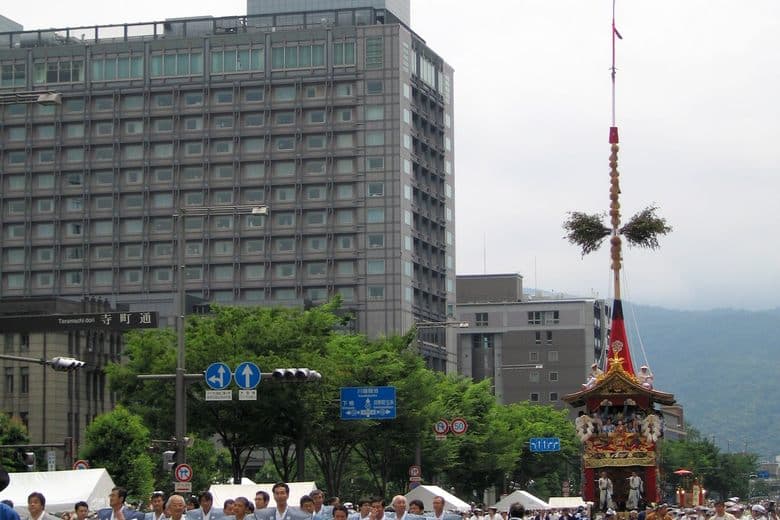
The Yamaboko Festival, part of the larger Gion Festival in Kyoto, is an ancient and vibrant annual procession that dates back to 869 AD. Originally conceived to appease deities and ward off epidemics, it has evolved into a grand cultural spectacle. It showcases Japan's rich history and craftsmanship through its towering, meticulously constructed floats, which are adorned with intricate carvings, statues, and centuries-old Gobelin tapestries.
Visitors consistently praise the sheer scale and historical significance of the floats, noting the impressive engineering involved in their construction without iron or nails. The atmosphere during the festival, especially the 'kon-chiki-chin' Gion Rhythm played in the evenings leading up to the main parade, is frequently highlighted as captivating. Many find the opportunity to see these historical artifacts up close and witness the traditional maneuvering of the massive floats around corners to be a truly unique experience. However, some visitors warn about the intense crowds, especially on the main parade day, which can make viewing challenging.
To make the most of your visit, consider attending the evenings between July 13th and 16th, known as Yoiyama, when the floats are displayed on city streets and traditional music is played. This offers a more intimate experience with fewer crowds than the main parade day. Arrive early on July 17th if you wish to secure a good viewing spot for the Yamaboko Float Parade. Bringing water, comfortable shoes, and a portable fan is highly recommended due to the summer heat and extensive walking. Consider purchasing reserved seating if available, though this can be expensive. Skipping the very front rows might offer a better overall view of the floats' height.
The Gion Festival takes place throughout central Kyoto. The main parade route on July 17th typically runs along Shijo, Kawaramachi, and Oike Streets. Kyoto is well-served by public transport. You can reach the festival areas by taking the Karasuma Line or Tozai Line of the Kyoto Municipal Subway, or various city buses. The nearest subway stations to the main viewing areas include Shijo Station (Karasuma Line) and Kyoto Shiyakusho-mae Station (Tozai Line). Walking is the primary mode of transport within the festival zones, as many streets are closed to vehicular traffic. Parking is extremely limited and not recommended.
The most common complaint revolves around the overwhelming crowds, particularly during the main parade on July 17th. To mitigate this, consider viewing the floats during the Yoiyama evenings (July 14-16) when they are stationary and the atmosphere is more relaxed. Alternatively, arrive very early on the parade day to claim a spot, or seek out less crowded sections of the parade route further away from major intersections. Be prepared for long periods of standing and limited access to restrooms and refreshments in peak areas.