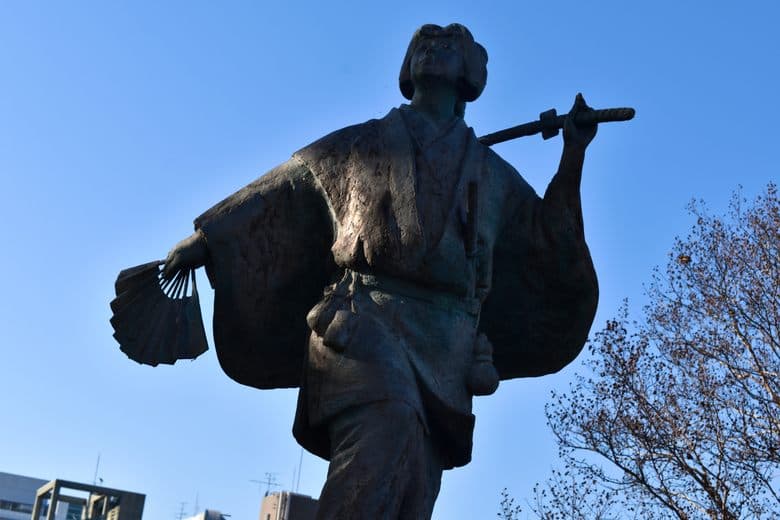
The Statue of Izumo-no-Okuni stands as a tribute to the woman credited with creating Kabuki, Japan's highly stylized and world-renowned theatrical art form. While Kabuki is now predominantly performed by an all-male cast, Okuni, a shrine maiden from Izumo province, pioneered its early, more subversive iterations in the early 17th century. Her performances, which often involved cross-dressing and a sensual, topsy-turvy atmosphere, laid the groundwork for what would become a UNESCO intangible cultural heritage.
Visitors often appreciate the statue's location, directly across from the historic Minami-za theater, which itself has deep roots in Kabuki history. Many find it a pleasant, albeit brief, stop while exploring the Gion district. Reviewers note that it's a good photo opportunity and a chance to learn about the often-overlooked female origins of Kabuki. However, some visitors mention that the statue itself is relatively small and can be easily missed amidst the bustling surroundings.
To make the most of a visit, allocate about 10-15 minutes. It's best viewed during daylight hours to appreciate the details and for better photography. There's no specific attire required, and it's an outdoor, open-access site. Consider combining your visit with a stroll through the Gion district, known for its traditional wooden machiya houses, geisha culture, and numerous shops and restaurants. This statue is more of a historical marker than a major attraction, so manage expectations accordingly.
The statue is conveniently located in the Gion district of Kyoto. It's directly across the street from the Minami-za theater, a prominent landmark. The nearest public transport options include Gion-Shijo Station on the Keihan Main Line and Kawaramachi Station on the Hankyu Kyoto Line, both within a short walking distance (5-10 minutes). Numerous bus lines also serve the Gion area. Given its central location, walking or using public transport is highly recommended, as parking in this busy district can be challenging and expensive.
A common complaint is that the statue is smaller than expected and can be overlooked. To mitigate this, specifically look for it across from the Minami-za theater. It's not a grand monument but rather a subtle nod to a significant historical figure. Don't expect an elaborate display; instead, view it as a point of historical interest within a vibrant cultural district.