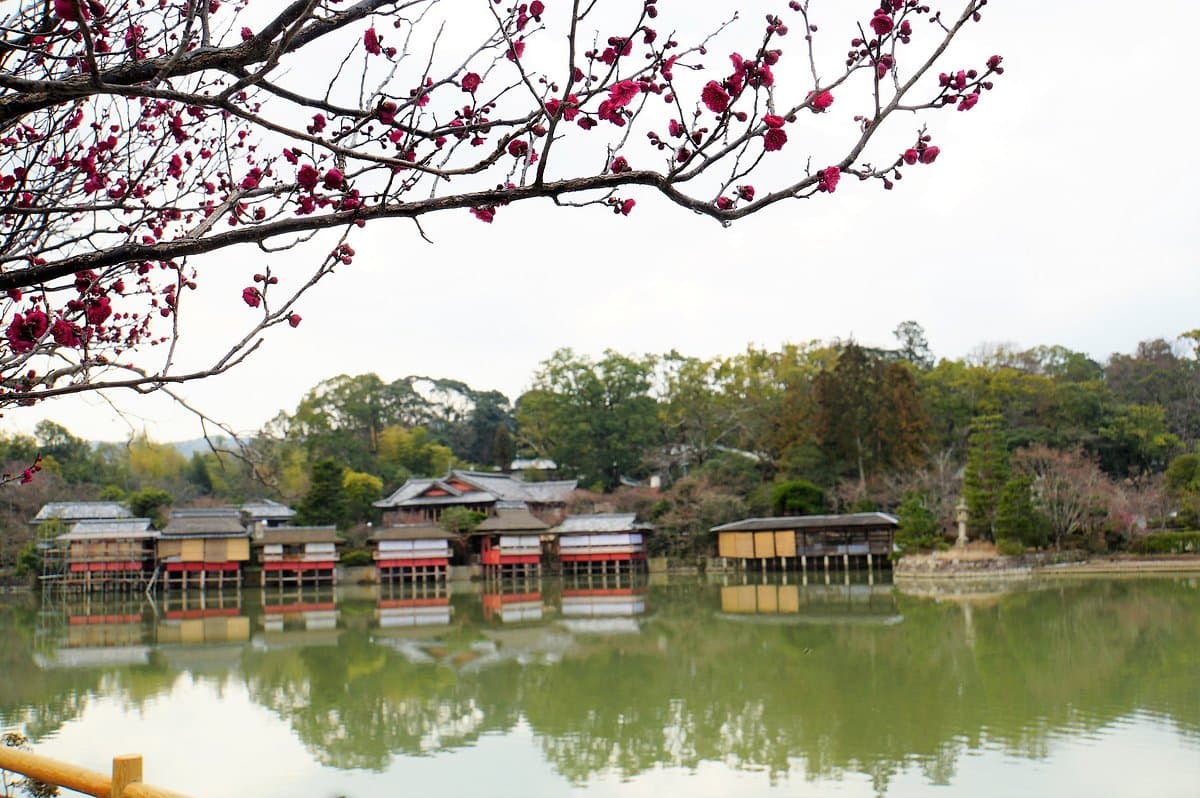
Nagaoka Tenmangu is a Shinto shrine dedicated to Sugawara no Michizane, a revered scholar and politician. It is particularly known for its beautiful seasonal landscapes, including plum blossoms, azaleas, and vibrant autumn foliage, which draw visitors seeking a more tranquil experience compared to Kyoto's bustling city center.
Visitors consistently praise the shrine's natural beauty, especially during specific seasons. Many reviewers highlight the stunning autumn colors of Kinkeien Garden and around Hachijo-ike Pond, describing them as "mesmerizingly beautiful." The azalea tunnel, when in full bloom, is also a major draw, attracting crowds eager to witness the vibrant red flowers. The plum orchard behind the shrine is noted for its beauty and fragrant scent during plum season. Reviewers appreciate the vast and well-kept grounds, offering a peaceful atmosphere for walking and relaxation, often feeling like a hidden gem even for those living in the Kansai area.
To make the most of your visit, consider timing it with the blooming seasons: late winter for plum blossoms, spring for azaleas (typically April), and late autumn for fall foliage (around late November). Several visitors suggest spending 1-2 hours to fully appreciate the grounds and enjoy a leisurely walk. Bringing insect repellent is highly recommended, especially if visiting during warmer months, as some reviewers noted an abundance of mosquitoes near the pond. While the shrine can get busy during peak bloom, it generally offers a less crowded experience than central Kyoto attractions.
Nagaoka Tenmangu is conveniently located about a 10-minute walk from Hankyu Nagaoka Tenjin Station. This makes it easily accessible by public transport. For those driving, parking information is not explicitly detailed in reviews, but the general accessibility suggests it's a viable option. The walk from the station is described as pleasant, allowing visitors to arrive at the shrine refreshed.
A common complaint, particularly during the plum season, is the presence of mosquitoes around Hachijo-ike Pond. Visitors strongly advise bringing insect repellent to mitigate this issue. While some find the shrine "ordinary" compared to Kyoto's grander temples, its charm lies in its quiet beauty and local feel, making it a worthwhile visit for those seeking a different pace.
