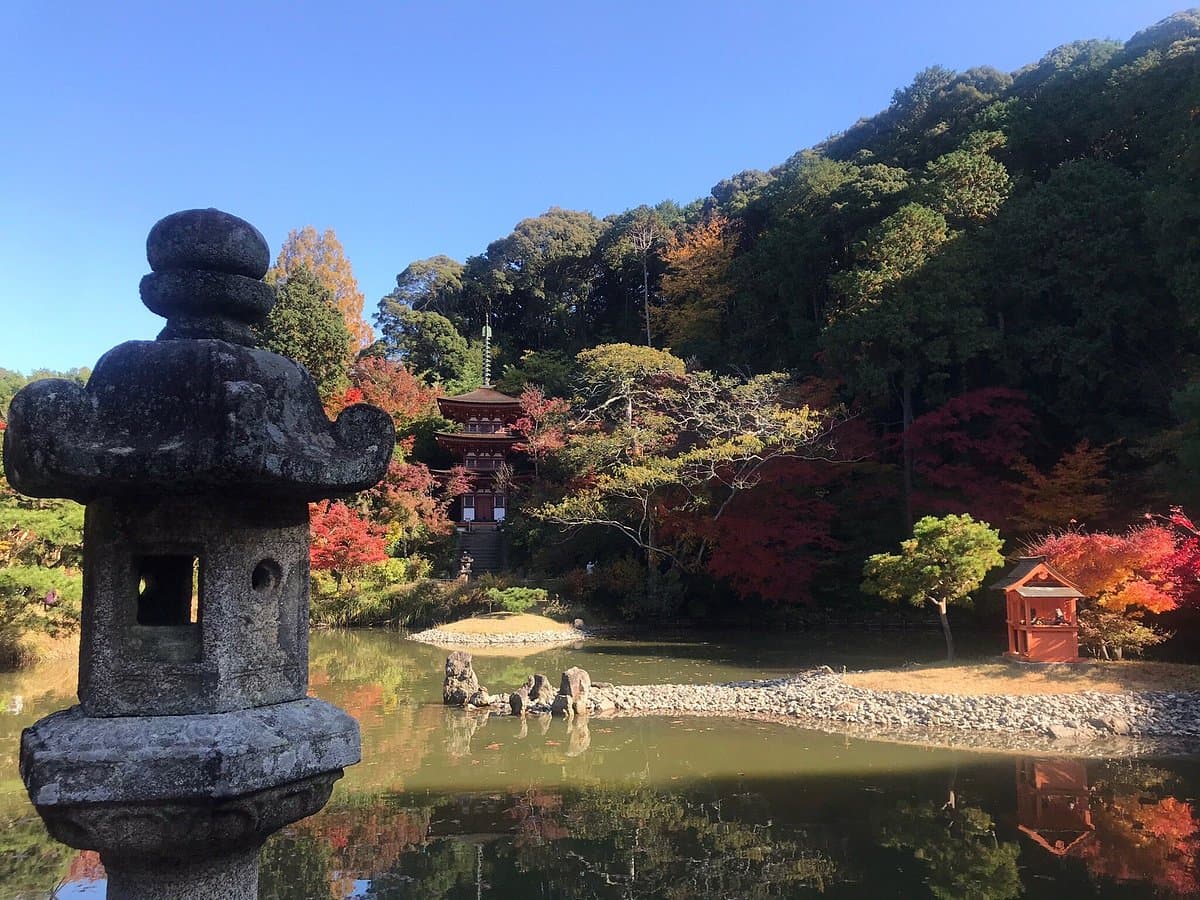
Joruri Temple, also known as Odawarayama Joruri-ji, is a historically significant Buddhist temple located on the border of Nara and Kyoto prefectures. It is renowned for its main hall, which houses nine 12th-century Amida Buddha statues, designated as National Treasures, and a three-story pagoda. The temple's layout, featuring a Jodo Garden with a pond and an island, is considered a valuable example of Fujiwara-era Buddhist architecture and garden design, reflecting the Pure Land Buddhist tradition.
Visitors frequently highlight the temple's peaceful and tranquil setting, especially appreciating the beauty of the garden during autumn when the maple leaves turn red. The unique arrangement of the nine Amida Buddhas in the main hall is a consistent point of praise, with many finding the experience of seeing them together quite moving. Reviewers also note the well-preserved pagoda and the overall sense of historical authenticity. Some visitors mention the small size of the temple, but emphasize that its historical and artistic value far outweighs its physical dimensions.
To make the most of your visit, allocate about 1 to 1.5 hours to explore the temple grounds and main hall. Many suggest visiting in autumn for the best scenic views. The entry fee is typically around ¥300-¥500. While the main hall's statues are always visible, a miniature shrine on the grounds houses a hidden statue of a goddess of harvest, which is only displayed three times a year, so check the temple's schedule if this is of particular interest. Bringing a camera is recommended, especially for the garden, but be mindful of photography rules inside the main hall.
Joruri Temple is accessible by public transport, though it requires a combination of train and bus. From JR Nara Station, take a train to Kamo Station. From Kamo Station, a community bus (often route 112) will take you to the temple in about 20 minutes. Several visitors recommend purchasing a one-day bus pass (around ¥400-¥500) at the information desk near Kamo Station's ticket gate, as it can be cost-effective and some passes feature cute designs. Alternatively, some visitors mention taking a bus directly from JR Nara, which takes about half an hour. For those driving, there is a parking lot near the temple, often costing around ¥300.
A common complaint is the temple's somewhat remote location, making it less convenient to reach compared to more central attractions. However, visitors generally agree that the journey is part of the experience and contributes to the temple's serene atmosphere. Planning your bus connections in advance and considering the one-day bus pass can mitigate potential transportation frustrations.