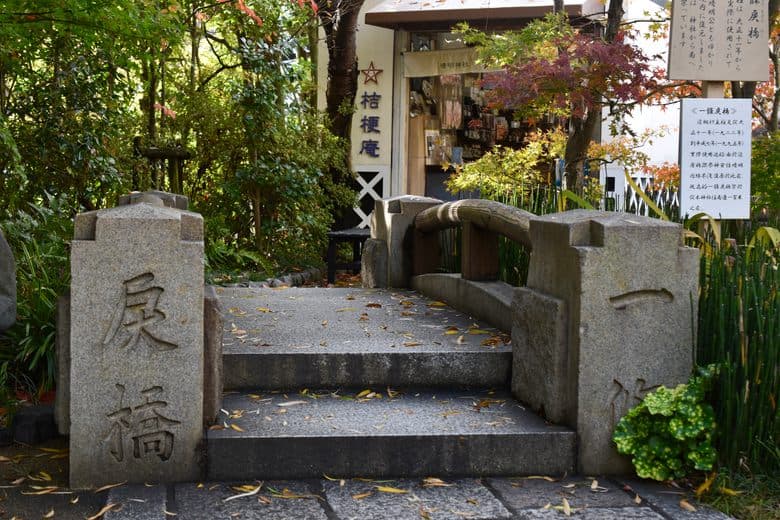
The Ichijo Modoribashi Bridge, often referred to as the 'bridge of return,' is a site deeply embedded in Kyoto's historical and supernatural narratives. Though the bridge itself is a modern reconstruction from 1995, its significance stems from the original structure, which dates back to 794 AD. It is famously associated with the legendary onmyōji (sorcerer) Abe no Seimei, whose residence was nearby, and is a focal point for numerous tales of spirits, demons, and miraculous returns.
Visitors are primarily drawn to the bridge for its rich folklore rather than its architectural grandeur. Many reviewers highlight the intriguing legends, such as the story of Miyoshi Kiyotsura's temporary resurrection or the samurai Watanabe no Tsuna's encounter with a demoness. The bridge's proximity to the Seimei Shrine is a consistent theme in visitor feedback, with many combining a visit to both sites to fully immerse themselves in the lore of Abe no Seimei. The presence of a stone statue of one of Seimei's familiars near the shrine, said to have resided under the original bridge, adds to the mystical atmosphere.
To fully appreciate the Ichijo Modoribashi Bridge, it is recommended to research its legends beforehand. A visit typically lasts a short time, perhaps 15-30 minutes, as it is more of a historical marker than a sprawling attraction. It is best visited as part of a broader exploration of the Seimei Shrine area. There are no specific items to bring, but comfortable walking shoes are always advisable for exploring Kyoto. Given its historical context, visiting during daylight hours allows for better visibility and photo opportunities.
The bridge is conveniently accessible by public transport. It is a little over 10 minutes' walk from Imadegawa Station, which can be reached via the Karasuma Line from Kyoto Station. The journey from Kyoto Station to Imadegawa Station also takes approximately 10 minutes. From the bridge, the Seimei Shrine is only a short walk away, making it easy to visit both locations consecutively.
Common complaints are rare, as visitors generally understand that the current bridge is a modern replica and the main draw is its historical and legendary significance. However, some might find it underwhelming if they expect a grand, ancient structure. To mitigate this, manage expectations by focusing on the rich stories and the cultural context rather than the physical appearance of the bridge itself.