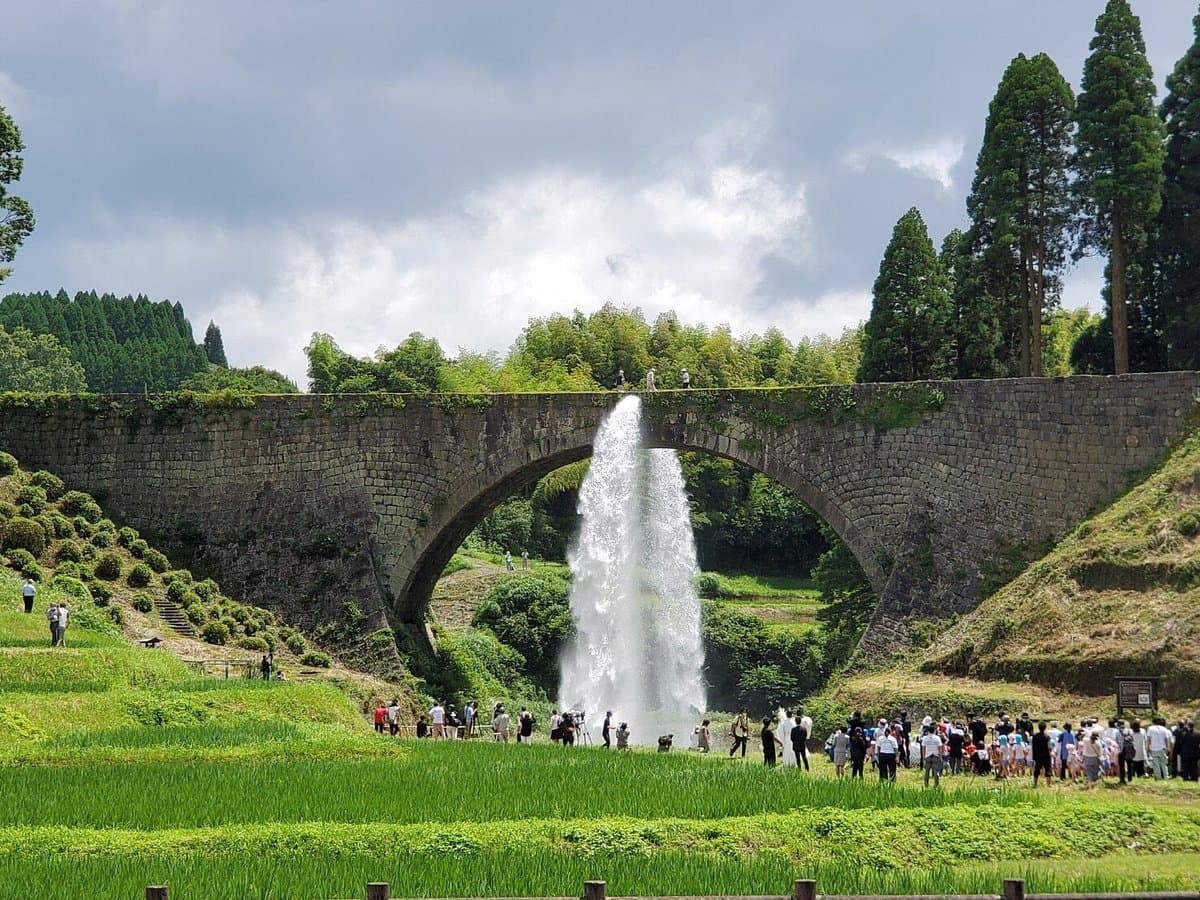
Tsujun Bridge is an extraordinary example of Edo Period civil engineering, a stone arch aqueduct built in 1854 that continues to supply water to local terraced rice paddies. Designated a national treasure in 2023, it stands as a testament to ancient Japanese ingenuity, blending seamlessly with the natural landscape while serving a vital agricultural purpose.
Visitors consistently highlight the scheduled water discharge as the main draw, describing it as a powerful and impressive spectacle. Many emphasize that seeing the bridge without the water release significantly diminishes the experience, turning it into "just a normal bridge." Reviewers praise the intricate stonework and the historical significance of its continued function. The opportunity to walk across the bridge and feel the cool wind during the discharge is also frequently mentioned as a memorable part of the visit.
To make the most of your visit, plan to arrive well before the scheduled water discharge, which typically occurs once a day, often at 13:00 on weekends and holidays, though schedules can change. Check the official local tourism website for the most current timings. Allow about 1-2 hours for your visit, including time to find parking, walk to the viewing areas, and experience the discharge. Bring water, especially on hot days, as the area can be exposed. Some visitors mention a small kiosk where you can pick up a card to access the bridge itself during the discharge.
The bridge is located near the village of Hamamachi in Yamato-cho, Kumamoto Prefecture. While not directly on major routes like 445/218, it is close enough, and traffic signs will guide you. Driving is generally recommended for reaching this location, as public transport options are limited. Parking is available, and from there, visitors can walk uphill to various viewing platforms. Some parts of the access may involve steps.
A common complaint is visiting when the water discharge is not happening, leading to disappointment. To mitigate this, always confirm the discharge schedule in advance. Another issue mentioned by a few visitors is temporary closures or maintenance work, which can restrict access to certain viewing areas. It's advisable to check for any such notices before your trip, especially if traveling a long distance.