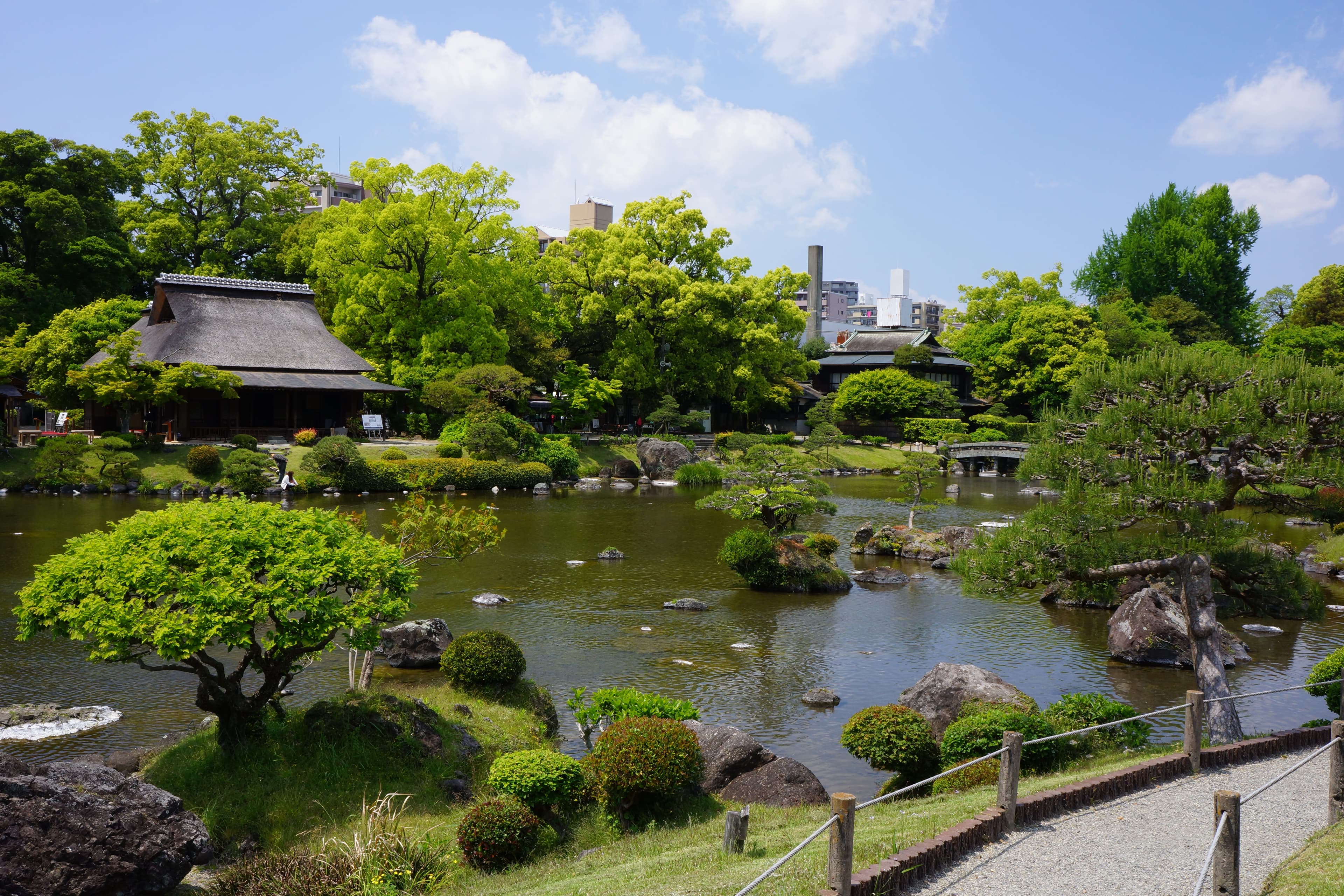
Suizenji Jojuen Garden is a historic Japanese landscape garden, originally established in the 17th century by the Hosokawa clan. It is renowned for its 'Momoyama-style' design, which meticulously recreates the 53 stations of the historic Tokaido Road, including a miniature Mount Fuji. This garden serves as a significant example of Edo-period landscape architecture and offers a peaceful glimpse into Japan's rich cultural heritage.
Visitors consistently praise the garden's serene atmosphere and exquisite landscaping, often describing it as a 'beautiful classical garden' or a 'large bonsai' due to its intricate design. Many appreciate the opportunity to rent yukata for photos, enhancing the traditional experience. The clear spring water, originating from Mount Aso, and the numerous koi fish are frequently highlighted as charming features. Reviewers note that the garden, while not vast, is 'small in scale but refreshing' and 'different at every step,' making it ideal for a leisurely stroll and photography. Some also mention the Izumi Shrine within the garden, particularly its 'Water of Longevity,' as a point of interest.
For a fulfilling visit, allocate approximately 1 to 1.5 hours to explore the garden thoroughly. The best time to visit is during pleasant weather to fully appreciate the outdoor scenery; some visitors mention a 'cold and windy' atmosphere during winter. Bringing small change for feeding the carp is a popular activity. While there are food stalls at the entrance, some close early, so it's advisable to plan accordingly if you intend to purchase snacks like sweet potato dumplings. Consider visiting in the morning for fewer crowds and better light for photography.
The garden is easily accessible by public transport. Take the Kumamoto tram (Line A or B) to 'Suizenji Park Station.' From there, it's a short walk of about 300 meters to the garden entrance. Several reviewers mention that using a one-day tram ticket can provide a discount on the garden's admission fee. Driving is also an option, with the garden being 10 to 20 minutes by car from the city center, though parking details are not consistently mentioned in reviews.
A common observation is that while beautiful, the garden is not particularly large, leading some to feel the 400 yen admission fee is 'quite expensive' for the size. To mitigate this, visitors recommend taking your time, appreciating the intricate details, and engaging in activities like feeding the fish or renting a yukata to maximize the experience. Some also suggest combining the visit with other nearby attractions, especially since Kumamoto Castle was under repair after the earthquake, making Suizenji Jojuen a primary draw in the city.