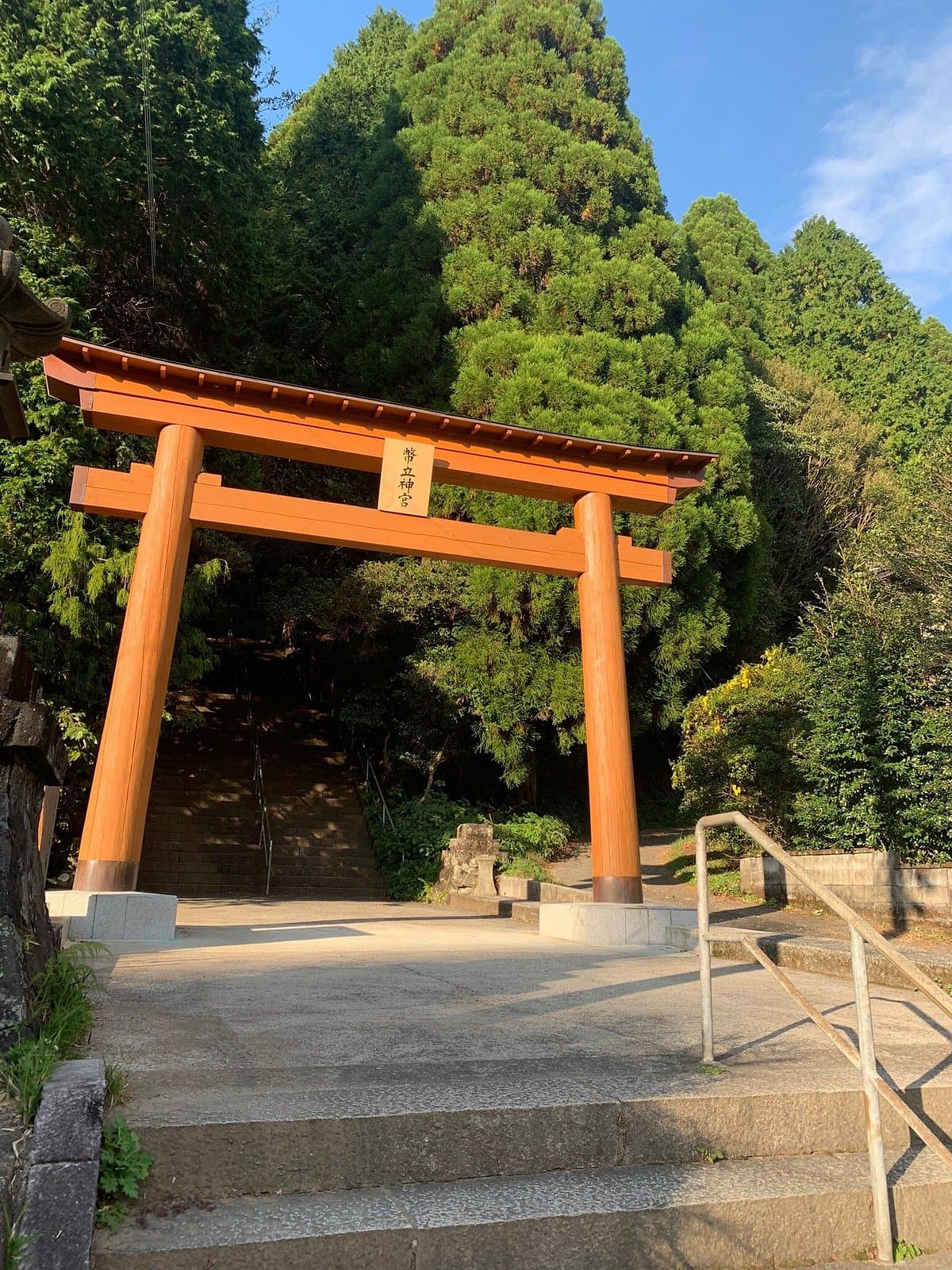
Heitate Shrine is a significant spiritual site nestled in the mountains of Kumamoto Prefecture, known for its ancient origins and the veneration of several important deities, including Kamibiki no Mikoto, Kamibimi no Mikoto, Ochus Yamato no Kami, Ame no Minakanushi no Kami, and Amaterasu Omikami. It is considered a 'power spot' due to its long history and the presence of a sacred tree believed to be 15,000 years old, making it a place of deep historical and spiritual importance in Japan.
Visitors consistently praise the shrine for its serene and natural environment, offering a peaceful escape from urban life. Many are particularly fascinated by the rich history and mythology associated with the shrine, noting that the more one learns about its background, the more engaging the visit becomes. The presence of the ancient sacred tree is a major draw, with many feeling a strong spiritual connection to the site. Reviewers also highlight the surprisingly clean and well-maintained facilities, including new toilets, despite its remote, mountainous location, which adds to a comfortable visitor experience.
To make the most of your visit, it's recommended to allocate at least an hour to explore the grounds and absorb the tranquil atmosphere. Bringing comfortable walking shoes is advisable, as the shrine is situated in a natural setting. While there are no specific warnings about what to skip, visitors interested in the spiritual aspect might consider researching the enshrined deities and the shrine's history beforehand to deepen their appreciation. The best time to visit would likely be during daylight hours to fully appreciate the natural surroundings.
Heitate Shrine is located at 712 Ono, Yamato-cho, Kumamoto Prefecture. Given its mountainous location, public transportation options might be limited, and driving is likely the most convenient way to reach the shrine. Visitors should check local transportation schedules or consider renting a car for easier access. Parking facilities are available, as indicated by the presence of new toilets, suggesting the shrine is accessible by vehicle.
Common complaints are not explicitly mentioned in reviews, but the remote location could be a potential challenge for those relying solely on public transport. Planning transportation in advance, ideally by car, would mitigate any access difficulties.