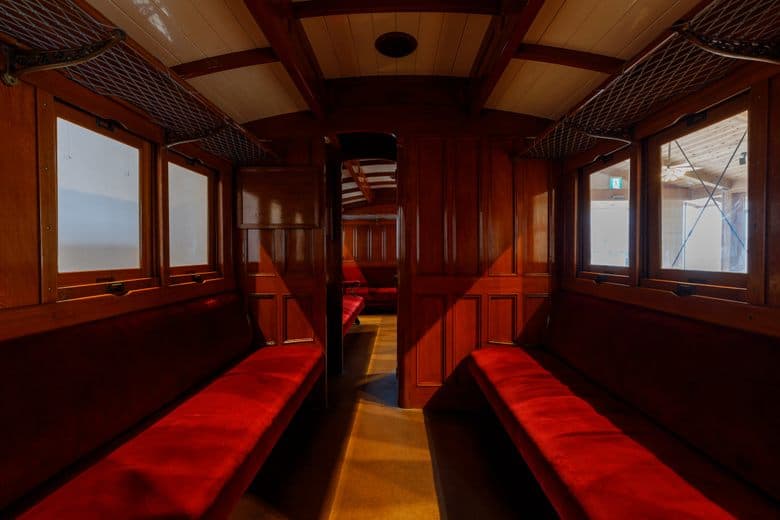
Uemachi Station is a unique historical exhibit in Sakawa, Kochi Prefecture, dedicated to preserving a significant piece of Japan's railway heritage. It's not a functional train station but rather a display space for the last remaining wooden Ro481 railway carriage from the Meiji period (1868–1912). This meticulously restored carriage serves as a tribute to Isami Hiroi, a local pioneer in Japanese civil engineering, and offers a tangible connection to the golden age of rail travel.
Visitors consistently praise the carriage's exquisite craftsmanship, noting the detailed woodwork, delicate porcelain sink, and elaborate iron luggage racks. Many find the experience to be a charming step back in time, appreciating the effort taken to restore and maintain such a rare artifact. The exhibit is particularly appealing to train enthusiasts and those interested in historical engineering, offering a quiet and contemplative experience away from more bustling attractions.
To make the most of your visit, plan to spend about 30-60 minutes exploring the carriage and its immediate surroundings. The area around Uemachi Station in Sakawa is known for its retro buildings, which can be explored on foot. It's also a short walk from Makino Park, a large garden famous for its cherry trees, dedicated to Dr. Tomitaro Makino, another local hero. Combining these sites can create a pleasant half-day itinerary. There are no specific items to bring, but a camera is recommended for capturing the intricate details of the carriage.
To reach Uemachi Station, first travel to Sakawa Station. Sakawa Station is approximately a 30-minute express train ride from Kochi Station, a central hub. Once at Sakawa Station, Uemachi Station and the surrounding retro buildings are within walking distance. Public transport is the most convenient way to access the area, as parking information is not readily available and the site is best explored on foot.
Common complaints are minimal, primarily stemming from visitors expecting a larger museum or a functioning station. To mitigate this, set expectations that it is a single, beautifully preserved train carriage in a dedicated display space. There are no interactive exhibits, so those seeking a more dynamic experience might find it brief. However, for those who appreciate historical artifacts and quiet contemplation, it offers a rewarding visit.