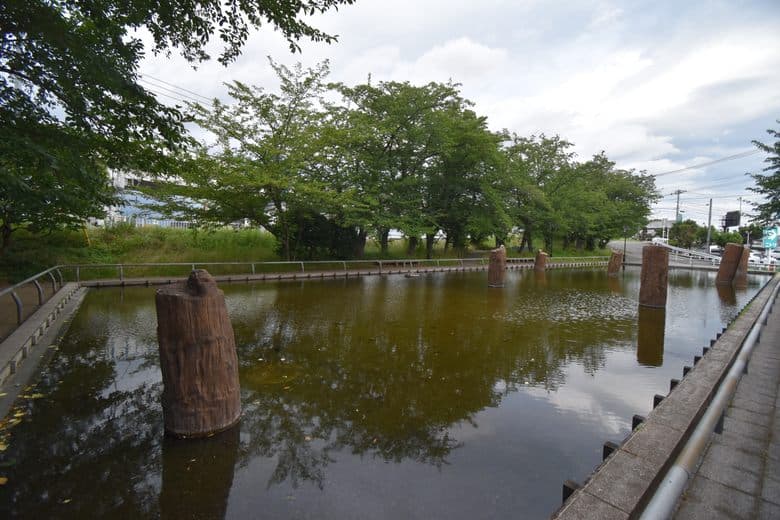
The Sagami River Bridge Ruins are a significant archaeological site in Japan, revealing the remains of a medieval bridge believed to have been constructed in 1198. These wooden pillars, made of hinoki cypress, were dramatically uncovered in 1924 following the devastating Great Kanto Earthquake of 1923 and its aftershocks. The discovery provided tangible evidence for a bridge mentioned in the ancient chronicle Azuma Kagami, linking it to samurai lord Inage Shigenari. The site offers a unique perspective on Japan's medieval engineering and the profound impact of natural forces on its historical landscape.
Visitors consistently note that while the historical significance is immense, the visual experience at the site is modest. The original pillars are no longer visible, as they are preserved underground to prevent further corrosion. Instead, replicas mark the location where the ancient structures once stood. This means that the primary appeal of the Sagami River Bridge Ruins lies in its historical narrative and the imagination it inspires, rather than impressive physical remains. Reviewers suggest that those with a deep interest in Japanese history, archaeology, or the effects of geological events will find the site most rewarding.
For those planning a visit, it's important to manage expectations regarding the visual aspect. There isn't much to 'see' in the traditional sense, so allocate a short amount of time, perhaps 30-60 minutes, to appreciate the historical context. Consider bringing a guidebook or researching the site's history beforehand to fully grasp its importance. The best time to visit would be during daylight hours, as the site is an open-air historical marker. There are no facilities or shops directly at the site, so plan accordingly for refreshments or restrooms.
The site is located between Hiratsuka and Chigasaki stations. The most convenient way to reach the Sagami River Bridge Ruins is by bus. Take a bus from either Hiratsuka Station or Chigasaki Station and alight at the Imajuku stop. From there, the ruins are approximately a 5-minute walk. Alternatively, for those who enjoy walking, it's about a 35-45 minute walk from either station, offering a chance to see the local area. Parking information is not readily available, suggesting public transport is the recommended method of access.
A common complaint is the lack of visible original artifacts, which can be disappointing for visitors expecting to see ancient structures. To mitigate this, approach the site with an understanding that it is a historical marker and a place of preservation, rather than an archaeological excavation display. Focus on the story behind the replicas and the remarkable circumstances of their discovery to fully appreciate the site.