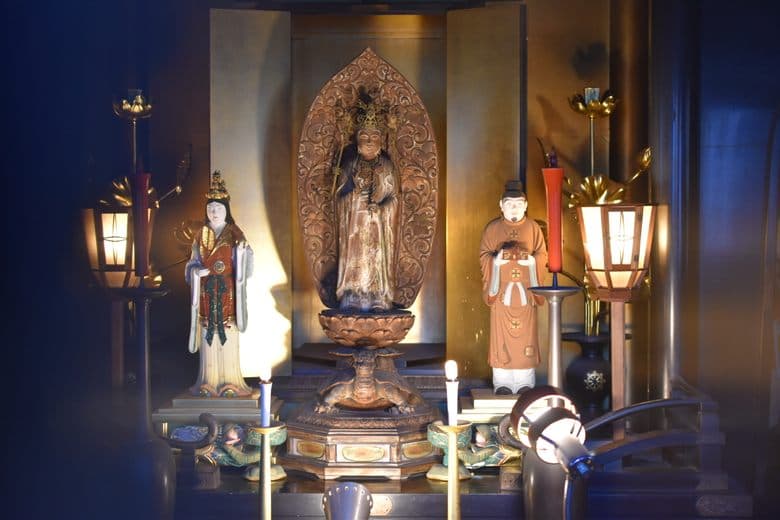
Urashima-Kannon Temple is a small shrine located in Yokohama's Kanagawa Ward, dedicated to one of Japan's most beloved folk tales. The temple enshrines a statue of Kannon, the Goddess of Mercy, which according to local tradition was brought from the Dragon Palace by Urashima Taro himself. The original temple, Kanpuku-ji, was founded in the 9th century and was destroyed by fire in 1868, but the precious Kannon statue survived. The statue was subsequently relocated to the nearby Keiun-ji temple, where it now rests in a dedicated pavilion known as Urashima-Kannon Temple, flanked by statues of Urashima Taro and Orihime, the Dragon Princess.
The temple appeals primarily to visitors with an interest in Japanese folklore, mythology, and traditional religious sites. The shrine is modest in scale and lacks the grandeur of major Yokohama temples, but this authenticity is part of its charm. Visitors appreciate the quiet, contemplative atmosphere and the opportunity to connect with a centuries-old legend that remains culturally significant in Japan. The site also benefits from local historical context: the surrounding Urashima-oka district contains turtle-related place names and burial sites allegedly connected to Urashima Taro's family, adding layers of cultural interest for those who take time to explore the neighbourhood.
Plan to spend 30 to 45 minutes at the temple itself, including time to observe the statues and read any available information plaques. The best time to visit is during weekday mornings when the site is quietest and you can fully appreciate the peaceful setting. Bring comfortable walking shoes, as the temple may involve some stairs or uneven ground typical of older Japanese shrine grounds. There is no entry fee. Photography is generally permitted, though visitors should be respectful of the sacred space and any posted restrictions. The temple is best visited as part of a broader exploration of Yokohama's cultural sites rather than as a standalone destination.
To reach Urashima-Kannon Temple, take the Yokohama Municipal Subway Blue Line (Yokohama Line) to Nakada Station. From the station, it is approximately a 10-15 minute walk to the temple. Alternatively, if arriving by car, parking is available in the surrounding neighbourhood, though spaces may be limited during peak hours. The temple is located in a residential area, so arriving by public transport is recommended. The nearest major transport hub is Yokohama Station, which is about 20-25 minutes away by subway. Visitors unfamiliar with the area should use Google Maps or a similar navigation app to locate the exact shrine entrance, as signage may be minimal.
Common challenges include the temple's modest size and limited English signage, which may disappoint visitors expecting a major landmark. The surrounding neighbourhood is quiet and residential, so there are few nearby cafes or shops; plan accordingly if you need refreshments. Additionally, the temple's cultural significance is deeply rooted in Japanese folklore, so visitors unfamiliar with the Urashima Taro story may find the experience less meaningful. To mitigate this, consider reading a summary of the legend before visiting, or look for information boards at the site that may provide context in Japanese and English.