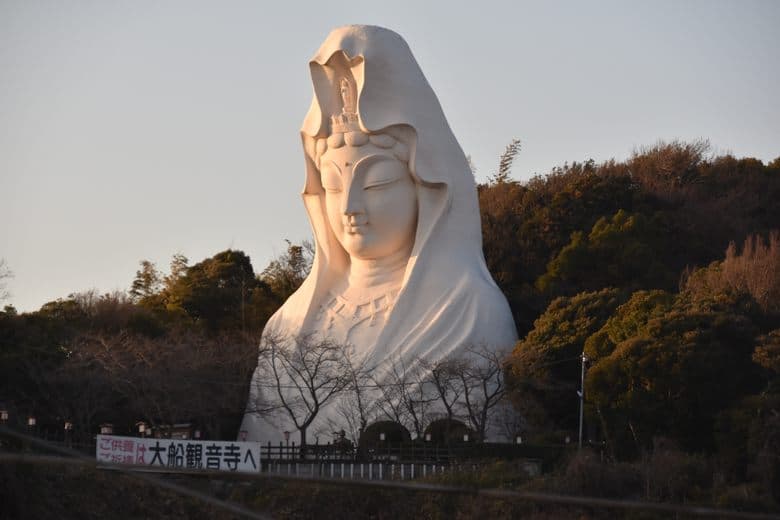
The Ōfuna Kannon is a monumental, 82-foot-tall statue of the Buddhist goddess of mercy, Byakue Kannon, perched on a wooded hill overlooking the Ōfuna district of Kamakura. Conceived in 1929 and completed in 1960 after a wartime hiatus, this modern icon stands as a symbol of peace and a memorial to the victims of World War II and the atomic bombs. Unlike ancient Buddhist statues, its relatively recent construction and striking white form make it a unique and eye-catching landmark.
Visitors consistently praise the statue's serene and majestic presence, noting its visibility from the train and the peaceful, contemplative atmosphere of the temple grounds. Many find the site to be a tranquil escape from the bustling city, offering a sense of calm and reflection. Reviewers often highlight the well-maintained gardens and the opportunity for quiet contemplation. While not as historically ancient as other Kamakura sites, its modern significance and the views it offers are frequently mentioned as positive aspects.
To make the most of your visit, allocate about 1 to 1.5 hours to explore the grounds and appreciate the statue. The best time to visit is during the morning or late afternoon to avoid crowds and enjoy softer light for photography. Wear comfortable shoes, as there is a short uphill walk to the statue. Some visitors recommend bringing a small offering or incense if you wish to participate in the temple's spiritual practices. There are no extensive food options directly at the site, so plan to eat before or after your visit in the Ōfuna station area.
The Ōfuna Kannon is conveniently located very close to Ōfuna Station, a major railway hub. From Ōfuna Station, it's a short walk, typically less than 10 minutes, to the entrance. Follow the signs from the station, which are generally clear. The path involves a gentle incline, but it is easily accessible for most visitors. Public transportation, particularly the JR lines, is the most recommended way to reach Ōfuna Station, as parking in the immediate vicinity can be limited.
A common point of feedback is that the statue itself is the primary attraction, and while the grounds are pleasant, they are not extensive. Some visitors who expect a large temple complex might find it smaller than anticipated. To mitigate this, manage your expectations and focus on the unique experience of seeing this modern, impactful statue and its memorial significance rather than a sprawling historical site.