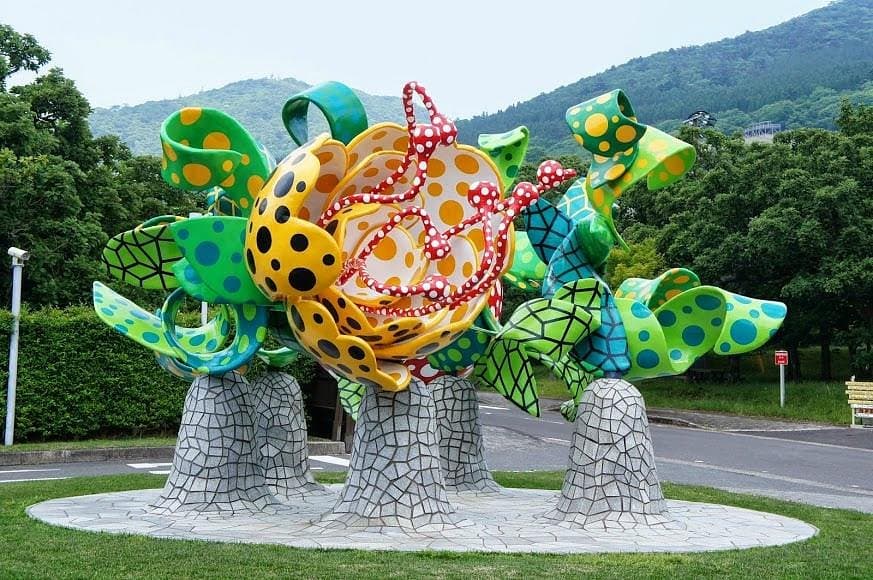
The Kirishima Open-Art Museum is a significant cultural institution in Japan, known for its extensive collection of contemporary sculptures and installations displayed both indoors and outdoors. It stands out as one of Japan's premier sculpture collections, often compared favorably to the Hakone Open-Air Museum and Benesse House on Naoshima, offering a unique experience where art integrates seamlessly with the natural environment of the Kirishima mountains.
Visitors consistently praise the museum's outdoor forest walk, where numerous art pieces are thoughtfully placed, creating an engaging scavenger hunt-like experience. Many are pleasantly surprised by the sheer volume and variety of works, often spending more time than initially planned. The presence of Yayoi Kusama's iconic 'Shangri-La' near the entrance and 'Red Shoes' inside the building is a major draw, with the latter being a popular spot for commemorative photos. Reviewers appreciate the well-maintained gardens and the opportunity to discover both foreign and Japanese sculptors, making it a rewarding visit for art enthusiasts.
To make the most of your visit, plan for at least 2-3 hours, especially if you intend to explore the outdoor exhibits thoroughly. Comfortable walking shoes are essential for the forest paths. While some exhibits might be less engaging for every visitor, the overall experience is considered enjoyable. It's advisable to check the museum's website in advance to see current exhibitions and plan your route. Bringing water, especially on warmer days, is also recommended for the outdoor walk.
Access to the Kirishima Open-Art Museum is noted by reviewers as challenging, primarily requiring a car or taxi. It is located further back from Kirishima Onsen. While there is ample parking available (phone 0995 74 5945 for directions), public transport options are limited. Several visitors mention the high cost of taxis from Kurino station, with some estimating over 50,000 yen for a round trip, making driving the most practical and cost-effective option. This difficult access contributes to the museum being less crowded than other major attractions.
The main complaint revolves around the difficult and expensive access via public transport. To mitigate this, consider renting a car if you are comfortable driving in Japan, or factor in the significant taxi fare if relying on public transportation. Planning your visit as part of a broader road trip through the Kagoshima region can also make the journey more efficient.