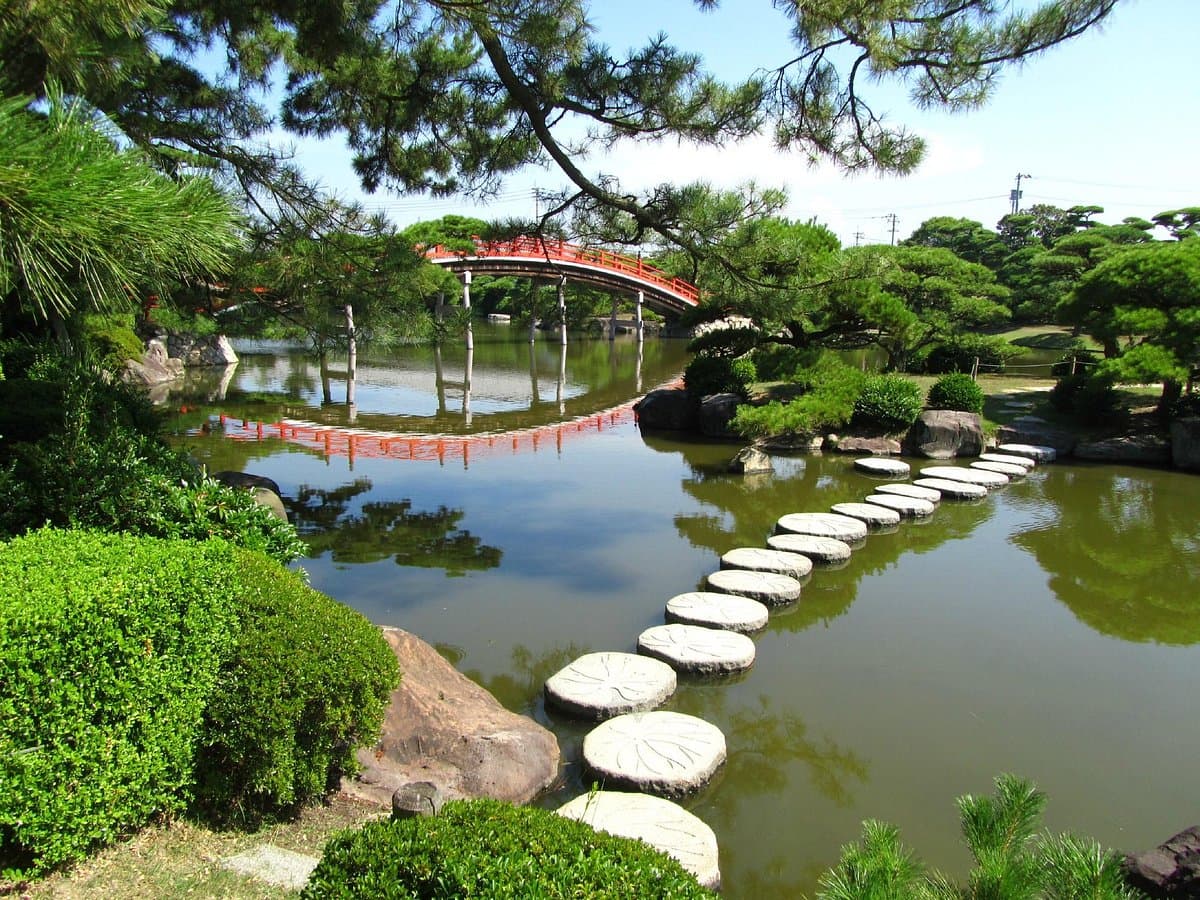
Nakazubansho Garden, also known as Nakazu Bansho Park, is a traditional Japanese garden established in 1688. It is celebrated for its classical design, featuring over 1500 pine trees, various flowers, and an artificial scenery reminiscent of Lake Biwa. The garden's name, derived from the framed calligraphy "Banshoen," signifies "all things in the Universe," reflecting the comprehensive beauty it aims to encapsulate.
Visitors consistently praise the garden for its tranquil and relaxing atmosphere. Many describe it as a "small but beautiful" space where islands, bridges, and trees are artfully arranged, evoking the aesthetic often seen in Hokusai's art. The sense of solitude is a recurring theme, with several reviewers noting they were the only visitors, which significantly enhances the peaceful experience. While the garden itself is highly regarded, the accompanying pottery exhibit or museum receives mixed reviews; some find it uninteresting or poorly presented, suggesting it can be skipped without detracting from the garden experience.
To fully appreciate the garden's serenity, plan to spend about an hour strolling through its paths. The best time to visit is during daylight hours when the natural light highlights the garden's features. Bringing a camera is recommended to capture the picturesque scenery. There is a restaurant on-site where visitors can enjoy Japanese foods, offering a convenient option for a meal or snack.
The garden is located at 25-1 Nakazucho, Marugame, Kagawa Prefecture. While it is described as being "a little out of the way" and near an industrial part of Marugame, its unique charm makes the journey worthwhile. Reviewers mention that the entrance to the parking can be unusual, so visitors arriving by car should pay close attention to signage. Specific public transport options are not frequently mentioned in reviews, suggesting that driving or taking a taxi might be the most convenient methods for reaching this somewhat secluded location.
A common complaint revolves around the museum or pottery exhibit within the garden, which some visitors find underwhelming. To mitigate this, focus primarily on the garden itself and consider the museum an optional, secondary attraction. The admission fee of 700 yen includes entrance to this exhibit, but visitors should manage their expectations for the museum portion.