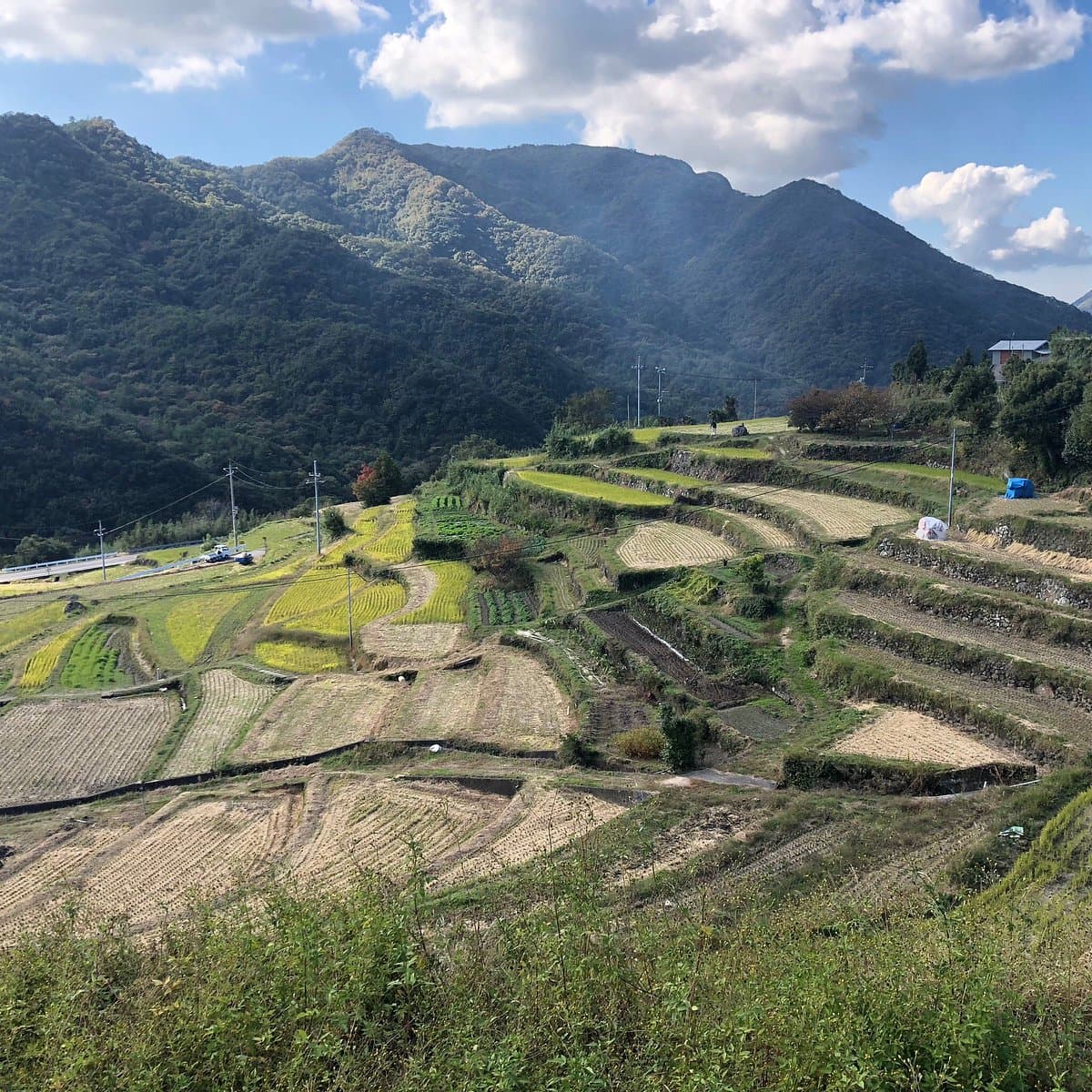
Nakayama Senmaida is a remarkable collection of terraced rice fields located in the mountainous interior of Shodoshima. These meticulously crafted stone-walled terraces, fed by water from Mt. Yufune, represent centuries of agricultural heritage and a deep connection between the local community and their land. It's considered the only terraced rice field of its kind in Kagawa Prefecture, making it a significant cultural and historical site.
Visitors consistently praise the breathtaking beauty of the landscape, describing it as a "sea of vibrant green seedlings" that sway with the wind, creating a "rippling waves" effect. Many find the "graceful curves" of the terraces particularly photogenic, especially during the summer months when the fields are lush. The peaceful atmosphere and the opportunity for a quiet stroll are frequently highlighted as major draws. However, some visitors note that the fields can appear "barren or disorderly" if visited outside the growing season, particularly before planting or after harvest.
To make the most of your visit, plan to spend 1-2 hours exploring the area. The best time to visit for lush green views is typically summer, from late May to early September, when the rice seedlings are fully grown. If you visit outside this period, be aware that the fields might not be as vibrant. Reviewers suggest hiking up to higher vantage points for the best photographic opportunities and panoramic views. Consider bringing comfortable walking shoes, as some climbing is involved to reach these viewpoints. If you're short on time, some suggest that a decent view can be had from the bus without disembarking, though this would mean missing the immersive experience of walking through the fields.
Getting to Nakayama Senmaida requires careful planning. It's located about 30 minutes from Tonosho Port towards the mountains. The most common public transport option is the local bus service, but visitors universally warn that buses are "very infrequent" and their schedule can be "tricky." It is crucial to check the bus schedule in advance and plan your return journey carefully. Some visitors opted for a taxi from Kusakabe, splitting the fare among a group, as it offered more flexibility. The roads leading to the terraces are described as "narrow." For those who enjoy nature and history, the effort to reach this site is considered "well worth the visit."
The main complaint revolves around the infrequent bus service and the potential for the fields to look less impressive outside the peak growing season. To mitigate this, always check bus schedules beforehand and consider renting a car or a battery-assisted bike if you prefer more flexibility. If visiting during the off-season, manage your expectations regarding the vibrancy of the fields; the beauty of the stone walls and the historical context can still be appreciated.