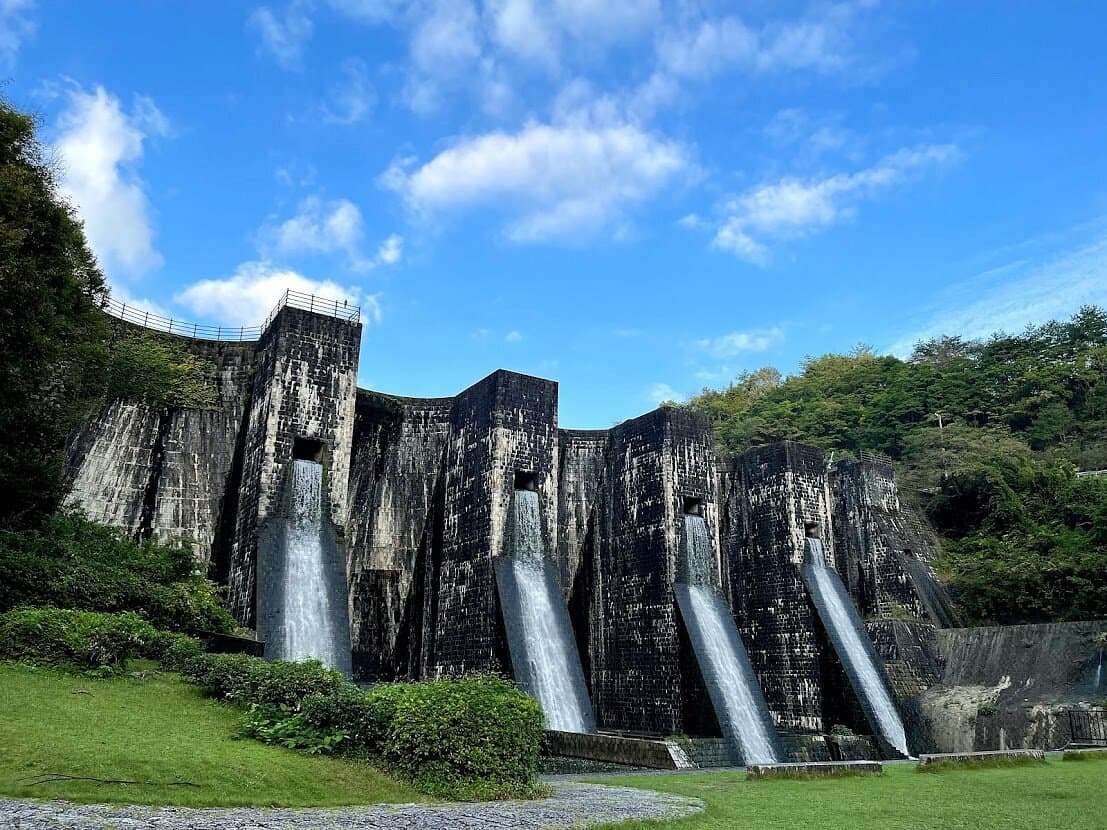
The Honenike Dam, situated in the Sanuki Mountain range near Kanonji, Kagawa Prefecture, is a significant example of early 20th-century Japanese engineering. Completed in 1930, this multiple-arch dam is primarily used for irrigation and is distinguished by its unique design featuring six arched buttresses. It represents an important piece of local infrastructure history and offers a rare architectural sight.
Visitors consistently highlight the dam's impressive structure and the serene natural surroundings. The architectural uniqueness, particularly the multiple arches, is a frequent point of praise, with many finding it a fascinating subject for photography. Reviewers often describe the area as peaceful and a good spot for a quiet outing, especially for those interested in engineering or historical structures. However, some visitors note the lack of additional facilities or activities, suggesting it is primarily a viewing experience.
To make the most of a visit, it is advisable to allocate about 1-2 hours, primarily for viewing and photography. There are no specific facilities or shops at the dam, so bringing your own water and snacks is recommended. The best time to visit is during daylight hours, especially on a clear day, to fully appreciate the dam's structure and the surrounding landscape. As it is a remote location, planning your transportation in advance is crucial.
Reaching Honenike Dam typically requires a car due to its remote mountainous location. Public transport options are very limited, and there are no direct train or bus lines to the dam itself. Visitors driving should use GPS navigation to Tanono, Onoharacho, Kanonji, Kagawa Prefecture. Parking is usually available near the dam, though it might be informal. Be prepared for winding roads in the mountainous terrain.
A common complaint among visitors is the dam's isolated location and the absence of amenities. To mitigate this, ensure you have a full tank of gas, bring all necessary supplies, and do not expect shops or restaurants nearby. The focus of the visit should be on appreciating the dam's historical and architectural significance rather than seeking a diverse range of activities.