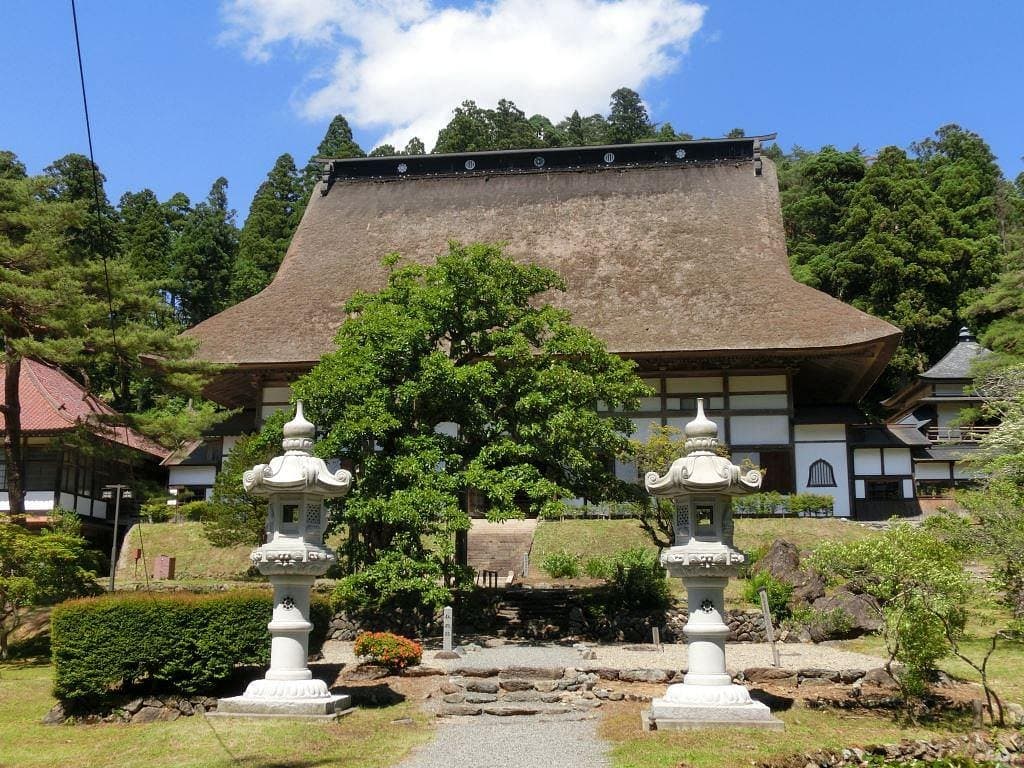
Shoboji Temple, located in Oshu, Iwate Prefecture, is a historically significant Buddhist temple that stands as a testament to traditional Japanese religious architecture and cultural preservation. It is particularly noted for its impressive main hall and the serene atmosphere it offers. Unlike more heavily touristed sites, Shoboji provides a more authentic and less crowded experience, allowing visitors to immerse themselves in its spiritual ambiance and appreciate its architectural grandeur.
Visitors consistently praise the temple's impressive structure and the peaceful environment. Many highlight the beauty of the temple grounds, especially during autumn when the foliage provides a stunning backdrop. The opportunity to change into slippers and walk through the temple's interior, including an adjacent corridor leading upstairs, is often mentioned as a unique and engaging part of the visit. Reviewers appreciate the sense of history and the well-preserved artifacts found within the temple.
To make the most of your visit, allocate approximately 1 to 2 hours to explore the temple and its grounds thoroughly. The best time to visit is during the autumn months to witness the vibrant fall colors, though its beauty is present year-round. It is advisable to wear comfortable shoes as you will be walking, and be prepared to remove them and wear slippers inside the temple. While not explicitly mentioned, bringing a small bag for your shoes might be convenient. There are no specific warnings about what to skip, as visitors generally find the entire experience rewarding.
Shoboji Temple is located at 129 Shoboji, Mizusawakukuroishicho, Oshu, Iwate Prefecture. Given its somewhat remote location, reaching the temple typically involves a combination of public transport and possibly a taxi or private car. While specific public transport lines are not detailed in reviews, visitors should plan their journey to Oshu city first, then consider local bus services or a taxi for the final leg to the temple. Driving is a viable option for those with a car, and parking is generally available. The entrance to the temple is noted to be on the right side.
Common complaints are not widely reported, likely due to the temple's less crowded nature and the positive experiences of visitors. However, as it is not frequently featured in English-language guides, some visitors might find information about its history or specific features less accessible. It is recommended to do some research beforehand or look for any available information pamphlets at the site to enhance your understanding of this significant cultural asset.